Children’s Wear and Baby Clothing Manufacturers in China: A Sourcing Guide for Global Buyers
China is one of the world’s most concentrated manufacturing bases for baby clothing and children’s wear, with industrial clusters across Guangdong, Zhejiang, Jiangsu, and Fujian producing everything from newborn layettes to premium teen lines. For global apparel buyers, retailers, and private-label brands, finding reliable baby clothing manufacturers in China requires understanding fabric sourcing, sizing systems, seasonal buying windows, and the difference between OEM and ODM services.
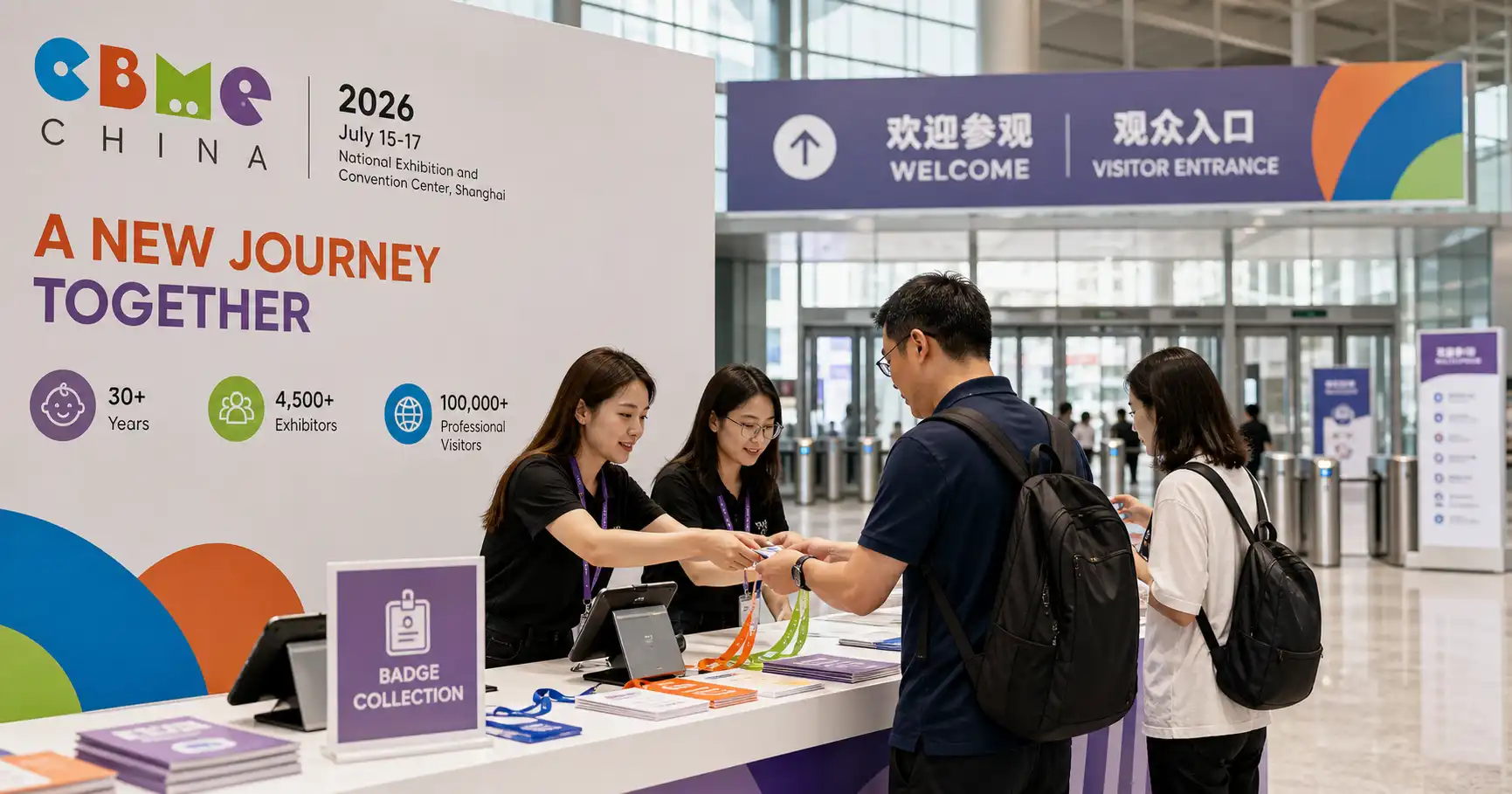
CBME China 2026 (July 15–17, NECC Shanghai) brings together 2,800+ verified brands, manufacturers, and OEM partners across the full baby product spectrum. The concurrent CBME Children’s Wear Expo gives apparel buyers a focused sourcing environment alongside the main exhibition halls. This guide explains what to evaluate before you source, what to ask at the show, and how CBME China helps you turn shortlists into long-term suppliers.
CBME China 2026
- Date: July 15–17, 2026
- Venue: National Exhibition and Convention Center (NECC), Shanghai
- Concurrent Event: CBME Children’s Wear Expo (kidswear and baby apparel)
- Categories: Children’s Wear, Baby Apparel, Maternity, OEM/ODM Partners
- Scale: 2,800+ verified brands, manufacturers, and OEM partners
- Register: Register to Visit CBME China 2026
Why Source Children’s Wear and Baby Apparel from China
China’s children’s wear and baby apparel sector offers three structural advantages for international buyers:
Manufacturing scale and category depth. Chinese factories produce the full apparel spectrum—from newborn bodysuits, sleepers, and rompers to toddler separates, school uniforms, outerwear, and teen fashion. The same manufacturing clusters often serve private-label and brand-name customers, giving buyers flexible access to both small-batch and bulk production.
Established export experience. Chinese children’s wear manufacturers have shipped to North America, Europe, Australia, the Middle East, and Southeast Asia for decades. Most export-ready factories are familiar with care-label requirements, bilingual packaging, hangtag conventions, and country-of-origin documentation common in international apparel trade.
Concurrent fashion platform. CBME Children’s Wear Expo runs in parallel with the main CBME China exhibition, giving buyers one venue to compare supplier ranges, view trend presentations, and meet both OEM factories and brand-name exhibitors without traveling between events.
Key Categories in Kidswear and Baby Apparel
When sourcing children’s wear from China, you will encounter suppliers across several distinct categories:
Newborn and infant clothing. Includes bodysuits, rompers, sleepers, layettes, bibs, hats, mittens, and receiving blankets. The infant category has the strictest fabric safety expectations because products are in direct contact with skin, often for babies under 12 months.
Toddler and children’s everyday wear. T-shirts, shorts, leggings, dresses, sweaters, and casual outerwear for ages 2–6. This is one of the largest kidswear categories by unit volume and is where private-label buyers typically start.
School uniforms and formal wear. Polo shirts, blazers, trousers, skirts, and PE kits supplied to school districts and educational institutions. Uniform buyers usually evaluate suppliers on durability, color consistency across repeat orders, and the ability to handle large batch replenishment.
Maternity wear. Often supplied by adjacent apparel factories, focusing on comfort, adjustability, and nursing-friendly design. Maternity overlaps with baby apparel at the brand level for buyers building integrated product lines.
Outerwear and seasonal collections. Jackets, snowsuits, rainwear, and fleece — typically ordered 4–6 months ahead of the selling season. Chinese factories are major sources for winter outerwear worldwide.
Accessories and adjacent products. Hats, socks, tights, swimwear, costumes, and dress-up items round out the apparel offering at most multi-category factories.

How to Find Baby Clothing Manufacturers at CBME China 2026
CBME China 2026 dedicates hall space to children’s wear and baby apparel exhibitors. The concurrent CBME Children’s Wear Expo adds curated fashion presentations and category-specific networking, helping buyers compare fabric feel, fit, and finishing in person.
Step 1: Pre-Show Preparation
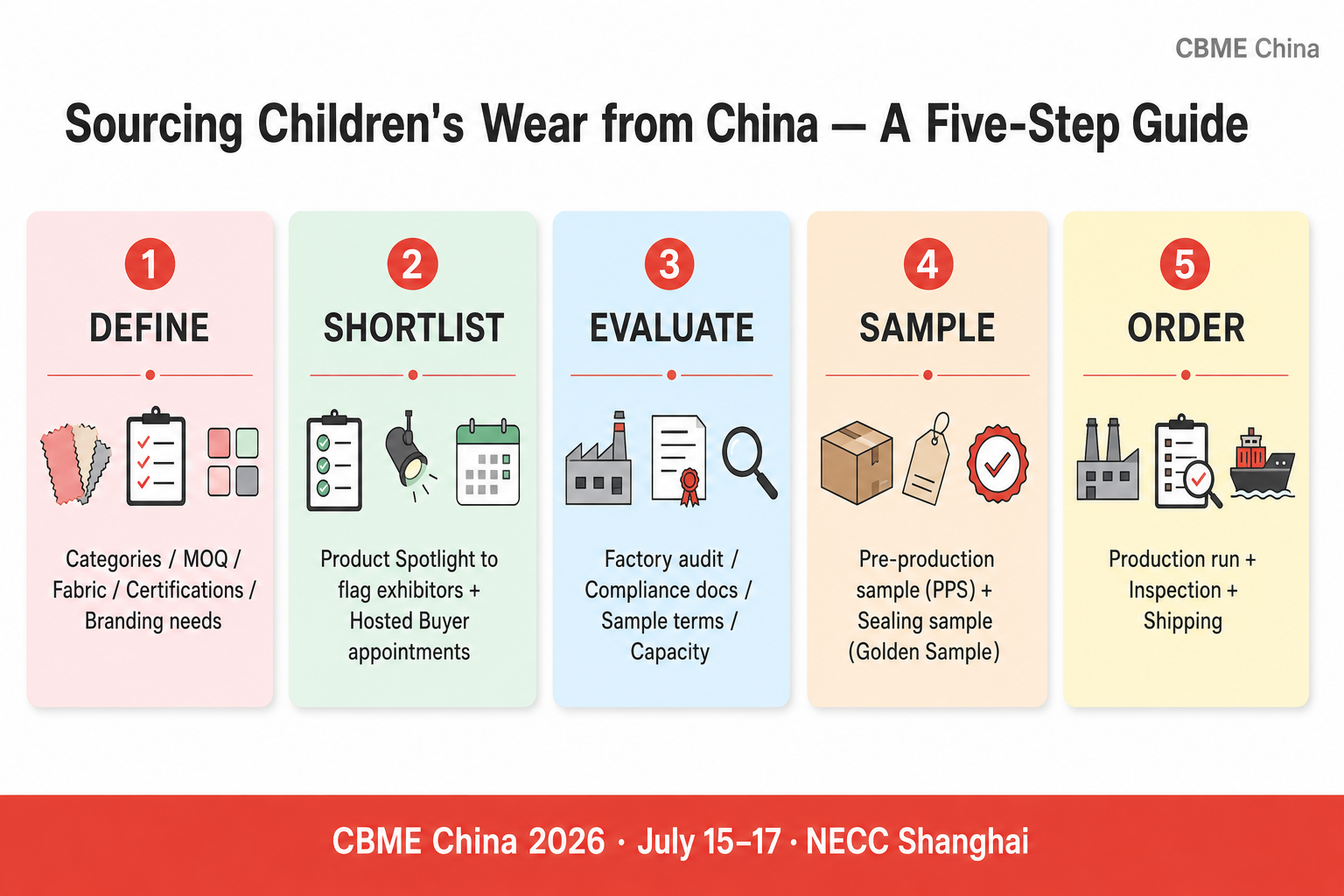
Before traveling to Shanghai, define your sourcing criteria:
- Target categories (newborn, toddler, uniform, outerwear, etc.)
- Estimated order volumes per SKU and per season
- Fabric preferences (cotton, organic cotton, bamboo blends, recycled fibers)
- Required safety certifications for your target markets
- Customization or branding needs (OEM/ODM, hangtags, private labels)
- Budget range and unit-cost expectations
Use the monthly CBME China Product Spotlight (available on the official website) to identify kidswear exhibitors before the show. Flag suppliers whose categories and fabric profiles match your criteria. Note their booth locations and any pre-show meeting requests they have advertised.
Step 2: Onsite Evaluation
At the exhibition, approach apparel booths with a structured evaluation framework:
- Fabric sourcing. Ask where mills are located, what fiber traceability they can document, and how they handle substitute fabrics when preferred mills are out of stock.
- Compliance documentation. Request copies of relevant certifications (OEKO-TEX, REACH, GB 31701, or local equivalents for your target market) and plan to verify them with the issuing body.
- Sampling process. Confirm sample fees, sample lead time, and whether samples will be deducted from the bulk order.
- Production capacity. Ask about factory size, workforce, peak-season output, and typical reorder timelines.
- Seasonal collection cadence. Discuss how the supplier plans new collections, accepts buyer design briefs, and coordinates product drops for your selling calendar.
Step 3: Post-Show Follow-Up
After CBME China, organize your contacts by category and priority. Within two weeks, reach out to shortlisted suppliers to:
- Request detailed quotations broken out by SKU and quantity tier
- Discuss customization specifications and packaging details
- Arrange sample orders and confirm turnaround
- Negotiate payment terms, ship dates, and inspection requirements
For buyers needing direct factory relationships rather than trading-company introductions, the CBME Hosted Buyer Program (source: CBME China official site) facilitates pre-scheduled appointments with verified manufacturers before the show opens.
Fabric, Material and Compliance Questions for Kidswear
Fabric is the single biggest variable in children’s wear sourcing. Even when a supplier’s factory looks the same on paper, what they source from upstream mills will determine hand-feel, shrinkage, colorfastness, and ultimately returns. Buyers should approach fabric conversations as engineering conversations, not sourcing paperwork.
Fiber and fabric basics. Common fibers in Chinese kidswear include long-staple cotton, organic cotton, bamboo blends, modal, and—for performance categories—recycled polyester and Sorona. Each fiber has different shrinkage behavior, dye uptake, and care requirements. Ask suppliers for the mill of origin and a technical sheet covering weight (gsm), composition, shrinkage percentage, and recommended wash temperature.
Safety certifications. Different markets require different safety frameworks. European buyers typically rely on OEKO-TEX Standard 100 plus REACH SVHC compliance; U.S. buyers verify CPSIA tracking labels and small-parts testing; Mainland China domestic sales require GB 31701 (婴幼儿及儿童纺织产品安全技术规范). Always request the certification document that matches your target market, and verify the certificate number directly with the issuing lab.
Sustainability claims. Many Chinese apparel factories now offer organic or recycled options. Be cautious of marketing language: ask to see the chain-of-custody documentation (for example, GOTS transaction certificates for organic cotton) rather than accepting supplier assertions at face value. Independent lab testing on a representative sample from your first production run is a sound discipline, especially for safety-critical categories.
Care labels and packaging. Care labels, country-of-origin labels, and fiber-content labels must match each market’s textile regulations. Most Chinese factories can produce care labels in multiple languages and integrate them into the garment during production, but confirm label artwork and language requirements before bulk run.
OEM/ODM and Private Label for Children’s Wear
Children’s wear is one of the most active categories for OEM, ODM, and private-label arrangements. Understanding the difference between these models helps you decide how much design control to retain and how much to delegate to the supplier.
OEM (Original Equipment Manufacturer). The buyer supplies a full tech pack — sketches, technical drawings, measurement tables, fabric specifications, construction notes — and the manufacturer produces the garment to that spec. OEM suits brand owners with in-house design teams and established fit standards.
ODM (Original Design Manufacturer). The supplier offers existing styles from their in-house design collection; the buyer chooses from those styles and applies brand-specific modifications such as labels, packaging, prints, or colorways. ODM is faster and often cheaper for new entrants because design work is partially complete.
Private label and white label. Closely related to ODM. The supplier produces a finished garment with the buyer’s brand on the label, hangtag, and packaging. Private label is the most common model for retailers and e-commerce sellers building their own children’s wear lines without running a design studio.
For buyers entering kidswear for the first time, beginning with ODM or private label lets you validate the category before investing in a full tech-pack-driven OEM program. Established brands typically mix models: OEM for hero collections, ODM for fast-turnaround lines.

Sizing, Fit and Seasonal Buying Patterns
Asian vs Western sizing. Chinese factories typically grade on centimeter-based measurements, which differ from U.S. and U.K. inch-based grading. Talk with suppliers about how they convert between systems, and request sample garments at the size you intend to sell rather than relying on chart matching alone. Fit variance across Asia-based factories can be significant; physical samples cut from production fabric are the most reliable indicator.
Sample discipline. Most factories will produce a pre-production sample (PPS) and a sealing sample (golden sample). The PPS confirms that the factory understands the spec; the sealing sample confirms the fit, fabric, and construction you’ll sign off before bulk production. Insist on both, and document every detail of the sealing sample so the bulk run matches.
Seasonal lead times. For autumn/winter collections, sourcing typically begins 6–9 months before retail availability (i.e., buyers selecting fabric and confirming styles in early spring). Spring/summer collections run on a tighter 4–6 month lead time. CBME China in mid-July lands at a useful point for autumn/winter sourcing and trend observation.
Inventory planning. Kidswear categories tend to be size-intensive (each collection typically requires 4–6 size sets per garment). Confirm with each supplier whether they can hold minimum fabric commitments for reorders, and how they handle size-run gaps in reorder situations.
Frequently Asked Questions
What is the typical MOQ for children’s wear from Chinese manufacturers?
Minimum order quantities vary by category, fabric, and customization level. Basic blank-style items can sometimes start at 300–500 units per SKU, while fully customized private-label orders typically require 500–1,000 units per SKU per colorway. Higher MOQs often apply to outerwear or technical categories where fabric commitments drive minimum production. Always confirm with the specific supplier before finalizing your shortlist.
How do I verify fabric safety certifications from Chinese kidswear suppliers?
Request a copy of the certification (OEKO-TEX Standard 100, GOTS, GB 31701, etc.), note the certificate number and issuing lab, then verify directly on the issuing body’s website or by contacting the lab. Independent lab testing of a sample from your first production run is recommended, especially for infant garments where safety claims carry legal weight in most markets.
Should I source OEM, ODM, or private label children’s wear from China?
The choice depends on your design capability and time-to-market. OEM suits established brands with in-house design teams and tech packs. ODM suits buyers who want to move quickly using the supplier’s design portfolio with light customization. Private label is the fastest path for new entrants and e-commerce sellers building an apparel line for the first time. Many buyers combine models: OEM for hero collections, ODM for fast-turnaround categories.
How does CBME China’s Children’s Wear Expo help apparel buyers?
CBME Children’s Wear Expo runs alongside the main CBME China exhibition, giving apparel buyers a focused environment to view seasonal collections, compare fabric qualities, and meet both OEM factories and branded exhibitors in one venue. Combined with the main CBME halls, the event covers the full spectrum from infant apparel to teen fashion, plus adjacent categories like maternity wear and children’s accessories.
When should I plan my CBME China visit for kidswear sourcing?
Plan 3–6 months ahead. Begin by downloading the monthly Product Spotlight to flag exhibitors, prepare a target-supplier list, book appointments through the Hosted Buyer Program if eligible, and arrive at the venue with a clear set of evaluation criteria. Buying decisions are not closed onsite — most orders are confirmed post-show with the top 3–5 suppliers identified during the visit.
Official sources
- CBME China About — Event details, exhibition profile, and visitor information
- CBME China Why Visit — Visitor value proposition, sourcing platform messaging, scale claims
- CBME China Product Spotlight — Monthly previews of exhibiting suppliers
- CBME China Hosted Buyer Program — Matchmaking services for qualified buyers
Publisher and editorial information
This article is published by CBME China, a division of Informa. Content is reviewed by the CBME China editorial team before publication and reflects the most current information available about CBME China 2026 and the official exhibitor program. To report a factual error or request an update, contact the CBME China editorial team.
Last reviewed: July 1, 2026 | First published: July 1, 2026 | Publisher: CBME China, a division of Informa
Register to Visit CBME China 2026 (source: CBME China official site)