How to Evaluate OEM and ODM Baby Product Suppliers at a Trade Show
To evaluate OEM and ODM baby product suppliers at a trade show, use a structured scorecard—not gut feel. Rate each booth on seven criteria: capability fit, MOQ and pricing tiers, sample process, production lead times, packaging support, QC readiness, and follow-up discipline.
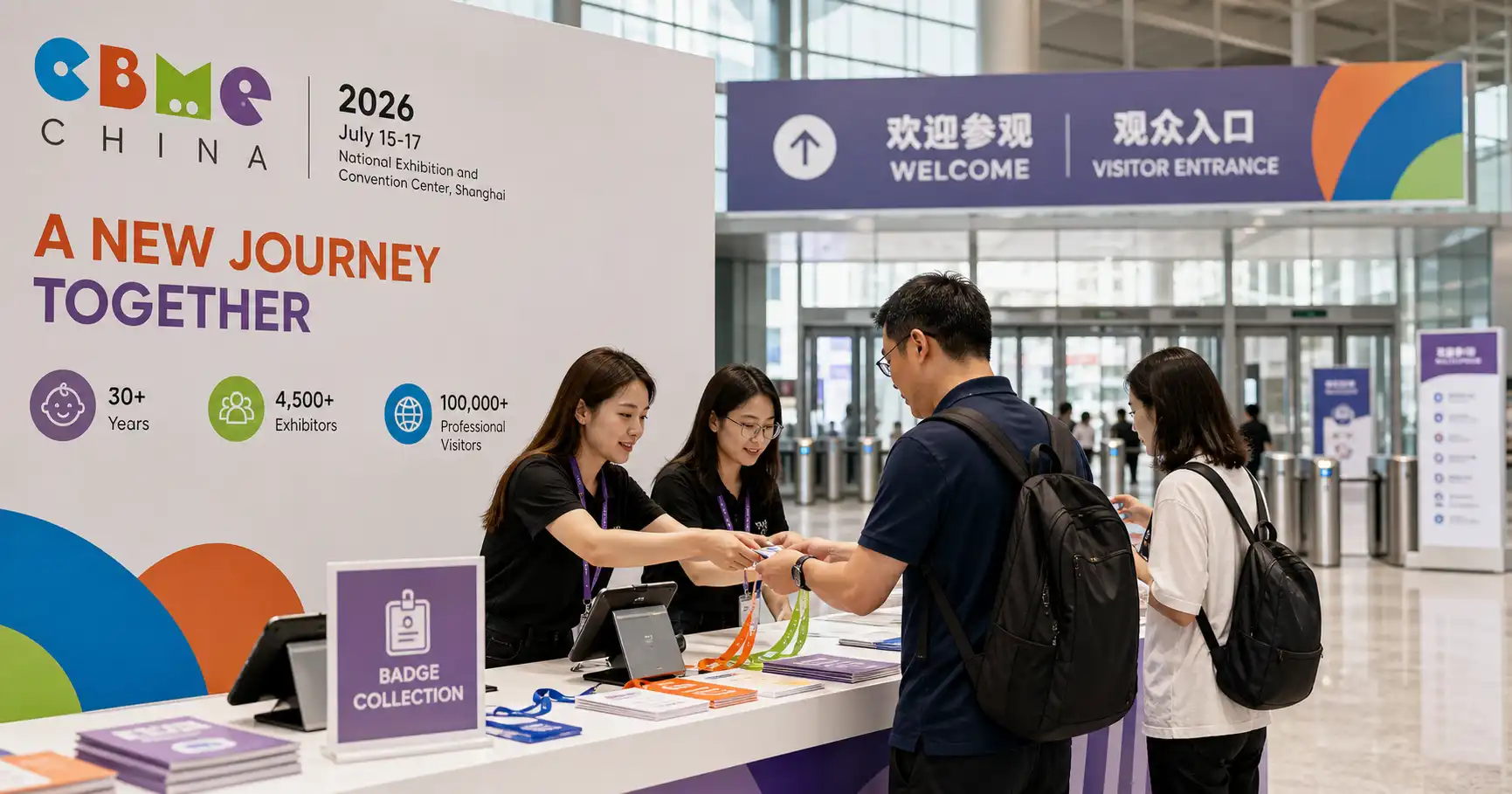
CBME China 2026 (July 15–17, NECC Shanghai) brings together brands, manufacturers, and white-label suppliers across the full baby and maternity supply chain. In three days you can compare multiple OEM stroller candidates or ODM diaper partners side by side—before you pay for tooling or commit to a first PO.
CBME China 2026
- Dates: July 15–17, 2026
- Venue: NECC (National Exhibition and Convention Center), Shanghai
- Positioning: One-stop sourcing platform for brands, manufacturers, and white-label baby and maternity products
- Pre-show tool: Download the monthly Product Spotlight to shortlist OEM/ODM exhibitors before the show
- Matchmaking: Hosted Buyer Program — pre-scheduled 1-on-1 supplier meetings
Why Trade Shows Beat Email for OEM/ODM Evaluation
OEM and ODM partnerships fail most often because buyers choose on price slides alone. A trade show meeting lets you test what documents cannot show: whether the supplier understands your category, can explain their R&D process, and responds clearly when you push on MOQ, customization limits, and quality checkpoints.
At CBME China, you can meet manufacturers across strollers, feeding, skincare, apparel, toys, and packaging in one trip. That density matters when you are comparing five OEM candidates in the same category—you see sample quality, booth professionalism, and sales-engineering depth side by side.
Before scoring any supplier, establish your compliance baseline using our guide on baby product compliance and quality checks before sourcing in China. For the full sourcing workflow, see our complete sourcing guide for global buyers.
OEM vs ODM: What to Evaluate Differently
Not every supplier meeting follows the same script. Score OEM and ODM partners on different proof points.
| Model | Supplier Provides | What to Verify at the Booth |
|---|---|---|
| OEM | Manufacturing to your design/spec | Tooling ownership, engineering team, pilot-run process, change-control workflow |
| ODM | Existing design you customize | IP ownership, modification limits, exclusivity options, speed to market |
| White label | Finished product with your branding | MOQ for label/packaging only, certification transfer, regional market restrictions |
OEM red flags at the booth
- Vague answers on tooling lead time
- No engineer or product manager available to join the conversation
- Cannot show a similar category in their export portfolio
ODM red flags at the booth
- Cannot clarify who owns the mould or design files
- Refuses to discuss market exclusivity options
- Sample quality inconsistent with catalogue photos
For model definitions and partnership structures, read our Baby Products OEM/ODM in China guide. Retailers building own-brand lines should also review private label baby products in China: what retailers should know.
The 7-Point Supplier Scorecard
Use this OEM ODM supplier checklist at every meeting. Rate each criterion 1 (weak) to 5 (strong). Suppliers scoring below 28/35 need more due diligence before samples.
| # | Criterion | What to Ask | Score 1–5 |
|---|---|---|---|
| 1 | Capability fit | In-house production? R&D staff? Similar export markets? | |
| 2 | MOQ & pricing tiers | MOQ per SKU? Price breaks at volume steps? Payment terms? | |
| 3 | Sample process | Sample cost, timeline, deductibility against first PO? | |
| 4 | Production lead time | Standard lead time after PO? Peak capacity? Subcontractors? | |
| 5 | Packaging & private label | Custom packaging MOQ? Label support for your market? | |
| 6 | QC & compliance | QMS certification? Audit reports? Pre-shipment inspection? | |
| 7 | Follow-up process | Dedicated contact? Response SLA? Post-show factory visit? |
Scoring guide
- 30–35: Priority follow-up—request samples and audit documents within one week
- 24–29: Secondary list—compare with 2–3 alternatives before committing
- Below 24: Archive contact unless major gaps are closed in writing

How to Run a 20-Minute Booth Evaluation
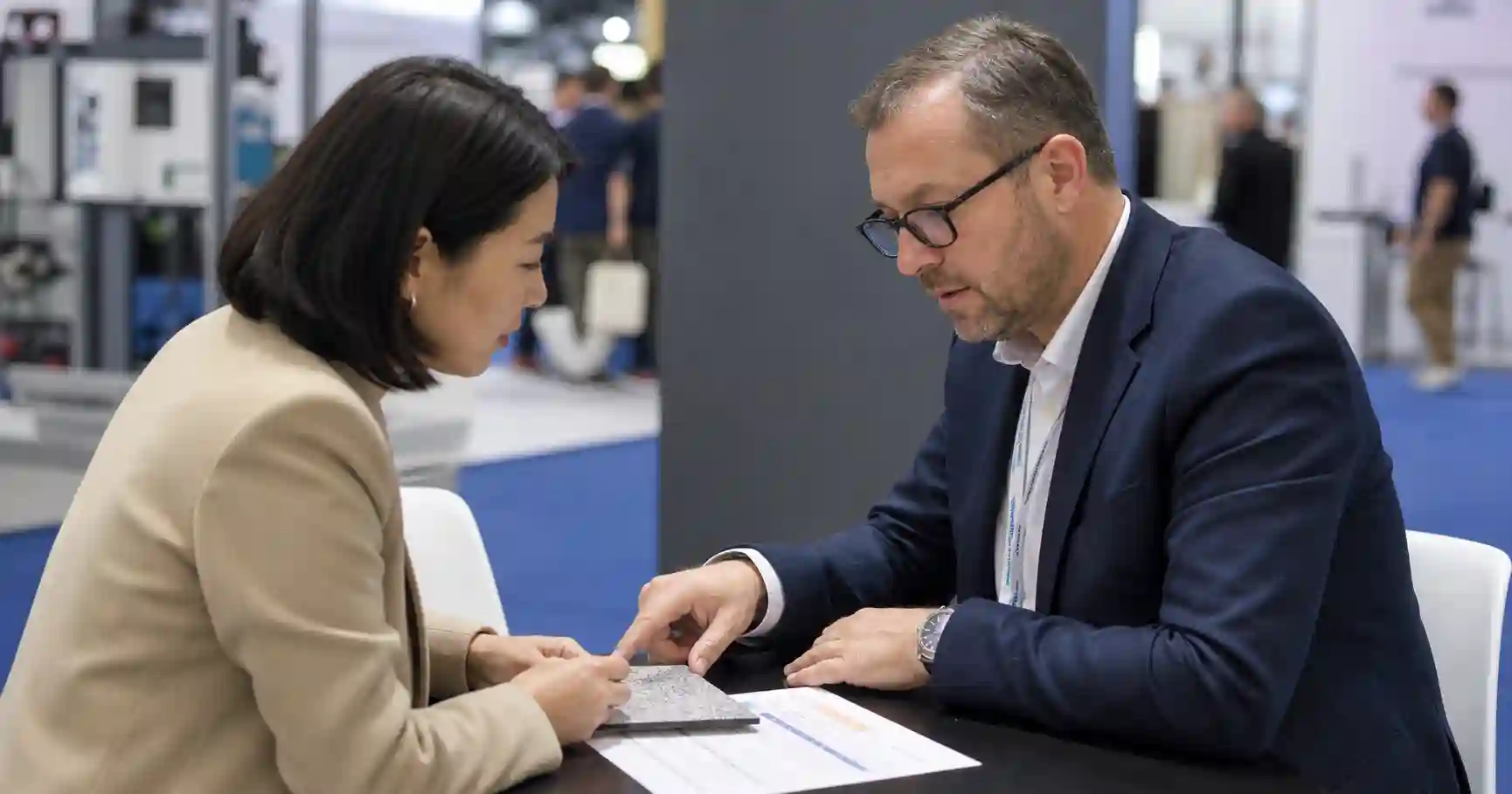
Structured time keeps you consistent across dozens of meetings.
Minutes 0–3 — Qualify fast
- Confirm they are a factory or trading company
- Ask primary export markets and category focus
- If misfit, thank them and move on
Minutes 3–10 — Capability & customization
- Show your target spec or reference product
- Ask OEM tooling timeline or ODM modification scope
- Request to see a physical sample similar to your brief
Minutes 10–15 — Commercial terms
- MOQ, sample cost, lead time, incoterms
- Note whether answers are specific or evasive
Minutes 15–18 — QC & compliance
- Ask for certificate numbers and latest audit date
- Cross-check against your compliance checklist
Minutes 18–20 — Close & next step
- Photograph booth card, sample, and product codes (with permission)
- Agree on follow-up: sample quote, factory video, or audit pack by date
- Enter scorecard notes immediately—memory fades within hours
Pair this workflow with how buyers can shortlist suppliers before the show to arrive with a ranked meeting list.
Use CBME China 2026 to Evaluate Suppliers Efficiently
CBME China positions itself as a one-stop sourcing platform for brands, manufacturers, and white-label goods. Two official tools help you evaluate OEM/ODM partners before and during the event.
Product Spotlight
Each month, CBME curates market-ready products from the exhibitor lineup. Before the show you can identify priority products, research featured suppliers, schedule meetings through the Hosted Buyer Program Matchmaking Service, and prepare questions on customization, pricing tiers, lead times, and partnership terms.
During the exhibition, use your curated list to visit priority booths first and compare alternatives from an informed position. After the show, follow up with priority suppliers using insights from spotlight research and booth visits.
Hosted Buyer Program
The Hosted Buyer Program offers pre-scheduled 1-on-1 meetings, a customized supplier shortlist, post-event follow-up, and year-round matchmaking. Qualifying buyers typically have decision-making authority, purchasing needs within 6–18 months, and commit to onsite matchmaking with at least six exhibitors.
Application deadline: 30 May 2026 (via the registration system). General visitor registration still provides floor access to run your scorecard across the halls if you miss the hosted buyer window.
Learn more about the event in our guide: Why CBME China 2026 is a must-visit baby and maternity expo in Asia.
Frequently Asked Questions
Should I evaluate OEM or ODM suppliers first?
Start with the model that matches your timeline. If you need speed to market with moderate customization, shortlist ODM suppliers first. If you have proprietary designs or strict spec control, prioritize OEM factories with visible R&D and tooling capability.
How many suppliers should I score at a trade show?
Most buyers can run meaningful 20-minute evaluations with 8–12 suppliers over three days if meetings are pre-scheduled. Quality of notes matters more than booth count—five well-scored meetings beat twenty rushed conversations.
Can I evaluate suppliers without physical samples on the floor?
Partially. You can score communication, capability fit, and commercial clarity without samples, but always request a sample before any PO. Use the scorecard to decide who earns a sample request—not who gets an order.
Does exhibiting at CBME China mean a supplier is verified?
No. CBME China is a trade exhibition. Exhibiting does not imply certification, factory audit, or regulatory approval by the organizers. Buyers must independently verify every claim.
What score should trigger a post-show factory visit?
Treat 30 or above on the scorecard plus clean compliance documentation as a factory-visit candidate. Scores in the mid-20s may still warrant a visit if the category is scarce or the sample quality is exceptional.
Official Sources
Related Articles
- How to Source Baby Products from China: A Guide for Global Buyers (Day 4 — Sourcing Cluster)
- Baby Product Compliance and Quality Checks Before Sourcing in China (Day 28 — Compliance)
- Baby Products OEM/ODM in China: Private Label and White Label Guide (Day 6 — OEM/ODM Cluster)
- CBME China 2026 Product Preview: How Buyers Can Shortlist Suppliers (Day 9 — Pre-show)
Published by CBME China Editorial Team
Last reviewed: July 4, 2026 | First published: July 4, 2026 | Publisher: CBME China, a division of Informa
Ready to evaluate OEM and ODM suppliers in person? CBME China 2026 runs July 15–17 at NECC Shanghai. Download the Product Spotlight, bring your scorecard, and meet manufacturers face to face before you commit to tooling or a first PO. Register to Visit CBME China 2026