Kids Sneakers and Children’s Footwear Trends: What Buyers Should Source in China
This guide covers the key children’s footwear trends shaping 2026, how to identify and evaluate suppliers, and what to expect when sourcing at CBME China. Whether you’re targeting casual sneakers, outdoor athletic shoes, or licensed children’s apparel, China’s manufacturing ecosystem offers the scale, trend responsiveness, and certifications that global retailers need.
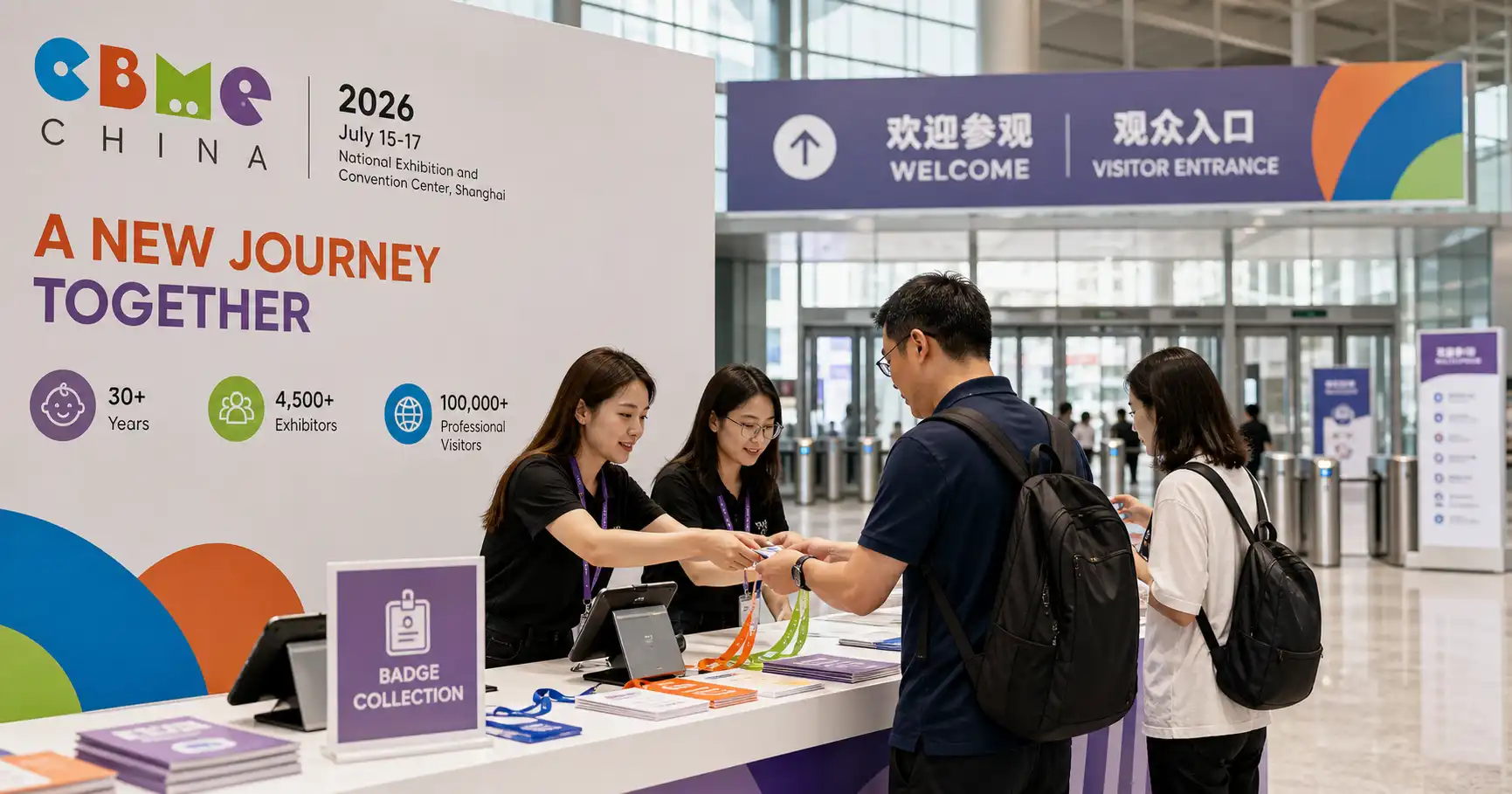
CBME China 2026
- Date: July 15–17, 2026
- Venue: National Exhibition and Convention Center (NECC), Shanghai
- Category: Children’s shoes, kidswear, baby apparel, licensed children’s products
- Admission: RMB 100 (waived with pre-registration)
- Register: Register to Visit
Why China’s Children’s Footwear Market Is Growing
Government Support Boosts Family Spending
China launched a national childcare subsidy in 2025, offering RMB 3,600 per year for each child. This direct cash support increases household spending capacity on children’s clothing and shoes — a measurable uplift that suppliers and retailers are already reporting in sales data.
Douyin Has Become a Children’s Product Powerhouse
The platform saw significant growth in the maternity and baby sector in 2024, with children’s apparel and footwear emerging as top-performing subcategories. Short-video discovery is compressing purchase cycles: where buyers previously planned six months ahead, Douyin trend cycles now demand three-month response windows from suppliers.
Demographic Breadth Is Expanding
China’s baby and maternity market is seeing brands expand beyond the 0-3 infant category into school-age, teen, and full-family demographics. This creates new sizing markets and demand profiles that global buyers can target — a trend confirmed across CBME exhibitor registrations and industry data.
Sports Licensing Cycles Drive Kids Sneaker Demand
Major sports licensing cycles — including international football events and basketball — drive demand for children’s athletic footwear, sportswear, and licensed apparel across all price tiers. The 2026 cycle is already influencing supplier roadmaps and buyer planning timelines, with children’s sneaker and athletic shoe demand particularly strong heading into the second half of 2026.

CBME China 2026: Your Children’s Footwear Sourcing Destination
15.3% of CBME China’s exhibitor categories fall under Baby & Kids Wear, Shoes and Accessories — the third-largest category block after mother and baby care (35.2%) and food/nutrition (21%). The 2026 show brings together 4,500+ brands from 30+ countries, with children’s footwear concentrated in Hall 5.1, home to the Fashion Town and Kids Wear FAST Zone sub-zones. Children’s shoe subcategories span the full 0–16 age range: first-walkers, dress shoes, canvas shoes, Mary Janes, kids’ sneakers, boots, dance shoes, and house slippers.
“China’s children’s footwear market is undergoing a fundamental transformation — from mass production to high-quality, flexible manufacturing,” according to Zhongyan Puhua (中研普華), China’s leading market research institute. “Brands with flexible production lines capable of sub-100 pair minimums will capture the next wave of private-label orders.”
The CBME Children’s Wear Expo runs concurrently within CBME China 2026, alongside CBME Toy & Education Expo, CBME Food & Health Expo, CBME Supply Chain Expo, and Licensing Expo China.
Buyers targeting children’s footwear gain access to:
- Baby shoes and children’s footwear manufacturers
- Kidswear brands and OEM suppliers
- Sports footwear and outdoor shoes producers
- Materials suppliers (soles, uppers, insoles, eco-materials)
- Licensed children’s apparel producers
Explore CBME China Product Spotlight to shortlist children’s shoe and kidswear suppliers before the show.
Children’s Footwear and Kidswear Categories at CBME China 2026
CBME China groups children’s footwear and apparel into distinct subcategories. Understanding these helps buyers shortlist suppliers efficiently.
Footwear
- Baby first shoes and soft-soled shoes (0–18 months)
- Children’s casual shoes (toddlers to size 30)
- Kids’ athletic and running shoes
- Outdoor and hiking footwear
- School shoes and dress shoes
- Custom/OEM children’s footwear
Kidswear
- Baby and infant apparel (bodysuits, rompers)
- Children’s casual wear (2–12 years)
- School uniforms
- Sportswear and activewear
- Seasonal collections (spring/summer, autumn/winter)
Top Trends Shaping Children’s Footwear in 2026

1. Kids Sneakers and Comfort-First Design for Developing Feet
Parents increasingly prioritize anatomical foot development, driving demand for wide-toe-box shoes, flexible soles, and breathable materials. Children’s sneaker styles — including low-top canvas, slip-on, and athletic-inspired designs — dominate both casual and functional categories. Suppliers with R&D investment in foot-health design are commanding premium positioning and longer-term buyer relationships.
2. Sustainability in Materials
Organic cotton, recycled EVA soles, water-based adhesives, and biodegradable packaging are moving from niche to mainstream in children’s footwear. Suppliers offering verified sustainable materials — backed by GOTS, OEKO-TEX, or equivalent certifications — are commanding higher order values and preferred buyer status.
3. Outdoor and Active Footwear
The “outdoor kid” movement in China is driving demand for lightweight hiking shoes, water-resistant casual footwear, and sport-specific shoes for children. Outdoor footwear suppliers with durable, lightweight constructions are seeing strong export growth, particularly to markets in Southeast Asia, Europe, and North America.
4. Licensed and Character-Driven Apparel
Sports licensing, entertainment IP partnerships, and character collaborations remain top growth drivers in children’s footwear and apparel. Children’s sneakers featuring sports-inspired designs — from team colours to iconic athletic silhouettes — command premium positioning in both wholesale and retail channels. Buyers sourcing licensed production need to verify supplier IP credentials and licensing chain documentation before placing orders.
China vs. Vietnam vs. India: Where Should You Source Children’s Footwear?
For global buyers evaluating their 2026 sourcing strategy, understanding how China’s children’s footwear ecosystem compares to alternatives is essential.
China vs. Vietnam vs. India: Quick Comparison
| Factor | China | Vietnam | India |
|---|---|---|---|
| Annual Footwear Export Value (2024) | $49.6 billion | $12.4 billion | Emerging (37M pairs to U.S. in 2025) |
| Manufacturing Wage (per hour) | ~$6.50 | ~$2.99 (~1/3 of China) | 30–50% lower than China |
| Supply Chain Integration | Fully integrated — local sourcing for all components | Relies on imported materials, often from China | Developing; less specialized for children’s footwear |
| Small-Batch MOQ Flexibility | As low as 30–100 pairs per style | 300–500 pairs (leather); 500–1,200 pairs (sneakers) | 100–500 pairs |
| Complex/Custom Footwear Capability | High — R&D labs, last development, mold precision | Moderate — standard production strength | Low — early stages for technical children’s footwear |
| Lead Time | Fast — complete local supply chain | Slower — imported components add time | Moderate |
| U.S. Import Volume (2025) | 964 million pairs | 574 million pairs | 37 million pairs (record high) |
Key takeaway for children’s footwear buyers: According to Matt Priest, CEO of the Footwear Distributors and Retailers Association (FDRA): “Some brands are moving out of China due to tariff fears, but China remains the world’s most capable footwear supplier — especially for complex, high-value children’s footwear.” Vietnam excels at high-volume, standardized production, while India is gaining ground on cost for basic children’s footwear. For licensed children’s sneakers, custom/OEM development, and flexible small-batch orders, China remains the dominant choice.
Per Heva Shoe Inc., a specialist footwear sourcing consultancy: “Vietnam’s supply chain is growing, but for many components — especially technical fabrics, specialized foams, and high-quality leather — Vietnamese factories still have to import from China. This adds time, cost, and complexity that buyers need to factor into total landed cost calculations.”
How to Source Children’s Shoes and Kidswear at CBME China 2026
Before the Show
Use CBME’s Product Spotlight to identify exhibitors in the children’s footwear and kidswear category before arrival. Schedule meetings in advance with suppliers who match your product requirements. Define your target price range, required certifications, and minimum order quantities.
At the Show
Dedicated halls for baby & kids wear, shoes and accessories at NECC Shanghai make focused navigation efficient. Collect business cards, request samples, and confirm certifications on-site. Use a supplier evaluation scorecard to compare options systematically.

Questions to Ask Children’s Footwear Suppliers
- Do you offer OEM or ODM services for children’s shoes?
- What are your minimum order quantities by style?
- Can you provide OEKO-TEX or GOTS-certified materials?
- Do you hold sports or entertainment licensing agreements?
- What is your lead time for sample development and bulk production?
- Do you have inspection or QC protocols for children’s product safety?
Frequently Asked Questions
What is the typical MOQ for children’s shoes from Chinese suppliers?
MOQ varies significantly by product type and manufacturer capability. Flexible manufacturers in China now offer MOQs as low as 30–100 pairs per style for basic designs, supported by 3D-printed prototyping and modular tooling. Standard athletic footwear and sneakers typically require 500–1,200 pairs per style per color, while complex custom midsoles or licensed sports designs may require 1,000+ pair minimums. According to IndexBox, domestic manufacturing capacity exceeds 200 million pairs annually, with private-label products accounting for roughly 35–45% of domestic volume — indicating strong OEM/ODM capability across all volume tiers.
Do children’s shoe manufacturers in China meet international safety standards?
Many established children’s footwear suppliers hold CE marking (EU), CPSIA compliance (US), and OEKO-TEX Standard 100 certifications. Always request documentation and verify that certifications cover your specific target market. CBME China exhibitors in the footwear category frequently display certifications on-site — use this to cross-check claims.
How do I verify a supplier’s quality for children’s products?
Request physical samples before committing to bulk orders. Evaluate stitching consistency, sole attachment strength, material hand-feel, and packaging quality. Ask for references from other buyers in your target market and, if possible, arrange a third-party pre-shipment inspection. Building a supplier scorecard before the show helps compare options objectively.
What trends are Chinese children’s shoe manufacturers investing in for 2026?
Based on CBME exhibitor registrations and industry signals, manufacturers are prioritizing comfort ergonomics (wide-fit designs, flexible soles), eco-materials (recycled EVA, organic cotton linings), outdoor-active footwear, and custom/OEM development for private label buyers. Licensed sports footwear production — including children’s sneakers with athletic styling — remains a high-growth segment heading into 2026.
Can I source sustainable children’s footwear at CBME China?
Yes. Several CBME exhibitors specialize in sustainable children’s footwear, offering recycled material options, water-based adhesives, and biodegradable packaging. Verify certifications on-site and request material spec sheets. The CBME Supply Chain Expo also features materials suppliers who support sustainable children’s footwear production.
Official Sources
- About CBME China – official event profile, dates, venue, exhibit categories
- Why Visit CBME China – category breakdown, registration details
- CBME Industry Insights – market trends, consumer data
- CBME Children’s Wear Expo – footwear subcategories (0–16Y)
- 中研普華:2026中國童鞋市場宏觀分析 – 2026童鞋市場趨勢、柔性產線、國貨品牌
- IndexBox: Children’s Footwear Market China – domestic manufacturing capacity, private-label share, MOQ data
- Jinhua Shoes: China vs Vietnam 2025 – supply chain comparison, MOQ, lead times
- Heva Shoe: China vs Vietnam Footwear 2025 – export data, wage comparison, customization capability
- WWD: 2025 Top Ten Shoe Production Rankings (U.S. Imports) – FDRA/USITC import data, Matt Priest quotes
- Small World India: India Sourcing 2026 – India MOQ, compliance, cost advantages
Publisher and editorial information
All editorial content published on CBME China is reviewed by our in-house editorial team to ensure accuracy, objectivity, and relevance to global buyers and suppliers in the baby, children, and maternity product industry. If you identify any inaccuracies, outdated information, or have suggestions for improvement, please contact our editorial team.
Last reviewed: June 13, 2026 | Published: June 12, 2026 | Publisher: CBME China, a division of Informa
Looking for children’s shoe suppliers in China?
Register for CBME China 2026 to meet verified children’s footwear manufacturers, kidswear suppliers, and licensed apparel producers — all in three days at NECC Shanghai.