The sustainable baby products market in China is experiencing rapid growth as millennial and Gen Z parents increasingly prioritize eco-friendly materials, low-waste packaging, and ethically sourced ingredients. China’s maternity and baby market is shifting from volume-driven growth to value-driven premiumization — with per-child spending reaching RMB 48,000 (approximately US$7,103) in 2025 and projected to grow at 6–7% annually through 2030. Within this premiumization wave, sustainability has become a key differentiator. International buyers sourcing from China can access a mature ecosystem of certified manufacturers offering biodegradable materials, plastic-free packaging, and carbon-neutral production processes.
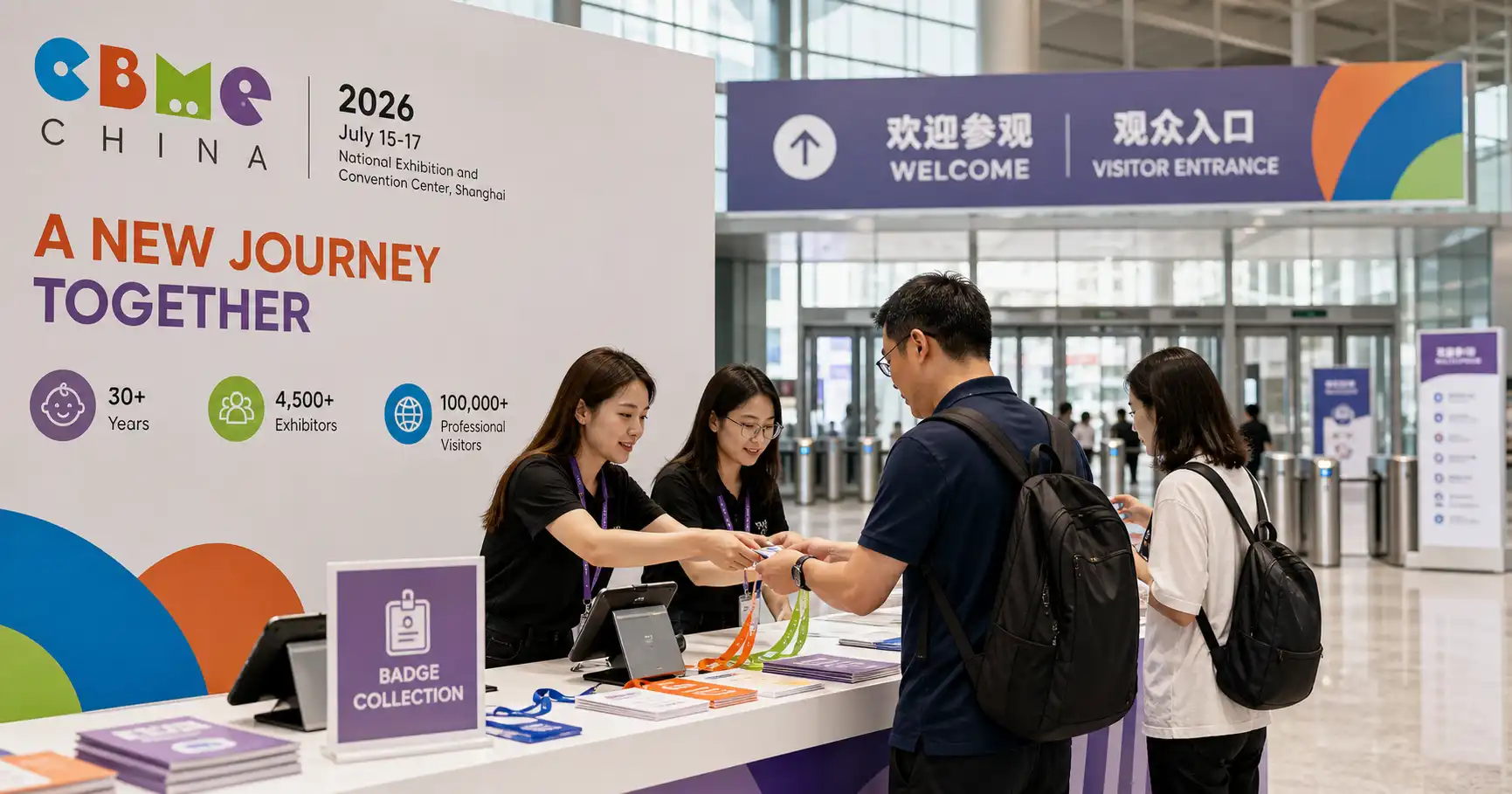
CBME China 2026 at a Glance
- Date: July 15–17, 2026
- Venue: National Exhibition and Convention Center (NECC), Shanghai
- Scale: 4,500+ brands | 3,200+ exhibitors | 100,000+ trade buyers | 300,000 m²
- Concurrent events: CBME Toy & Education Expo | Licensing Expo China (LEC) | CBME Children’s Wear Expo | CBME Food & Health Expo | CBME Supply Chain Expo
- Supply Chain Expo focus: Packaging materials, washing and care OEM, paper hygiene OEM, food ingredients
- Admission: RMB 100, waived with pre-registration
- Registration: Register online at the CBME China official site
Why Sustainable Baby Products Matter for International Buyers
China produces some of the world’s most innovative sustainable baby products, driven by both domestic regulatory pressure and global export demand. The eco-friendly and biodegradable segment — currently representing 5–8% of certain categories — is forecast to be the fastest-growing sector through 2035. This growth reflects a fundamental shift in parenting philosophy: modern Chinese parents, particularly in Tier 1 and Tier 2 cities, view sustainability not as a luxury but as a baseline requirement for products touching their children.
For international buyers, sourcing sustainable baby products from China offers three strategic advantages:
- Material capability — China-based manufacturers have developed advanced capabilities in sustainable materials, particularly bamboo fiber, organic cotton, and plant-based alternatives that meet international certifications.
- Cost competitiveness — Chinese factories often provide cost-competitive pricing for sustainable production that Western manufacturers cannot match.
- Flexible volumes — The supply chain infrastructure in China supports both small-batch custom orders and large-scale production, allowing brands to test sustainable lines before committing to volume.
For innovation-focused buyers, explore our smart parenting tech guide to see how technology and sustainability intersect in China’s baby product market.

Key Sustainable Materials in Baby Products from China
The sustainable baby product stack at CBME China 2026 spans three major material categories:
Bamboo-Based Products
Bamboo has emerged as one of China’s strongest sustainable material exports in the baby category. Chinese manufacturers have perfected bamboo fiber processing for applications including:
- Bamboo fiber diapers — Soft, breathable, and partially biodegradable (reducing plastic waste by approximately 25–30% compared to traditional disposables)
- Bamboo wipes and washcloths — Naturally antibacterial, biodegradable within weeks under proper conditions
- Bamboo feeding accessories — Bowls, plates, and utensils that are durable and compostable
Bamboo’s rapid renewability — it can be harvested in 3–5 years compared to decades for hardwood — makes it a cornerstone of China’s sustainable baby product manufacturing. Look for FSC (Forest Stewardship Council) certification when evaluating bamboo suppliers.
Organic and Natural Fibers
Organic cotton remains the gold standard for sustainable baby textiles in China. Leading manufacturers produce:
- Organic cotton onesies, sleepwear, and bedding certified to international standards
- GOTS (Global Organic Textile Standard) certified fabrics for apparel and nursery items
- OEKO-TEX certified products ensuring no harmful chemicals in the finished goods
The premium segment — certified organic and design-differentiated textiles — is capturing an increasing share of value growth, with projections suggesting 45–50% of retail value in this category could come from certified organic products by 2035.
Biodegradable and Plant-Based Materials
Innovation in biodegradable materials extends beyond bamboo:
- Plant-based diaper cores using wood pulp from certified forests
- Corn starch-based packaging materials
- Algae-derived ingredients in baby skincare
- Marine-biodegradable wet wipes that decompose within 28 days under specific conditions
When evaluating biodegradable claims, ask suppliers for third-party testing documentation such as ISO 14855 certification for biodegradation testing.

For related sustainable materials in baby care, explore our guide to baby skincare and hygiene products in China (Day 18).
Sustainable Packaging: From Plastic to Planet-Friendly
Packaging sustainability has become a critical concern for international buyers, particularly following global regulatory trends restricting single-use plastics. Chinese manufacturers have responded with comprehensive sustainable packaging solutions.
Plastic-Free Packaging Options
- Kraft paper packaging — FSC-certified kraft materials for boxes, sleeves, and inserts
- Plant-based polybags — Corn starch or sugarcane-derived alternatives to traditional plastic
- Home-compostable packaging — Materials that break down in domestic compost conditions within 24 months
- Recycled cardboard — Post-consumer recycled materials reducing virgin resource consumption
Carbon-Neutral Production Claims
Some manufacturers now offer carbon-neutral production certifications, verified through standards such as PAS 2050:2011. When suppliers make carbon footprint claims, request documentation including:
- Third-party verification certificates
- Production carbon accounting methodology
- Offset mechanisms if applicable
Eco-Label Design Considerations
For brands developing private label or custom sustainable lines, discuss:
- Minimalist packaging designs that reduce material usage
- Ink choices (soy-based, water-based) for printing
- Dual-language labeling that meets both Chinese GB standards and international requirements
- Packaging size optimization for shipping efficiency
Explore CBME China’s Product Spotlight for pre-show exhibitor highlights featuring sustainable packaging innovations. For more on sustainable hygiene products, see our diaper, wipes and baby hygiene manufacturers guide.
How CBME China 2026 Supports Sustainable Sourcing
CBME China officially recognizes sustainability as a key innovation theme for 2026. The event’s tagline “全 (Comprehensive), 效 (Efficient), 新 (Innovative), 趋 (Trend-driven)” positions sustainable product development as a core trend shaping the industry.

Dedicated Supply Chain Expo
The concurrent CBME Supply Chain Expo focuses on:
- Packaging materials and equipment
- Washing and care OEM services
- Paper hygiene OEM
- Food ingredients and additives
This dedicated supply chain focus allows buyers to evaluate sustainable packaging and ingredient suppliers separately from finished product manufacturers — streamlining the sourcing process for brands developing eco-conscious product lines.
Trend Zones and Innovation Areas
CBME China features dedicated trend zones where exhibitors showcase sustainable innovations. These areas provide first-hand observation of material innovations before market launch, comparison of sustainable features across multiple suppliers, and direct access to product development teams who can explain technical specifications.
Precision Matchmaking
CBME China’s matchmaking services allow pre-registered buyers to request meetings with suppliers specializing in sustainable materials, organic certifications, or plastic-free packaging. This targeted approach maximizes efficient use of time at the show.
Questions to Ask Sustainable Baby Product Suppliers
When evaluating suppliers at CBME China 2026, consider asking the following questions:
- Certification verification: “Can you provide copies of your FSC, GOTS, OEKO-TEX, or other relevant certifications?” Request original certificates and verify expiry dates.
- Material sourcing: “Where do your bamboo/organic cotton/raw materials originate?” Sustainable products require traceable supply chains.
- Testing and compliance: “What testing do you conduct on sustainable claims?” Ask for biodegradation test reports, skin sensitivity testing, and heavy metal content verification.
- MOQ and customization: “What are your minimum order quantities for sustainable product lines?” Some eco-friendly options require higher MOQs due to certification costs or specialized materials.
- Packaging options: “Do you offer plastic-free or compostable packaging?” Discuss the cost differential and lead time implications.
- Production capacity: “What percentage of your production is sustainable-certified versus conventional?” This indicates their commitment level and capability scale.
- Sample process: “How can I receive samples for market testing?” Always verify sustainable claims with physical product testing.
Frequently Asked Questions
What certifications should I look for when sourcing sustainable baby products from China?
Key certifications include FSC (Forest Stewardship Council) for wood and bamboo materials, GOTS (Global Organic Textile Standard) for organic textiles, OEKO-TEX for textile safety, ISO 14855 for biodegradation testing, and relevant FDA or EU compliance certifications depending on your target market. Always verify certificates through official databases rather than accepting copies alone.
Are bamboo baby products truly sustainable?
Bamboo can be highly sustainable when sourced from responsibly managed forests and processed without harmful chemicals. Look for mechanically processed bamboo fiber (rather than chemically processed) and FSC certification. Chinese manufacturers have developed closed-loop processing systems that minimize chemical usage, making bamboo a genuinely eco-friendly option for baby products.
What is the cost premium for sustainable baby products?
Sustainable baby products typically carry a 15–30% cost premium over conventional alternatives, reflecting higher material costs, certification expenses, and more rigorous quality control. However, premium positioning in markets often allows brands to capture corresponding price increases, making sustainability both an ethical and commercial opportunity.
How do I verify greenwashing claims from Chinese suppliers?
Request third-party verification for any environmental claims. Legitimate manufacturers will provide testing reports from accredited laboratories, certification copies from recognized bodies, and transparent answers about their sustainability practices. Be cautious of vague claims like “eco-friendly” without supporting documentation.
Can I get small batches of sustainable baby products for testing?
Many Chinese manufacturers offer reduced MOQs (minimum order quantities) for sample runs, particularly for established brands conducting market tests. Discuss your testing objectives upfront and ask about sample pricing, customization options, and the process for scaling to production quantities.
When is the best time to source sustainable baby products?
Pre-show outreach through CBME China’s matchmaking service allows you to identify sustainable suppliers before arriving in Shanghai. Download the Product Spotlight (monthly pre-show publication) to research exhibitor categories and flag potential sustainable suppliers. This preparation transforms a three-day show into a focused sourcing mission.
Official Sources
- CBME China About — Event dates, venue, exhibition profile, 25 editions since 2001, concurrent events including Supply Chain Expo
- CBME China Why Visit — 4,500+ brands, 3,200+ exhibitors, 100,000+ trade buyers, admission details
- CBME China Product Spotlight — Monthly previews of exhibiting manufacturers
Publisher and Editorial Information
Published by CBME China Editorial Team, a division of Informa
Questions about this article? Contact the CBME China editorial team
Last reviewed: July 6, 2026 | First published: July 6, 2026 | Publisher: CBME China, a division of Informa
Ready to find sustainable baby product suppliers at CBME China 2026?
Register to visit CBME China 2026 (July 15–17, NECC Shanghai) — admission is RMB 100 and waived with pre-registration. Browse the monthly CBME China Product Spotlight before you arrive to shortlist sustainable material suppliers by category, and attend the CBME Supply Chain Expo for dedicated packaging and ingredient sourcing opportunities.