Character Licensing Trends in Toys, Kidswear and Baby Products: How Global Buyers Source IP-Aware Chinese Manufacturers in 2026
The 2026 character-licensing demand spike is being pulled by three entertainment-IP catalysts: a live-action family entertainment reboot that crossed USD 1 billion worldwide, an animated franchise sequel released in late 2025 with a global licensed-merchandise push, and a video-game IP revival launched alongside the next console cycle. For a global brand or retailer, the practical question is no longer whether to add a character-licensed line — it is how to source it from Chinese manufacturers without infringing the IP. Per the Licensing International 2026 Global Licensing Industry Study (source: AP News / Licensing International), the Character/Entertainment segment grew 8% YoY to USD 161.8 billion in 2025 — the only major licensing segment growing materially faster than global retail. Anime, video games, comics and social-media-driven characters now account for 34% of that segment, narrowly ahead of feature-film and TV properties at 33%. For buyers evaluating where to place a 2026/2027 character-licensed PO, that mix rule plus China’s mature, IP-aware manufacturing base are the two structural signals that define the sourcing decision.
CBME China 2026 + Licensing Expo Shanghai (LEC) at a Glance
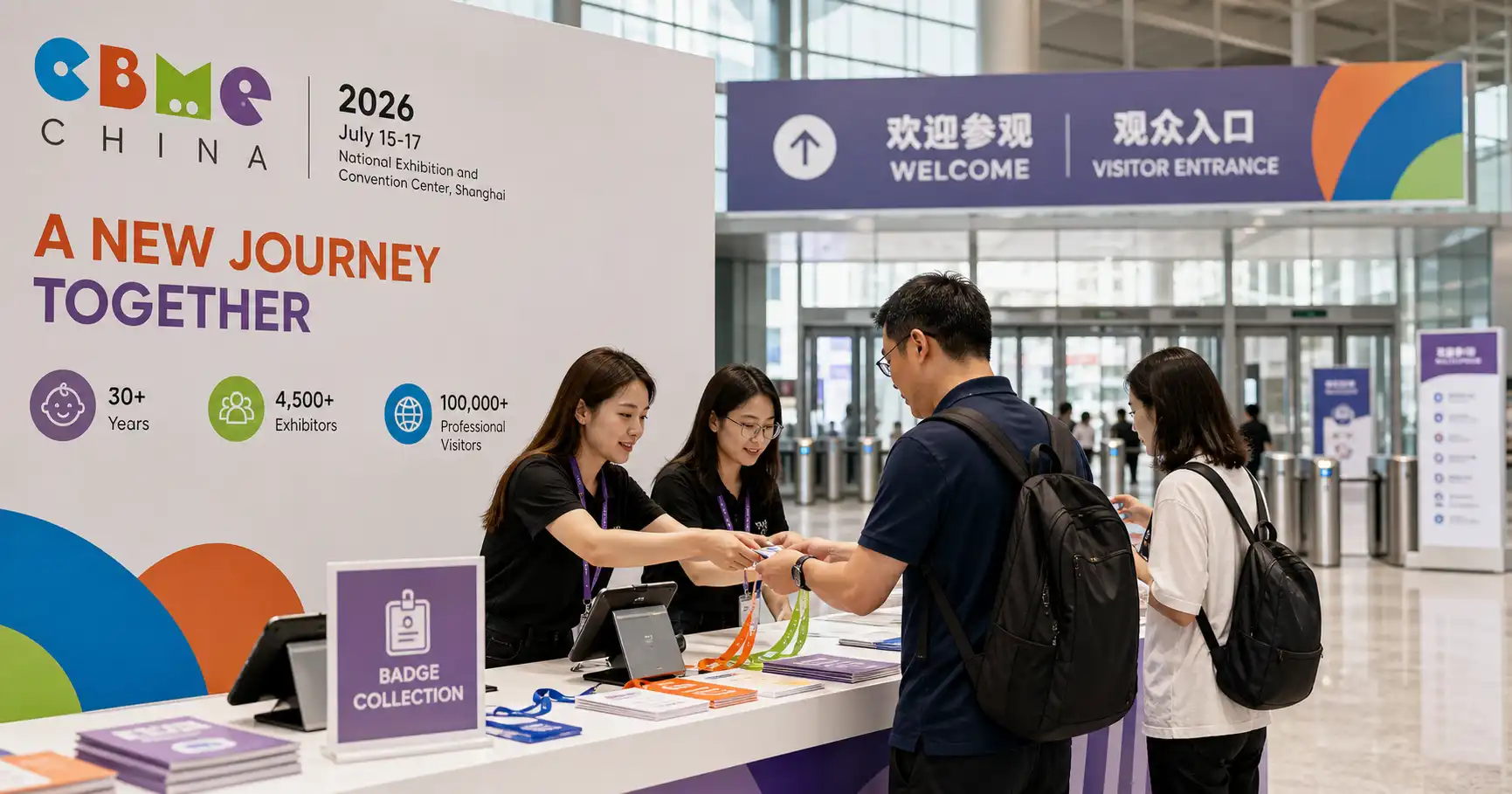
- Event: CBME China 2026 — International Maternity, Baby & Child Expo
- Dates: July 15–17, 2026
- Venue: National Exhibition and Convention Center (NECC), 333 Songze Avenue, Qingpu District, Shanghai 201102
- Brands exhibiting: 4,500+
- Trade buyers: 100,000+
- Exhibition space: Nearly 300,000 m²
- CBME admission: RMB 100, waived with pre-registration
- Concurrent for IP buyers: Licensing Expo Shanghai (LEC) — Halls 3.1 & 4.1
- LEC dates & hours: July 15 (09:00–17:00) · July 16 (09:00–17:00) · July 17 (09:00–15:00)
- LEC entry: FREE (no one under 18 admitted)
- LEC organizer / official partner: Informa Markets / Licensing International (the global licensing trade body founded 1985)
- Register: Register to Visit — Free
The 2026 Character-Licensing Demand Map
Three entertainment-IP catalysts are pulling global demand for character-licensed kids’ products into a single 2026/2027 buying window. Each one matters differently for a Chinese-sourcing decision.
1. The live-action family entertainment reboot. A high-profile live-action re-imagining of a long-running family animated franchise released in 2025 crossed USD 1 billion worldwide, pulled existing fans back to retail, and introduced the property to a new generation of parents. Every major live-action reboot creates a 12–24 month spike in character plush, dress-up, roleplay and baby-gear licensing requests — and a corresponding surge of inquiries at Chinese OEM/ODM factories that hold licenses for that IP.
2. The animated franchise sequel. A flagship animated franchise sequel released across 2024–2026 has driven merchandise-licensee demand for soft plush, kids’ room décor and character-themed apparel, particularly in the U.S. and EU. Buyers looking for late-2026 or 2027 delivery windows are placing POs in the July–September 2026 sourcing cycle.
3. The video-game IP revival. Gaming-IP licensing has been a named growth driver in the Licensing International 2026 Global Licensing Industry Study (source: AP News / Licensing International). Anime, video games, comics and social-media-driven characters now account for 34% of the Character/Entertainment segment, narrowly ahead of feature-film and TV properties at 33%. For Chinese manufacturers, gaming-IP plush, action figures and apparel are no longer a niche — they are a core 2026 demand line.
| Metric | 2025 figure | YoY change | Source |
|---|---|---|---|
| Global licensed merchandise and services sales | USD 389.8 billion | +5.45% (vs. +4.52% global retail) | Licensing International 2026 Study |
| Character/Entertainment segment | USD 161.8 billion | +8% | Licensing International 2026 Study |
| Anime + video games + comics + social media share | 34% of Character/Entertainment | — | Licensing International 2026 Study |
| Feature film + scripted/unscripted TV share | 33% | — | Licensing International 2026 Study |
What that means for a buyer: Entertainment IP is the only licensing segment growing materially faster than global retail. If you are evaluating a character line for 2026/2027, the window is structurally favourable — and China is where the supply side is concentrated. For buyers evaluating the broader category landscape, see our toy and educational product manufacturers in China: a 2026 sourcing guide (source: CBME China, published July 4, 2026) for the parallel toy and kids’ product categories where licensed plush and action figures cluster.
Buyer-tip callout — treat the 34% vs. 33% split as your sourcing-mix rule of thumb. A balanced character-licensed line in 2026 should weight roughly one-third gaming/anime-style IP and one-third film/TV IP, with the remaining third spread across classic, original and museum/cultural-art IP. This mirrors the market growth and reduces dependence on any single franchise.
The China Character-Licensed Manufacturing Opportunity
China’s licensing market is outpacing the global average. For character-licensed kids’ products, the supply side is concentrated in five well-known industrial clusters — and the licensed-manufacturing capacity is now mature enough to treat character IP as a stock category at the right vendor.
| Market metric | 2025 value | YoY change | Source |
|---|---|---|---|
| China licensed merchandise retail sales | USD 26.2 billion | +15.9% | Total Licensing |
| Active licensing enterprises in China | 701 | +5.6% | Total Licensing |
| Active IPs in China licensing | 3,012 | +9.2% | Total Licensing |
| Total royalties in China licensing | USD 1 billion | +12.3% | Total Licensing |
| Share of consumers identifying as IP enthusiasts | 60.8% | +10.4 pts vs. 2024 | Total Licensing |
| Share of licensed-product purchases going to toys + art-toys | 47.4% | — | Total Licensing |
| Yangzhou (China plush capital) IP+smart-toy revenue share | 18% | rising fast | ourjiangsu.com — June 2026 |
Why this matters for a global buyer: China’s licensing market is growing at roughly 3× the global rate (15.9% vs. 5.45%). The growth is being driven by a 60.8% IP-enthusiast consumer base and a 3,012-IP active catalogue — and toys + art-toys take nearly half of all licensed purchases. The 18% IP+smart-toy revenue share in Yangzhou tells you the licensed-manufacturing capacity is now in place at the supplier end. You no longer need to special-order IP-licensed plush; it is a stock category at the right Chinese vendor.
Soft CTA: Pre-screen IP-licensed plush, action-figure and kidswear candidates using the CBME China Product Spotlight (source: CBME China official site) before the show; the July 2026 Spotlight includes category-tagged licensed-product listings from Yangzhou, Yiwu, Shantou/Chenghai and Dongguan manufacturers.
The IP Documentation & Royalty Framework
Buying character-licensed product is not a regular OEM/ODM transaction. You are buying the right to apply a third party’s intellectual property to a product. That right is governed by a licensing agreement with specific financial and audit terms.
The four standard components of a character-licensing agreement
- Advance. An upfront payment you make to the IP holder, typically credited against future royalties. Its purpose is to signal licensee commitment and cover the IP holder’s pre-launch costs.
- Minimum guarantee (MG). A non-refundable floor the licensee must pay regardless of actual sales. If your royalty payments for the year total less than the MG, you still owe the difference.
- Royalty rate. Typically a percentage of net sales (not gross), paid quarterly. Standard rates for entertainment/character merchandise (toys, games, clothing) sit in the 10–12% range — the most common bracket in the industry (Licensing Expo Handbook, source: Licensing Expo).
- Audit rights. The licensor’s contractual right to inspect the licensee’s books (sales records, royalty calculations, inventory reports) at intervals (often annual). Under-reporting triggers interest, retroactive royalties and possibly termination.
Common Marketing Fund (CMF): Many agreements also include an additional ~2% royalty that funds joint retail and marketing activity. Confirm whether the CMF is included in the headline rate or charged on top — one of the most common negotiation friction points.
Royalty rate tiers — where your IP sits
| Franchise / IP strength | Typical royalty range | Examples |
|---|---|---|
| Standard / mid-tier entertainment IP | 8–12% | Emerging TV shows, regional animation, second-tier franchises |
| Mainstream / strong entertainment IP | 10–15% | Major animated franchises, top-tier anime |
| Premium / blockbuster IP | 18–20% | Outlier / master-toy agreements on top global franchises |
| Outbound toy-brand licensing (e.g., a toy brand extending into a new category) | 5–10% | Brand-owner extending into non-core product categories |
| Food & grocery licensing | 3–6% | Food, beverage, grocery — much lower than character merchandise |
| Design and fashion brands | 4–12% | Designer, fashion, lifestyle collaborations |
| Full range across categories | 2–18% | Brand Licensing Europe Handbook |
Sources: toylicensing.com · Licensing Expo Handbook · Brand Licensing Europe Handbook
The four checks every buyer must run at the Chinese factory
A Chinese factory can offer a “licensed” product line, but only the licensor or authorized agent can grant the right to use an IP. The factory’s word is not enough. Use this checklist at every meeting at LEC at CBME China 2026 (source: Licensing Expo Shanghai official site):
- Active licensing agreement. IP-specific, product-specific and territory-specific. A license for plush in China does NOT cover apparel in the EU.
- Direct confirmation with the licensor or authorized agent. Verify the agreement’s validity with the named IP holder. This is the only proof that bypasses the factory.
- CNIPA trademark registration. The IP must be registered with the China National Intellectual Property Administration (CNIPA) for the relevant Nice classes to be enforceable in China.
- Audit + quality clauses. The licensor’s right to inspect the factory protects your brand. A high-quality licensor enforces standards.
Buyer-tip callout — the single most important check is #2. A factory saying “we have a license” is not the same as the licensor confirming the license is active. Take 24 hours after each meeting to email the named licensor or agent and verify the agreement. Skipping this step is the most common cause of IP-infringement shipment seizures at EU and U.S. customs.
How CBME China 2026 + Licensing Expo Shanghai (LEC) Solve the Problem in 3 Days
Licensing Expo Shanghai (LEC) is the only dedicated IP-licensing event co-located with the world’s largest baby, child and maternity products show. For a global buyer evaluating character-licensed sourcing, the combination gives you three concentrated working days to compress what would otherwise be 3–6 months of email outreach and factory visits.
LEC’s official coverage is broad: anime images, film & TV, museums, culture & art, online literature, entertainment, games, publishing, corporate brands, sports (LEC — About, source: Licensing Expo Shanghai official site). For a buyer, that means you can cover the full 2026 IP-licensing demand map in a single floor walk, in a single morning.
What LEC adds on top of CBME
| Capability | CBME China 2026 alone | CBME + LEC together |
|---|---|---|
| Meet IP holders and authorized agents | Limited — CBME is a finished-goods show | Yes — LEC’s explicit purpose |
| See character-licensed plush, toys, kidswear, baby products | Yes (10.7% toys + 15.3% kidswear) | Yes — same halls, adjacent buyer flow |
| Discuss royalty structure, advance, MG directly with the licensor | No | Yes |
| Pre-schedule 1-on-1 supplier meetings | Product Spotlight | Product Spotlight + LEC agent-led briefings |
| 1-on-1 hosted manufacturer appointments | Hosted Buyer Program | Hosted Buyer Program + LEC license introductions |
The 10.7% + 15.3% that matters for character-licensed sourcing: Of all CBME China exhibitors by category, Toys, study tables and stationery account for 10.7% and Baby & kidswear, shoes and accessories account for 15.3% (CBME — Why Visit, source: CBME China official site). That is your character-plush, action-figure, dress-up and licensed-kidswear zone on the floor — adjacent to LEC’s IP-holder halls.
A focused 3-day working plan
| Day | What to do | Where |
|---|---|---|
| Day 1 — Tue July 15 | Walk LEC Halls 3.1 & 4.1 in the morning. Identify the IP holders/agents relevant to your target categories. Confirm the factory’s license status (4-check list) in the afternoon. | LEC + CBME |
| Day 2 — Wed July 16 | Pre-scheduled hosted-buyer meetings with 4–6 IP-licensed Chinese manufacturers (plush, action figures, kidswear, baby gear). Bring the IP verification checklist. | CBME Toy + Kidswear zones |
| Day 3 — Thu July 17 | Close remaining meetings, finalize samples, exchange contracts. LEC closes at 15:00 — use the morning. | CBME + LEC (closes 15:00) |
Pre-registration tip: Register for CBME China 2026 (source: CBME China official site) in advance to waive the RMB 100 admission and to qualify for the Hosted Buyer Program. Register separately for LEC — entry is FREE but pre-registration is required and no one under 18 is admitted.
A 4-Week Sourcing Plan for 2026 Character-Licensed Lines
A focused 4-week plan to take you from trend signal to signed license agreement + factory PO.
| Week | Action | Output |
|---|---|---|
| Week 1 — Trend & IP shortlist | Build a target-IP shortlist using the 34% / 33% market mix rule. Identify 6–10 IP holders or authorized agents with active licensing programs in your product category. | IP shortlist (6–10 names) |
| Week 2 — CBME + LEC pre-registration | Pre-register for CBME China 2026 (waive RMB 100) and LEC (FREE). Request Hosted Buyer Program 1-on-1 meetings with 4–6 IP-licensed Chinese manufacturers. Pre-schedule IP-holder meetings at LEC. | Confirmed meeting calendar |
| Week 3 — Shanghai, July 15–17 | Walk LEC Halls 3.1 & 4.1 first. Use the IP verification checklist at every meeting. Visit 4–6 IP-licensed Chinese manufacturers at CBME. Close term sheets, sample timelines and IP-confirmation status. | Term sheets, sample timelines, license status verified |
| Week 4 — Sample evaluation & contract | Receive samples; run safety pre-tests (EN71 / ASTM F963 / GB 6675-2025, effective Nov 1, 2026). Confirm license validity directly with each licensor by email. Sign license agreement, factory PO and quality-control addendum. | Signed license agreement + PO + QC addendum |
For an integrated view of the Chinese toy-manufacturing hub landscape, see our toy and educational product manufacturers in China: a 2026 sourcing guide (source: CBME China, published July 4, 2026). For the OEM/ODM model that licensed manufacturers run on, see baby products OEM/ODM in China: private label and white label guide (source: CBME China, published June 15, 2026).
Frequently Asked Questions
Do I need to be a “Licensor” or “Brand Owner” to attend LEC at CBME China 2026?
No. LEC’s coverage (source: Licensing Expo Shanghai official site) explicitly includes OEMs, ODMs, licensees and retailers, in addition to IP owners and agents. For a global buyer or retailer, LEC is the right place to meet IP holders, evaluate license terms, and identify IP-licensed Chinese manufacturers. The official CBME visitor profile (source: CBME China official site) also lists Brand Owner and Licensor as recognized visitor categories.
What is the typical royalty rate for a character-licensed toy or kidswear product?
The most common rate for entertainment/character merchandise (toys, games, clothing) is 10–12% of net sales. Rates vary by franchise strength: 8–12% for mid-tier IP, 10–15% for mainstream IP, and 18–20% for premium blockbuster IP. Food and grocery categories sit much lower (3–6%). Always request a tiered rate schedule in the agreement.
How do I verify a Chinese factory’s character-licensing claim?
Use the four checks in Section 3. The single most important is to verify the licensing agreement directly with the IP holder or authorized agent — the factory’s claim is not sufficient proof. Also check that the IP is registered with the China National Intellectual Property Administration (CNIPA) for the relevant Nice classes.
What is the difference between a licensing agreement advance and a minimum guarantee (MG)?
Both are upfront payments, but they work differently. The advance is typically credited against future royalties — once the licensee has paid enough in royalties to cover the advance, the obligation is met. The minimum guarantee (MG) is a non-refundable floor — the licensee must pay it regardless of sales, and any shortfall between actual royalties and the MG is still owed. Many agreements combine the two: an advance that converts to a non-refundable MG if certain sales thresholds are not met by a specific date. Read the conversion clause carefully.
Is LEC entry free, and can I bring my sourcing team?
LEC entry is FREE, but pre-registration is required. No one under 18 is admitted to LEC (LEC — About, source: Licensing Expo Shanghai official site). For a typical sourcing team of 2–4 (buyer, product manager, QC, licensing counsel), LEC’s free entry makes full-team attendance cost-effective.
What is the most important toy-safety standard to watch in 2026?
For buyers manufacturing or selling in China: GB 6675-2025, which takes effect November 1, 2026. The new standard tightens chemical limits (formaldehyde, azo dyes, VOCs, phthalates), adds electromagnetic-compatibility requirements for electronic toys, and introduces new rules for flying toys, yo-yo balls, neck straps, food-imitation products, and hygiene/odor. For export: EN71 (EU) and ASTM F963 (U.S.) remain the two destination-market standards every Chinese factory must demonstrate compliance with.
Related Reading
- Toy and educational product manufacturers in China: a 2026 sourcing guide (source: CBME China, published July 4, 2026)
- Solo Leveling and anime IP licensing: sourcing anime-themed baby and kids products in China (source: CBME China, published June 22, 2026)
- Fortnite, Gundam and anime IP: China toy manufacturers and IP licensing’s new frontier (source: CBME China, published July 1, 2026)
- Baby products OEM/ODM in China: private label and white label guide (source: CBME China, published June 15, 2026)
- Smart parenting tech in China: apps, baby monitors and connected nursery products (source: CBME China, published June 14, 2026)
- Children’s shoes and kidswear trends in China 2026 (source: CBME China, published July 2, 2026)
- Top 10 plush toy brands of 2024: rankings and trends (source: CBME China, published June 11, 2026)
- How to source baby products from China: a guide for global buyers (source: CBME China, published June 13, 2026)
Official Sources
- CBME China — About the show (source: CBME China official site)
- CBME China — Why visit (source: CBME China official site)
- CBME China — Featured Product Spotlight (source: CBME China official site)
- CBME China — Hosted Buyer Program (source: CBME China official site)
- Licensing Expo Shanghai — About the event (source: Licensing Expo Shanghai official site)
- Licensing International 2026 Global Licensing Industry Study (source: AP News / Licensing International)
- Total Licensing — China licensed merchandise retail grows 15.9% in 2025 (source: Total Licensing)
- Licensing Expo Handbook — royalty structures, advance and MG framework (source: Licensing Expo)
- Brand Licensing Europe Handbook — royalty tier benchmarks (source: Brand Licensing Europe)
- toylicensing.com — A clear explanation of royalty rates in toy brand licensing (source: toylicensing.com)
- ourjiangsu.com — Yangzhou Hanjiang toy industry chain 2025 revenue (source: ourjiangsu.com, June 2026)
Publisher and Editorial Information
Publisher: CBME China, a division of Informa
Editorial team: CBME China Editorial Team
First published: July 4, 2026 | Last reviewed: July 4, 2026
This article is commercial buyer guidance, not legal advice. Character-licensed product sourcing involves legal, regulatory and quality risks. Buyers should verify IP licensing status directly with the IP holder or authorized agent and consult qualified counsel before signing a character-licensing agreement.
Plan your CBME China 2026 + LEC sourcing trip around the 2026 character-licensing window. CBME China 2026 runs July 15–17 at NECC Shanghai, with Licensing Expo Shanghai (LEC) co-located in Halls 3.1 & 4.1 — the only place in 2026 to meet IP holders, authorized agents and IP-licensed Chinese manufacturers under one roof in 3 days.
Register to Visit CBME China 2026 — Free Register for LEC — Free