Mexico Baby Products Market 2026: Opportunities for Global Importers at CBME China
Mexico is the second-largest economy in Latin America, the world’s 12th-largest consumer market, and one of the most strategically important sourcing destinations in the Americas. With 100 million+ internet users, 75% smartphone penetration, and an e-commerce sector growing 20-25% annually, Mexico is becoming a magnet for international baby product brands. The country’s birth rate of approximately 1.9-2.0 million annually creates consistent demand for infant and child products, while a young demographic profile and rising middle-class incomes are driving parents toward higher-quality imported goods.
For global baby product manufacturers, particularly those exhibiting at CBME China, Mexico represents a strategic opportunity that combines three powerful tailwinds: USMCA trade benefits for North American distribution, FIFA World Cup 2026 co-host momentum driving consumer spending, and a structural shift toward e-commerce. Chinese manufacturers already supply a significant share of Mexico’s baby product imports, yet the relationship between Mexican buyers and Chinese suppliers remains underdeveloped compared to the U.S. market — a gap CBME China 2026 is specifically designed to close.
CBME China 2026 at a Glance
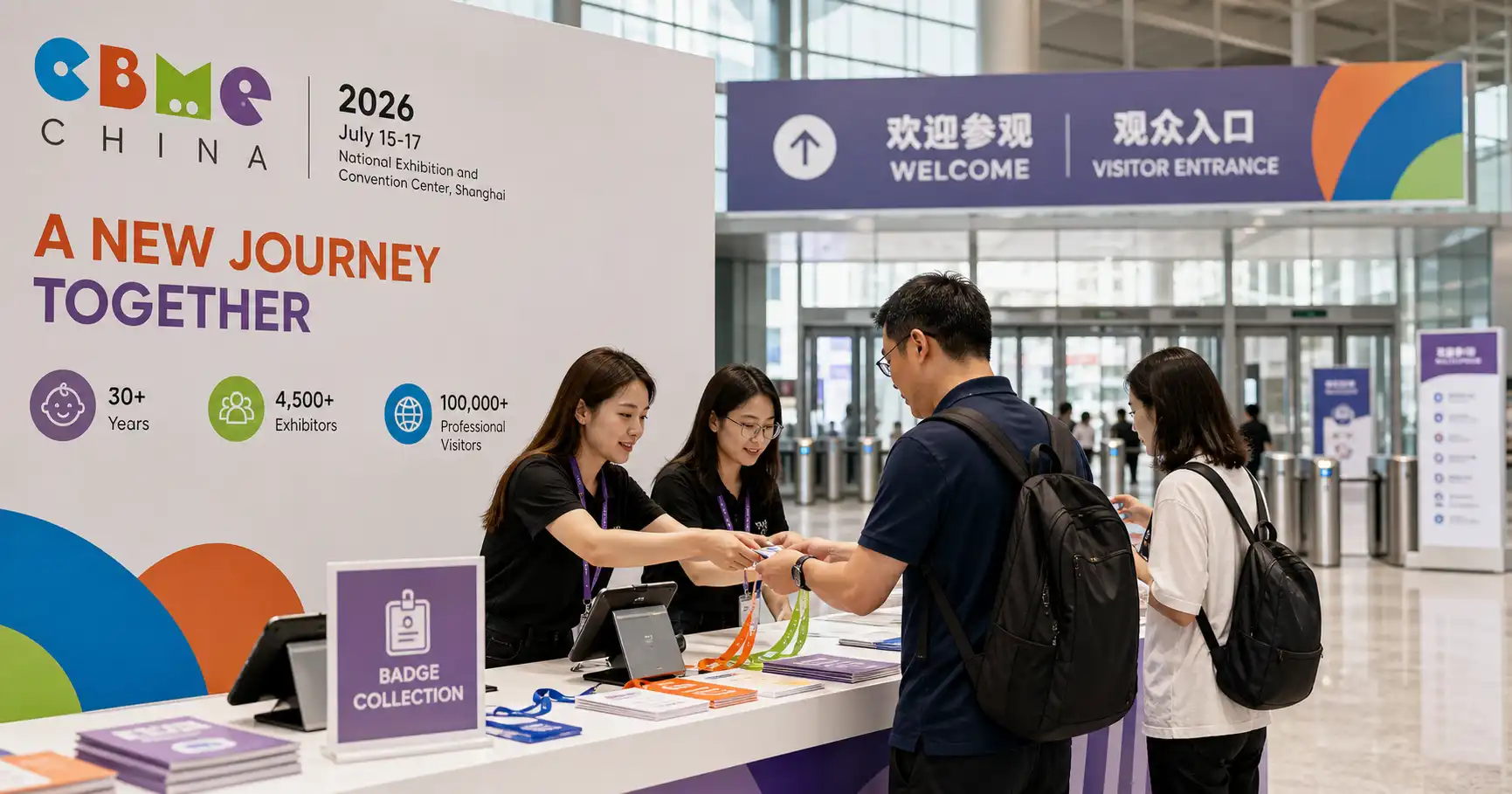
- Event: CBME China 2026 — International Maternity, Baby & Child Expo
- Dates: July 15-17, 2026
- Venue: National Exhibition and Convention Center (NECC), Shanghai
- Exhibitors: 4,500+ brands
- Trade Buyers: 100,000+
- Register: Register for CBME China 2026
Mexico Baby Products Market Size and Growth
Mexico’s baby and child products market has shown consistent growth, supported by demographic factors, a young population, digital transformation, and trade integration with the United States and Canada under USMCA.
Market fundamentals
| Metric | Value | Source |
|---|---|---|
| Baby & child products market size | USD 6-8 billion | Euromonitor / INEGI |
| E-commerce share of baby product sales | 25-30% | Statista |
| Annual birth rate | ~1.9-2.0 million | INEGI / WHO |
| Children’s products segment growth | 6-10% YoY | Euromonitor |
| Mexican population | 130 million+ | World Bank |
| Internet users | 100 million+ | ITU / World Bank |
The e-commerce acceleration
Mexico’s e-commerce market has grown at 20-25% annually, with baby and child products among the fastest-growing categories. Marketplaces like Mercado Libre Mexico, Amazon Mexico, and Liverpool.com have invested heavily in baby product categories, creating opportunities for international brands that can meet quality standards and competitive price points. Mexican parents are increasingly comfortable purchasing baby products online, particularly in the metropolitan areas of Mexico City, Guadalajara, and Monterrey.
World Cup 2026 and consumer spending
Mexico is co-hosting the FIFA World Cup 2026 alongside the United States and Canada. The tournament is expected to drive a measurable lift in consumer spending on family categories including baby products, infant apparel, and travel gear. Mexican retailers and importers are actively preparing inventory for the 2026 calendar year, creating a near-term window for international suppliers to secure shelf space and distribution agreements.
Rising demand for imported products
Mexican consumers increasingly associate imported baby products with superior quality, safety, and design. American, European, Japanese, and Korean baby brands command significant premiums in the Mexican market. Chinese manufacturers, while dominant in volume, are increasingly focused on moving up the value chain — producing higher-quality OEM/ODM products that meet international certifications (EN71, ASTM F963, NOM).
Buyer-tip callout: Mexican importers are specifically seeking suppliers who can provide products certified for multiple markets simultaneously. A factory with EN71 (Europe), ASTM F963 (U.S.), and NOM (Mexico) certifications commands a significant premium and faces less competition. USMCA rules of origin can also be leveraged by suppliers with North American assembly operations.
Key Distribution Channels in Mexico
Understanding how Mexican buyers source and distribute baby products is essential for manufacturers targeting this market.
Major retail chains
Mexico’s retail landscape is dominated by large national chains and U.S. retailers that serve as primary distribution channels for baby products:
| Retailer | Type | Baby Product Focus |
|---|---|---|
| Walmart Mexico | Mass merchandiser | Mid-range baby gear, nursery, formula |
| Soriana | Mass merchandiser | Mid-range baby products, groceries with baby aisle |
| Chedraui | Mass merchandiser | Growing baby category, Yucatan and national |
| Coppel | Department store credit | Budget to mid-range, baby gear and apparel |
| Liverpool | Department store | Premium baby products, brand-name nursery |
| El Palacio de Hierro | Luxury department store | High-end baby brands, fashion-forward |
Pharmacy chains
Mexican pharmacy chains have become significant distributors for baby care products, infant formula, and health-related baby items:
- Farmacias Guadalajara — Strong regional presence, growing national footprint
- Farmacias Benavides — National coverage, mid-to-premium positioning
- Farmacias San Pablo — Premium positioning, Mexico City focus
- Farmacias del Ahorro — Value-focused, broad national coverage
Convenience retail (OXXO)
OXXO, part of FEMSA, operates more than 20,000 stores across Mexico and is one of the world’s largest convenience retail chains. While not a primary baby product channel, OXXO has expanded into adjacent categories including baby snacks, formula, and on-the-go feeding products — and serves as an indicator of Mexico’s modern retail transformation.
E-commerce marketplaces
Online platforms account for 25-30% of baby product sales in Mexico, with these platforms leading the market:
- Mercado Libre Mexico — Mexico’s largest e-commerce marketplace
- Amazon Mexico — Growing rapidly, especially for imported goods and Prime members
- Liverpool.com — Omnichannel reach, premium positioning
- Walmart Mexico online — Click-and-collect and home delivery expansion
What Mexican Importers Are Looking For
Based on trade show patterns and import data, Mexican buyers attending CBME China are specifically seeking these product categories and supplier capabilities.
High-demand product categories
| Category | Demand Level | Notes |
|---|---|---|
| Baby strollers & car seats | Very High | Safety-focused, must meet Mexico standards |
| Baby apparel & sleepwear | High | Fashion-conscious parents driving growth |
| Nursery furniture & decor | High | Growing middle-class home investment |
| Baby feeding products | Medium-High | Bottle warming, sterilizers, high chairs |
| Baby monitors & smart tech | Medium | Emerging category, tech-savvy parents |
| Organic/natural baby care | Medium | Premium niche, growing awareness |
| World Cup 2026 fan gear (infant) | Medium-High | One-time opportunity, family purchases |
Quality and certification requirements
Mexican importers prioritize suppliers who can provide:
- Multi-market certifications — EN71, ASTM F963, and NOM compatibility
- Documentation in Spanish — Product specifications, manuals, labels
- Flexible MOQ — Mexican importers often prefer lower minimum orders for initial testing
- Sample turnaround — Fast sample delivery (2-4 weeks) is critical
- Packaging localization — Spanish labeling capability
- USMCA readiness — Suppliers familiar with rules of origin or with assembly in Mexico gain a tariff edge
USMCA and the China-Mexico Sourcing Connection
USMCA, in force since July 1, 2020, governs trade between the United States, Mexico, and Canada. While China is not a USMCA party, the framework significantly influences how Chinese manufacturers approach the Mexican and broader North American market.
Why USMCA matters for Chinese suppliers
- Tariff leverage: Products assembled in Mexico using qualifying inputs can enter the U.S. and Canada duty-free. Chinese manufacturers with Mexican assembly partners — or those willing to support nearshoring — can offer importers meaningful savings.
- Reduced friction: USMCA-compliant supply chains reduce the documentation burden and customs delays for North American buyers.
- Market credibility: Mexican buyers serving U.S. retail chains often require their suppliers to understand USMCA rules of origin.
Practical options for Chinese exporters
- Direct export to Mexico under standard MFN tariffs (5-15% on most baby product categories)
- Joint venture or contract assembly in Mexico to leverage USMCA preference
- U.S. or Mexican distribution partner to manage customs, certification, and last-mile delivery
- Cross-border wholesale through Texas, California, or Arizona distributors serving Mexican buyers
Buyer-tip callout: Mexican importers who serve U.S. retail chains increasingly ask their Chinese suppliers for USMCA documentation, certificates of origin, and assembly options. Manufacturers that can support both Mexico-direct and U.S./Canada distribution have a structural advantage.
How CBME China 2026 Connects You with Mexican Buyers
CBME China 2026 offers the most efficient platform for manufacturers to meet, qualify, and build relationships with Mexican importers and distributors.

The North American buyer advantage
CBME China has been actively expanding its international buyer base, with North America and Latin America representing strategic growth regions. The Hosted Buyer Program specifically targets qualified buyers from Mexico, the U.S., and other Latin American countries, providing:
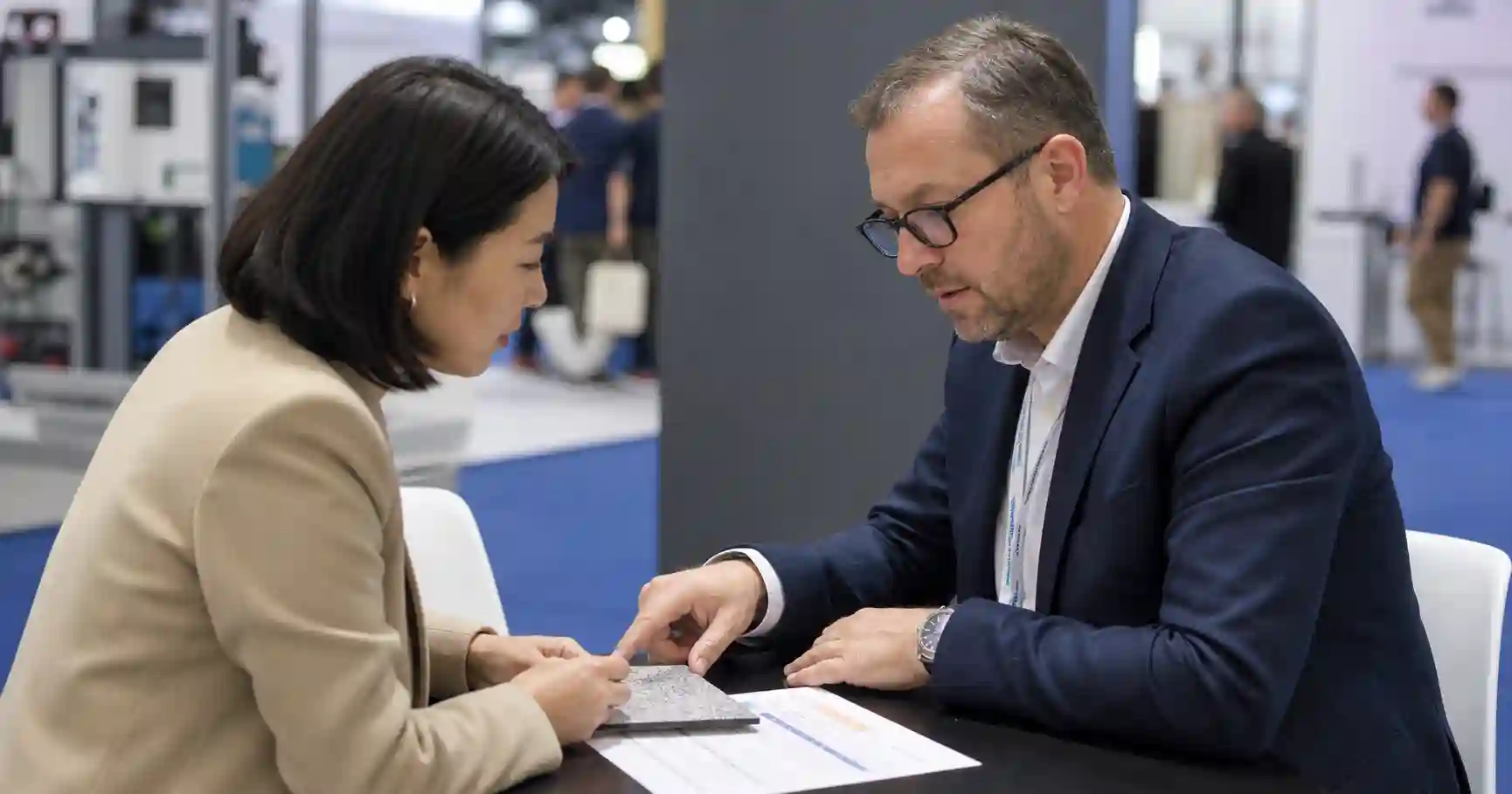
- Pre-scheduled one-on-one meetings with relevant exhibitors
- On-site translation assistance (English / Spanish)
- VIP buyer lounge access
- Matchmaking services based on product categories
Preparing for Mexican buyers at CBME China 2026
- Register for Product Spotlight — Upload your product catalog to the CBME Product Spotlight platform, which Mexican buyers use for pre-show shortlisting.
- Apply for the Hosted Buyer Program — Request meetings with Mexican and Latin American buyers specifically.
- Prepare Spanish materials — Have product sheets, price lists, and certifications available in Spanish.
- Know your export capabilities — Mexican importers want to know your experience with Mexico-specific requirements (NOM, Spanish labeling, import documentation) and any USMCA-related capabilities.
A 3-Step Plan to Approach the Mexico Market
Step 1: Before CBME China (June-July 2026)
- Research Mexican retail chains and importers attending CBME China 2026
- Register for the Product Spotlight and Hosted Buyer Program
- Prepare multi-language product documentation (English, Spanish)
- Ensure your certifications cover Mexico, U.S., and EU markets
- Review USMCA rules of origin if you have a Mexico or North American presence
Step 2: During CBME China (July 15-17, 2026)
- Attend matchmaking sessions with Mexican and Latin American buyers
- Visit international pavilions and networking events
- Collect business cards and follow-up information
- Schedule post-show sample shipments
- Discuss World Cup 2026 inventory opportunities with retail buyers
Step 3: After CBME China (July-September 2026)
- Follow up with Mexican contacts within 48 hours
- Send samples with Spanish documentation
- Request NOM certification requirements from Mexican partner
- Negotiate initial trial orders with flexible MOQ
- If pursuing USMCA leverage, initiate a rules-of-origin feasibility review
Frequently Asked Questions
How large is Mexico’s baby products market?
Mexico’s baby and child products market is estimated at USD 6-8 billion, with 6-10% annual growth driven by e-commerce expansion, a young demographic profile, USMCA trade benefits, and World Cup 2026 consumer spending. The market serves approximately 1.9-2.0 million annual births across a population of 130 million+.
What percentage of Mexico’s baby product imports come from China?
China is one of Mexico’s largest sources of imported baby products, with the country ranking among the top three import origins alongside the United States and select European suppliers. Mexican importers are increasingly seeking higher-quality Chinese manufacturers who can meet international certifications and support both direct Mexico sales and U.S./Canada distribution via USMCA.
What certifications do baby products need to enter Mexico?
Baby products entering Mexico typically require NOM certification for regulated categories. Common requirements include product safety testing per Mexican official standards, Spanish labeling and instructions, and importer registration with Mexican authorities (SAT). For re-export to other markets, EN71 (Europe), ASTM F963 (U.S.), and CE marking are also commonly requested.
How does USMCA benefit Chinese manufacturers serving the Mexican market?
USMCA does not apply to direct China-Mexico trade, but Chinese manufacturers with operations in Mexico — or those willing to support nearshoring — can help Mexican importers access U.S. and Canadian markets duty-free when rules of origin are met. This is a structural advantage for suppliers that can offer both Mexico-direct and North American distribution.
How can Chinese manufacturers meet Mexican buyers at CBME China 2026?
Chinese manufacturers can connect with Mexican buyers through the Hosted Buyer Program, Product Spotlight, international networking areas, and organized buyer delegations from North America and Latin America.
Is CBME China 2026 worth attending for manufacturers targeting Mexico and North America?
Yes. CBME China 2026 specifically targets North American and Latin American buyers as a strategic growth market. The combination of 4,500+ exhibitors, 100,000+ trade buyers, and dedicated matchmaking services makes it the most efficient platform for manufacturers seeking to enter or expand in the Mexican market, particularly in the lead-up to World Cup 2026.
Official Sources
- CBME China 2026 — About the Event
- CBME China — Why Visit
- CBME China — Hosted Buyer Program
- CBME China — Product Spotlight
Published by CBME China Editorial Team
Last reviewed: July 6, 2026 | Published: July 6, 2026 | Publisher: CBME China, a division of Informa
Ready to explore the Mexico market at CBME China 2026? Register to Visit CBME China 2026 and access the Hosted Buyer Program, Product Spotlight, and pre-scheduled matchmaking with Mexican and North American importers from July 15-17 at NECC Shanghai.
Internal links to related CBME 2026 coverage:
- Baby Products Trade Shows in China 2026 (Day 1 — Core Expo Cluster)
- Baby Products Sourcing from China: A Guide for Global Buyers (Day 4 — Sourcing Cluster)
- China Baby and Maternity Market Guide 2026 (Day 11 — Market Entry Cluster)
- How Overseas Baby Brands Can Enter the China Market (Day 12 — Market Entry Cluster)
- How to Meet Distributors and Retailers for Baby Products in China (Day 13 — Distribution Cluster)