China Infant Formula and Baby Nutrition Market Trends 2026: What Global Buyers Need to Know
CBME China 2026 at a Glance
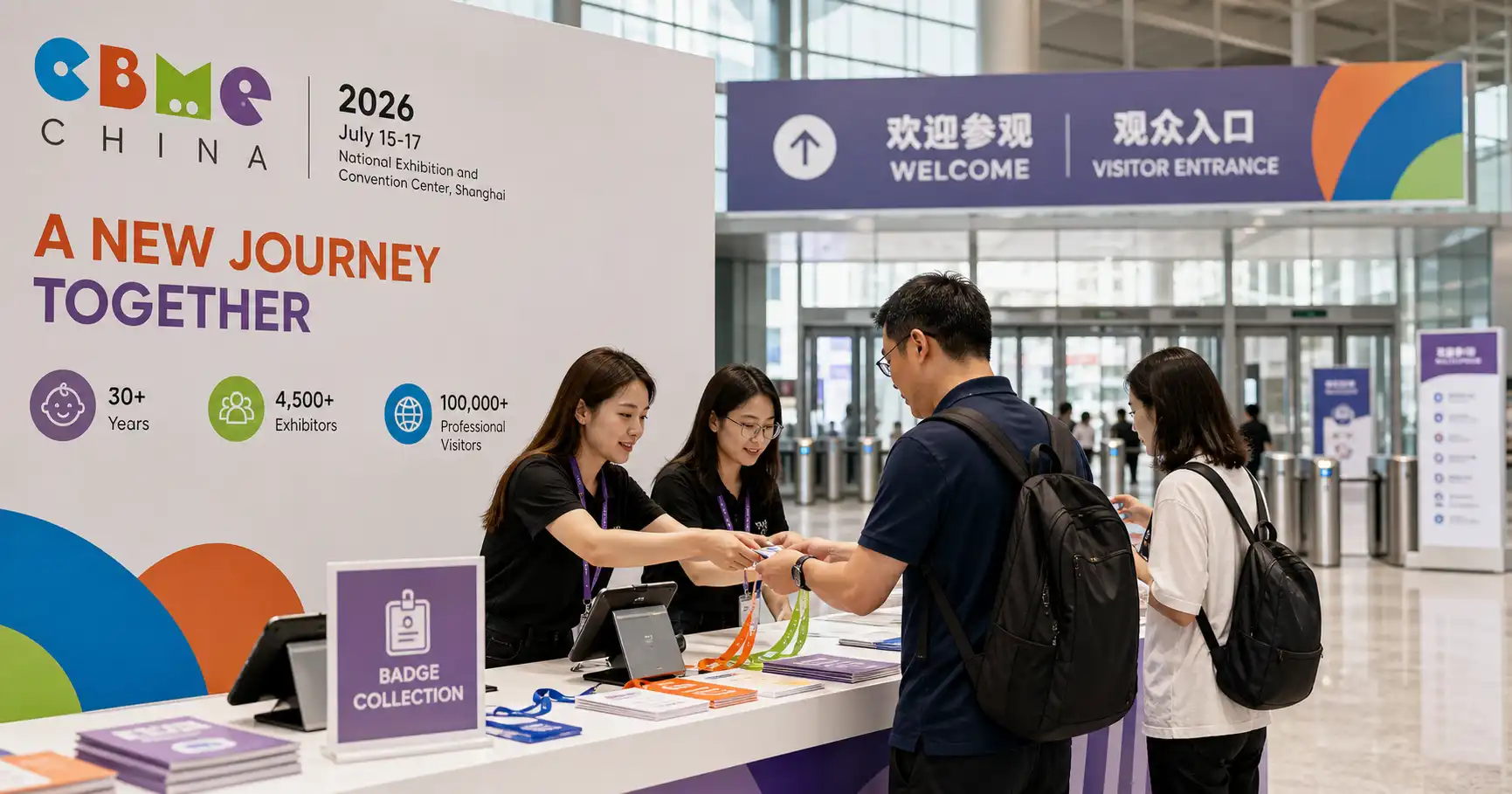
- Date: July 15–17, 2026
- Venue: National Exhibition and Convention Center (NECC), Shanghai
- Scale: 3,200+ exhibitors, 4,500+ brands, 300,000m²
- Food & Nutrition: 21% of exhibitor categories in Hall 7.1 + Food & Health Expo
- Registration: Free pre-registration — RMB 100 walk-in fee
Why the China Infant Formula Market Still Matters for Global Buyers
Despite a structural decline in China’s birth rate — from a peak of 17.86 million in 2016 to approximately 9 million in 2023 (per National Bureau of Statistics data) — the infant nutrition market has proven remarkably resilient. The key driver: per-child spending has risen sharply as parents prioritize quality over quantity. In 2024, China’s national birth population reached 9.54 million, the first increase since 2017, signaling a potential stabilization in the consumer base.
For global buyers, the China infant formula market presents several distinct opportunities:
- Premiumization drives margin: Ultra-premium products — priced at CNY 500–700/kg versus CNY 100–280/kg for commodity formulas — now command a significant and growing share of retail value. Buyers sourcing these tiers can achieve stronger margins in destination markets.
- Functional ingredients create differentiation: HMO-enriched formulas, A2 protein products, goat-milk-based options, and probiotics-added lines command price premiums and attract parents willing to pay for clinically supported benefits.
- Toddler and child segments extend the sourcing lifecycle: The 12–36 month toddler segment already accounts for nearly 40% of formula volume, and the 3+ year children’s nutrition category is growing fastest in value terms. Sourcing beyond stage 1 (0–6 months) formulas opens new product lines.
- Domestic brands seek international distribution partners: Leading manufacturers including Yili (17.3% market share in 2024) and Feihe are actively building overseas distribution networks, creating B2B partnership opportunities.
Soft CTA: Buyers can use the monthly CBME Product Spotlight to shortlist exhibitors in the nutrition and baby food category before the show opens on July 15.
Market Size, Structure, and Category Breakdown
Milk formula remains the dominant segment, holding approximately 70–75% of the total baby food market by retail value. Specialty formulas — including organic, hydrolyzed, and goat-milk-based products — are expanding at 7–10% annually and are projected to reach a combined share of 30–35% of total baby food market value by 2030.
The CBME China exhibitor profile mirrors this structure. According to official show data, 21% of CBME exhibitors fall within the Food, nutraceuticals, and snacks category — the second-largest category block after mother and baby care products at 35.2%.
Key product sub-segments within infant nutrition at CBME:

- Infant formula (stage 1–4): Standard, follow-on, and toddler formulas from both domestic and international brands
- Goat milk formula: The fastest-growing specialty segment, valued for digestibility and low allergenic properties
- Specialized/medical formulas: Hypoallergenic, lactose-free, and premature-infant formulas requiring SAMR registration
- HMO and functional formulas: Next-generation products featuring human milk oligosaccharides, probiotics, and brain-development ingredients
- Baby food and complementary foods: Prepared purees, snacks, and weaning foods for infants 6+ months
- Maternal nutrition: Prenatal and postnatal supplements for nursing mothers
E-commerce and social commerce channels capture approximately 40% of infant formula sales in China, according to industry data. However, mother-and-baby specialty stores, pharmacies, and supermarket chains remain critical offline touchpoints — especially for premium products where in-store consultation influences purchase decisions.
Key Trends Shaping China’s Infant Formula Market in 2026

1. Premiumization and Ultra-Premium Positioning
The premium segment held approximately 37% of China’s infant formula market share by value in 2024, up from 32.8% in 2023. Ultra-premium tiers featuring clinically proven functional ingredients are expanding fastest. Market projections suggest premium and super-premium products will account for 40–45% of total retail value by 2035. For buyers, this signals a clear shift in sourcing strategy: prioritize suppliers with strong R&D capabilities and premium-grade production facilities.
2. Functional Ingredients and Scientific Differentiation
Ingredients that were once premium differentiators have become baseline expectations. Key functional ingredients in demand include:
- HMOs (Human Milk Oligosaccharides): Now approved by Chinese regulators and featured in leading brands including Danone’s Aptamil NEO 3 and Nestlé’s Illuma HMO
- A2 beta-casein protein: Positioned for easier digestibility and reduced gut discomfort
- Goat milk base: Valued for natural A2 proteins, smaller fat globules, and lower allergenic profile
- Probiotics and prebiotics: Including Bifidobacterium strains for gut and immune health
- MFGM (Milk Fat Globule Membrane) and OPO structural fats: Supporting cognitive development and calcium absorption
These ingredients appear across both domestic and international brand portfolios, creating sourcing opportunities for buyers seeking differentiated products for their home markets.
3. Regulatory Strengthening and Its Sourcing Implications
China’s regulatory environment for infant formula is among the strictest globally. All infant formula sold in China requires SAMR (State Administration for Market Regulation) registration and must comply with GB national food safety standards. The revised GB standards, implemented in February 2022, mandate reformulation requirements for calories, carbohydrates, proteins, and micronutrient levels.
For international buyers sourcing for export to third markets, SAMR registration requirements do not directly apply. However, understanding these standards is valuable when evaluating supplier quality systems, production hygiene, and testing protocols. CBME China 2026’s Supply Chain Expo provides dedicated OEM/ODM zones where nutrition product manufacturers — including those with established export compliance track records — can be evaluated directly.
4. Domestic Brands Gaining Ground
The competitive landscape has shifted substantially. Domestic brands now produce approximately 80% of infant formula consumed in China. Yili, Feihe, and Mengniu have invested heavily in dairy farm infrastructure, R&D, and supply chain traceability. For a broader view of China’s baby and maternity market, see the China Baby and Maternity Market Guide 2026 for Global Brands. International brands remain significant: Danone’s Aptamil holds approximately 44.5% of the English-label market, while a2 Milk Company and Nestlé follow. For buyers, both domestic and international manufacturers at CBME China represent viable sourcing options — the choice depends on target market, price positioning, and required certifications.
5. Channel Diversification and E-commerce Integration
The approximately 40% e-commerce share of formula sales reflects shifts in how Chinese parents discover and purchase baby nutrition products. Platforms including Tmall, JD.com, Douyin, and Xiaohongshu have become primary discovery channels. QR-code traceability systems, introduced post-melamine crisis, now feature on most premium products and are increasingly visible on export-oriented SKUs. For buyers evaluating suppliers, those offering e-commerce-ready packaging and digital traceability solutions may hold a competitive edge.
What to Ask Infant Nutrition Suppliers at CBME China 2026
Before visiting Hall 7.1’s Infant Formula Street and Innovation Zone, prepare a supplier evaluation checklist. Key questions to ask:
- What SAMR registration status does your product hold, and for which formula stages (0–6, 6–12, 12–36 months)?
- Do you offer OEM, ODM, or both? What are the minimum order quantities for each?
- Which functional ingredients do you offer (HMO, A2, goat milk, probiotics)? Can formulations be customized?
- What export markets have you supplied to, and which certifications do you hold (e.g., FDA, EU, HALAL, Organic)?
- What are the lead times for sample production versus bulk orders?
- What quality control and third-party testing protocols do you follow?
- Do you offer packaging options suitable for your target export market?
- Can you provide traceability documentation for raw milk sourcing?
Where to Find Nutrition Suppliers at CBME China 2026
CBME China 2026 organizes its infant nutrition sourcing zone across multiple dedicated areas:
- Hall 7.1: Maternal and Infant Food, Baby Formula, Nutritional Products — the primary formula and nutrition hall
- Infant Formula Street (Hall 7.1): Curated selection of formula brands organized by function — digestive health, allergy support, cognitive development
- Infant Formula Innovation Zone: Showcases science-driven next-generation products with clear functional labeling
- Full-Age Formula Brand Zone: Covers formulas for infants through toddler years (0–36+ months)
- CBME Food & Health Expo (concurrent): Extended nutrition and functional food category across adjacent halls
- OEM/ODM & Packaging — Nutritional Products: Contract manufacturing and packaging partners for brands seeking custom formulations
The CBME Product Spotlight pre-show programme curates monthly exhibitor selections across all nutrition categories, enabling buyers to shortlist priority suppliers before the event.
Frequently Asked Questions
When is CBME China 2026, and where is it held?
CBME China 2026 runs from July 15 to 17, 2026 at the National Exhibition and Convention Center (NECC) in Shanghai. Pre-registration is free; walk-in visitors pay a RMB 100 admission fee.
What percentage of CBME China exhibitors are in infant nutrition?
According to CBME China’s official exhibitor category breakdown, 21% of exhibitors fall within the Food, nutraceuticals, and snacks category — making it the second-largest category group at the show.
How large is China’s infant formula market?
China’s baby food market — with infant formula as its dominant segment — was valued at approximately USD 19.63 billion in 2025 and is projected to reach USD 36.15 billion by 2034. Milk formula alone accounts for 70–75% of total baby food retail value.
What are the key trends in China’s infant formula market for 2026?
The primary trends are premiumization, functional ingredient innovation (HMOs, A2 protein, goat milk, probiotics), the growth of domestic brands, and channel diversification. The premium segment now holds approximately 37% of market value and is expanding fastest.
What regulatory requirements apply to infant formula sold in China?
All infant formula sold in China requires SAMR registration and must comply with GB national food safety standards. International buyers sourcing for export to other markets should verify their target market’s import regulations and the supplier’s relevant certifications.
What is the best age segment to source for in China’s infant formula market?
The toddler segment (12–36 months) accounts for nearly 40% of formula volume and is growing fastest in value terms. Sourcing stage 3 and stage 4 formulas — plus children’s nutritional supplements up to age 3+ — aligns with the current market direction toward extended consumption cycles and premium positioning.
Official Sources
- CBME China — About (source: CBME China official site)
- CBME China — Why Visit (source: CBME China official site)
- CBME China — Category Markets & Zones (source: CBME China official site)
- CBME China — Onsite Activities (source: CBME China official site)
- CBME China — Hall Plan (source: CBME China official site)
- CBME China — Product Spotlight (source: CBME China official site)
- CBME China — Industry Insights (source: CBME China official site)
Published by: CBME China Editorial Team
Last reviewed: June 26, 2026 | Published: June 26, 2026 | Publisher: CBME China, a division of Informa Markets
Ready to source infant nutrition products at CBME China 2026? Register to Visit CBME China 2026
Explore CBME Product Spotlight to shortlist infant nutrition and baby food suppliers before the show.
Related Articles
- Baby Food and Infant Nutrition Suppliers in China: What Buyers Should Know (Day 16)
- Baby Skincare and Hygiene Products in China: Sourcing and Market Guide (Day 18)
- China Baby and Maternity Market Guide 2026 for Global Brands (Day 11)
- Baby Product Compliance and Quality Checks Buyers Should Know Before Sourcing in China (Day 28)
- China Baby Food and Nutrition Trends Seen at CBME China 2026 (Day 45)