Family Entertainment and Baby Products: How TV Shows and Movies Influence Parenting Shopping in China
Understanding how entertainment media shapes parenting purchasing decisions is essential for any brand or buyer looking to connect with Chinese parents in 2026. China’s mother and baby market is valued at approximately $38.7 billion in 2026, with projections pointing toward $67.64 billion by 2035 at a compound annual growth rate of 6.4% (source: CBME China industry data). Yet raw market size alone does not explain why some products fly off shelves while others with identical functionality struggle. The answer increasingly lies in the entertainment content Chinese parents consume — and how brands strategically appear within that content.
CBME China 2026
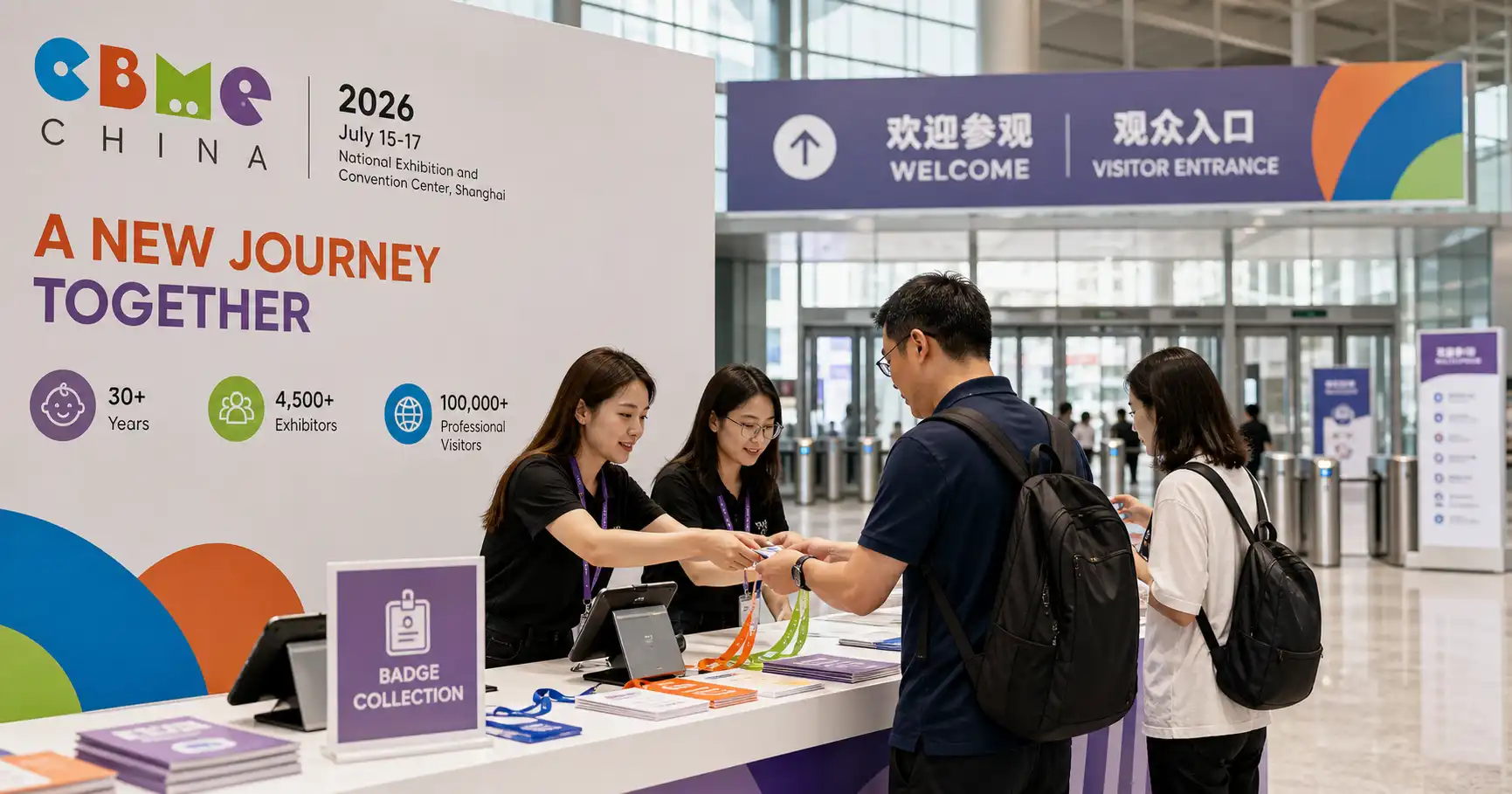
- Date: July 15–17, 2026
- Venue: National Exhibition and Convention Center (NECC), Shanghai
- Edition: 25th consecutive edition of Asia’s leading maternity and baby products expo
- Categories: Maternity and Baby Care, Food, Toys & Learning, Strollers/Car Seats/Furniture, Children’s Wear, Supply Chain
- Register: Register to Visit CBME China 2026
Why Family Entertainment Shapes Parenting Purchases
The modern Chinese parent — overwhelmingly born between 1990 and 2010 — has fundamentally changed what drives their purchasing decisions. According to CCTV Financial’s “Good Life Survey,” 45.89% of young consumers now prioritize emotional value (“心价比”) as their primary purchase consideration, outpacing pure price sensitivity. This shift has profound implications: when parents make buying decisions driven by feeling, connection, and narrative resonance, entertainment media becomes one of the most powerful influence vectors available.
Traditional product advertising tells parents why a product is good. Family entertainment shows parents why a product matters — by embedding it in relatable, emotionally charged scenarios that viewers see as reflections of their own lives. A TV drama depicting a tired working mother discovering a smart baby monitor does more than advertise a product; it tells a story that parents recognize, desire, and act upon.
This emotional-first purchasing behavior is compounded by a collaborative family decision-making dynamic. While female users account for 72% of maternity-related searches on Baidu, fathers show the highest engagement during pre-pregnancy and the baby’s first year, and grandparents play a stronger caregiving role during late pregnancy and the immediate post-birth period (source: Baidu/iClick maternity insights). A single family entertainment program can reach and influence all three decision-makers simultaneously — which is why smart brands treat family media as a category-level demand driver, not a one-off marketing tactic.

Soft CTA: Explore CBME China’s Industry Insights page to see how the expo connects trend awareness with sourcing opportunities.
What Types of Entertainment Content Drive Baby Product Purchases
Several distinct content formats have emerged as proven purchase-drivers for baby and maternity products in China.
Television Drama Placements
Family education dramas have a long track record of influencing Chinese consumer behavior. Domestic series exploring modern family dynamics — particularly those depicting parenting challenges, sibling dynamics, and generational differences — consistently generate social media buzz that translates into measurable purchase intent for featured products. Rather than interrupting the viewer’s experience, product placements in this format feel like natural elements of the family narrative, allowing brands to build warmth and trust alongside entertainment value. The key success factor is narrative authenticity: the product must feel genuinely embedded in the story rather than awkwardly inserted.
Micro-Dramas: The 662 Million-Viewer Opportunity
Micro-dramas — short-form serialized video content, typically 1–3 minutes per episode — have emerged as one of China’s most influential entertainment formats. As of December 2024, China had 662 million micro-drama users, representing 59.7% of all Chinese internet users (source: CNNIC data). Unlike traditional television, micro-dramas are optimized for mobile viewing and social sharing, making them a natural discovery platform for younger parents who spend significant time on Douyin and WeChat.
The format also offers something traditional advertising cannot: integrated purchase pathways. Micro-dramas routinely embed shoppable links and live-commerce integrations, allowing brands to convert entertainment engagement into immediate sales without requiring the viewer to leave the content ecosystem. In 2024, brand co-produced and self-produced micro-dramas accounted for 39% of total micro-drama content (source: industry data), signaling that major brands have already shifted from experimental to strategic investment in this format.

Platform-Specific Discovery Behaviors
Chinese parents do not discover baby products through a single channel. Their path from entertainment to purchase typically moves through a predictable ecosystem:
- Xiaohongshu (Little Red Book): Functions as the essential peer-review and research platform. Parents discover products through entertainment content, then validate their interest through detailed KOC reviews, product comparisons, and usage tips shared on Xiaohongshu. For a full breakdown of China’s e-commerce landscape, see our guide to Tmall, JD, Douyin and Xiaohongshu: China E-commerce Channels for Baby Brands.
- Douyin: Leads in initial product discovery and impulsive live-stream purchases. Short-form entertainment content naturally transitions into live-streamed sales events where baby products are featured alongside parenting narratives.
- Tmall and JD.com: Dominate high-value purchase conversions and replenishment. After discovery and research, parents complete their most important purchases on these established e-commerce platforms. Tmall alone accounts for nearly 40% of baby product sales share (source: Nielsen NIQ).
- Offline and Distributor Channels: Family entertainment drives discovery across digital platforms, but for products requiring physical evaluation — strollers, car seats, baby furniture — parents also visit offline specialty stores and engage distributor networks. A comprehensive guide to China baby retail channels helps brands understand where entertainment-driven awareness translates into physical channel demand.
This ecosystem means that family entertainment does not operate in isolation — it initiates a multi-platform journey that ends when a brand has earned trust at every stage.
Real Examples: How Brands Are Winning Through Entertainment Content
JD Baby’s Custom Micro-Drama
In 2025, JD Baby (京东母婴) departed from traditional marketing conventions by producing a custom micro-drama titled “奶爸成仙记之父凭子贵” (A Dad’s Mythical Journey: Rising Through Fatherhood), released on Douyin. The drama wove traditional Chinese mythology into modern parenting scenarios, positioning JD’s baby products as natural solutions within these dramatic, humorous situations. Rather than a product advertisement, JD built an entertaining narrative that parents wanted to watch — and shoppable links made the path from engagement to purchase seamless. The campaign demonstrated that when entertainment and commerce merge, brands can earn both emotional connection and sales conversion simultaneously.
Domestic Drama Product Placements
Chinese domestic drama series offer baby product brands a proven, copyright-safe placement format. Series depicting parenting and family scenarios have demonstrated sustained social media discussion, driving both brand awareness and search traffic for featured products. The consistent pattern across successful placements is that the brand’s value proposition — safety, quality, convenience — is expressed through the characters’ experiences rather than narrated as a sales message. Parents respond to this format because it mirrors their own decision-making process: seeking trusted solutions within their social context.
How CBME China Connects Trend Awareness to Sourcing
For global brands and buyers, understanding consumer trends through entertainment media is only half the challenge. The other half is finding Chinese manufacturers capable of producing products that match the emotional and functional promises made in that content.
CBME China bridges this gap. Held July 15–17, 2026 at the National Exhibition and Convention Center (NECC) in Shanghai, CBME China has successfully delivered 25 editions of the industry’s most comprehensive baby and maternity products sourcing platform. The expo covers every product category relevant to entertainment-driven demand: maternity and baby care, food and nutrition, toys and learning, strollers and car seats, children’s wear, and supply chain partners including packaging and ingredients.
Concurrent events at CBME China 2026 include the CBME Toy & Education Expo, CBME Children’s Wear Expo, CBME Food & Health Expo, CBME Supply Chain Expo, and Licensing Expo China — giving brands and buyers a complete view of the sourcing landscape in one location.
Soft CTA: Download the CBME Product Spotlight to research exhibitors and their product categories before the show.
What Baby Product Brands Should Do: Actionable Steps
1. Monitor Entertainment Platforms for Demand Signals
Track which drama series, micro-dramas, and streaming shows are generating parenting-related social media discussion on Xiaohongshu and Douyin. High-engagement content around specific baby product categories — feeding, skincare, toys, clothing — signals emerging buyer demand that can be met through targeted sourcing.
2. Develop Content Integration Strategies
Move beyond traditional advertising. Consider co-producing micro-dramas, sponsoring parenting drama series, or partnering with parenting KOCs who create content that feels native rather than promotional. Brands that control the narrative within entertainment content build deeper emotional connections with parents.
3. Source from Manufacturers Who Understand Trend Responsiveness
Chinese manufacturers exhibiting at CBME China increasingly offer fast-response production capabilities — the ability to adapt product designs, packaging, and formulations in response to shifting consumer tastes. When evaluating suppliers, ask about their experience with trend-driven product development and their ability to handle smaller batch orders for specialized or seasonal products.
4. Align E-Commerce Strategy with the Discovery Ecosystem
Ensure your brand appears at every stage of the parent’s entertainment-to-purchase journey: entertainment discovery on Douyin, peer research on Xiaohongshu, and conversion on Tmall or JD.com. Brands that optimize for this full ecosystem consistently outperform those focusing on a single touchpoint.
5. Attend CBME China 2026
CBME China 2026 (July 15–17, NECC Shanghai) is the single most efficient opportunity to meet the manufacturers, brands, and industry experts who are building the products that will respond to entertainment-driven demand in the second half of 2026 and into 2027.
Frequently Asked Questions
How do TV shows and micro-dramas actually influence baby product purchases in China?
Entertainment content influences Chinese parents primarily through emotional storytelling. When a drama or micro-drama depicts a parenting situation, parents who recognize themselves in that scenario are more likely to seek solutions. Brands that appear naturally within these narratives earn trust more effectively than through traditional advertising. The micro-drama format is particularly powerful because it often includes direct shoppable links, making the path from entertainment engagement to purchase nearly frictionless.
What role does Xiaohongshu play in the entertainment-to-purchase journey?
Xiaohongshu functions as the research and peer-validation layer of the Chinese parent’s purchase journey. After discovering a product or brand through entertainment content on Douyin, parents typically search Xiaohongshu for real-user reviews, product comparisons, and usage tips. KOC content on Xiaohongshu provides the social proof that converts entertainment-driven curiosity into actual purchase intent. Brands need to ensure their presence on Xiaohongshu is active, authentic, and aligned with the emotional narrative established in entertainment content.
Can international baby product brands use micro-drama marketing in China?
Yes, international brands can participate in micro-drama marketing, though the approach requires localization. Working with local MCNs (Multi-Channel Networks), Chinese production teams, and platform specialists is essential. International brands that successfully enter the micro-drama space typically identify the emotional moments within their brand story that resonate most with Chinese parents — such as the safety of a product, the convenience for busy parents, or the developmental benefits for children — and build narrative content around those themes. Partnering with Chinese distributors who have existing micro-drama relationships can also accelerate market entry.
How can baby product buyers at CBME China find suppliers responsive to entertainment-driven trends?
Buyers should use the CBME Product Spotlight program to research exhibitor categories and product focus areas before arriving at the show. When meeting suppliers onsite, ask specific questions about their experience with trend-responsive product development: How quickly can they adapt packaging designs? Do they offer small-batch customization? These questions identify manufacturers who understand the fast-moving nature of consumer trends driven by entertainment media.
What product categories are most influenced by entertainment content in China?
Categories with strong emotional narratives — baby food and nutrition, toys, children’s wear, and baby care products — tend to see the highest entertainment-driven purchase influence. Products that can be naturally integrated into parenting scenarios are particularly well-suited to drama and micro-drama placements. Functional products with less emotional resonance still benefit from peer-review amplification on Xiaohongshu following entertainment-driven discovery.
How should brands balance entertainment marketing with product quality credibility?
Entertainment content builds awareness and emotional connection, but Chinese parents — particularly Gen Z and millennial buyers — are also deeply focused on product safety, ingredient transparency, and professional certifications. The strongest brands combine entertainment-driven demand generation with clear quality signals: GB standard compliance, NMPA registration, professional endorsements, and authentic peer reviews on Xiaohongshu. The entertainment pathway and the quality-validation pathway are complementary, not competing.
Official Sources
- CBME China — About CBME China (Event date, venue, 25 editions, product categories, visitor profile)
- CBME China — Why Visit (Sourcing platform value, visitor benefits)
- CBME China — Industry Insights (Consumer trend authority content)
- CBME China — China Baby and Maternity Market Guide 2026 (Market value data, channel insights)
- CBME China — Product Spotlight (Pre-show supplier research tool)
Publisher and Editorial Information
Published by the CBME China Editorial Team, a division of Informa Markets. CBME China has served the global mother, baby, and child products industry since 2001, connecting brands, manufacturers, and buyers across 25 editions of Asia’s leading maternity and baby products trade event.
For questions or content collaboration, contact the CBME China editorial team.
Last reviewed: June 26, 2026 | Published: June 26, 2026 | Publisher: CBME China, a division of Informa
Ready to turn consumer trend insights into sourcing opportunities? Subscribe to CBME Industry Insights for the latest market intelligence, or Register to Visit CBME China 2026 (July 15–17, NECC Shanghai) to connect with the manufacturers shaping the future of the baby and maternity market.