Character Licensed Baby Products China: Pixar IP Sourcing Guide
Family entertainment IP has become a year-round merchandising engine for the global baby, toddler, and kids market. Each major family-animation release window drives 12-24 months of pre-production, retail planning, and shelf reset across plush, kidswear, nursery, feeding, and stationery categories. China sits at the center of this supply chain: most character-licensed plush, baby textiles, kidswear accessories, and nursery decor that reach global shelves are produced in Chinese factories operating under licensee authorization. CBME China 2026 (July 15-17, NECC Shanghai) brings these manufacturers, licensees, and brand owners together under one roof — alongside the co-located Toy & Education Expo and Licensing Expo China — making it the most efficient venue for buyers sourcing character licensed baby products China suppliers in a single trip.
This article is a sourcing and IP-awareness guide. It does not name, depict, or imply endorsement by any specific studio, franchise, or character. The goal is to help global buyers, brand owners, and licensors understand the character-licensed product category and source it the right way.
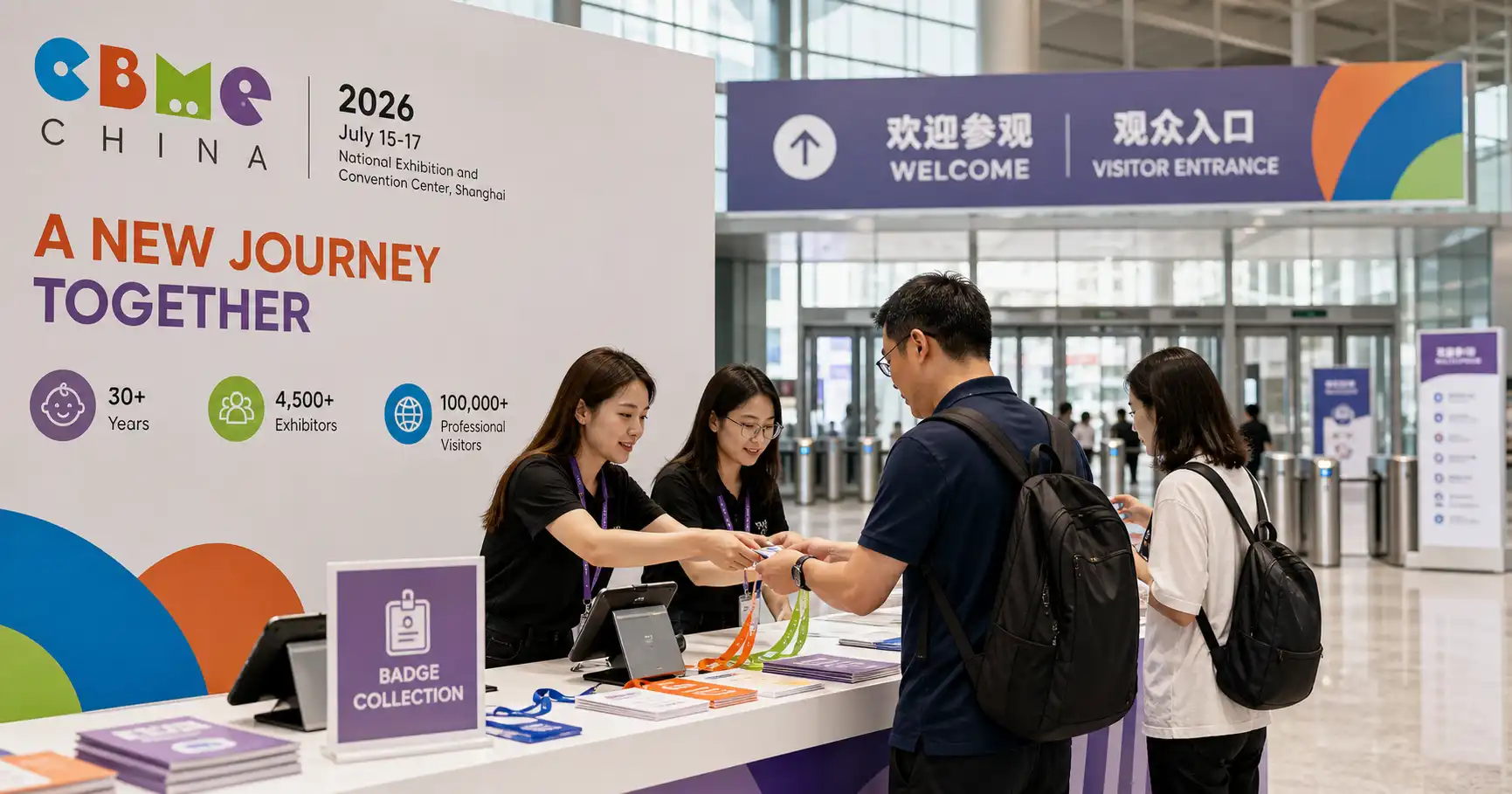
CBME China 2026 at a Glance
- Event: CBME China 2026 – International Maternity, Baby & Child Expo
- Dates: July 15-17, 2026
- Venue: National Exhibition and Convention Center (NECC), 333 Songze Avenue, Shanghai 201102
- Organizer: Informa Markets
- Concurrent Events: CBME Toy & Education Expo, CBME Children’s Wear Expo, CBME Food & Health Expo, CBME Supply Chain Expo, Licensing Expo China
- Relevant Zones: Toy & Education Expo (plush, soft toys, character merchandise), Licensing Expo China (IP rights, brand licensing)
- Pre-show Tool: Product Spotlight for shortlisting manufacturers with character-licensed product experience
The 2026 Animation IP Landscape for Baby and Kids Products
Why Animation IP Matters in Baby and Kids Categories
Animation IP has become a structural part of the baby, toddler, and kids merchandise calendar. Family entertainment releases create predictable, multi-quarter demand spikes — plush and soft toys around theatrical and streaming launches, kidswear ahead of back-to-school, and nursery decor during gifting seasons. For global buyers and brand owners planning Toy Story 5 sourcing or similar major-release merchandise programs, this translates into sourcing cycles that begin 12-24 months before a release window and require careful coordination between the licensor, the licensee, and the manufacturing partner.
The merchandise category is broader than toys. Plush companions, baby bibs, blankets, sleepwear, socks, backpacks, stationery, lunch boxes, water bottles, room decor, and party goods all carry character IP. Buyers who understand the full category map can plan multi-line programs rather than single-product purchases.

Where Animation IP Sits in the Baby and Kids Sourcing Mix
Animation IP typically accounts for a meaningful share — but not the majority — of the baby and kids shelf. Most licensed ranges sit alongside unbranded, private-label, and generic themed products. For buyers evaluating China as a sourcing destination, the practical question is not “should we buy licensed IP?” but “how do we set up an authorized program with the right manufacturing partner?” Children’s wear and baby clothing manufacturers are among the most active exhibitors at CBME China for character-licensed apparel programs.
Pixar IP Sourcing China: How the Model Applies to Major Animation Studios
Pixar IP sourcing China follows the same three-party licensing framework as other major animation studios. The rights to Pixar characters are managed by the studio’s licensing division or a designated licensing agency, which grants category-specific, territory-specific, and time-window-specific rights to a licensee. That licensee then authorizes Chinese factories to produce the physical products. For buyers seeking Pixar IP sourcing China suppliers, the correct entry point is identifying which brand or retailer holds the active license for the relevant category and target market — not approaching factories directly.
What Character Licensing Actually Involves
The Three-Party Model
Character-licensed baby and kids products move through a three-party model:
- Licensor — the rights owner (typically a studio, publisher, or brand owner) that owns the character, name, or logo
- Licensee — the brand or retailer that has signed a licensing agreement with the licensor for a specific territory, category, and time window
- Manufacturer — the factory authorized by the licensee to produce the licensed product, typically under a sub-license or direct manufacturing agreement
Buyers who want to bring a specific character to retail must work through a licensee, not directly with the licensor. The licensee is the party that issues purchase orders to the manufacturer, approves samples, controls label artwork, and manages royalty reporting.
Authorized vs. Generic Character Products
A clear distinction exists between authorized and generic character products:
- Authorized — produced under a valid licensing agreement, with approved artwork, correct trademark usage, and royalty reporting. Eligible for retail distribution in the licensed territory.
- Generic / Inspired — unbranded products that may evoke a category or aesthetic but do not carry protected character names, likenesses, or logos. Common in plush, sleepwear, and kidswear.
Buyers who source unauthorized character products face trademark and customs risk, including shipment seizure, retail delisting, and brand damage. The licensing model exists precisely to keep these risks off the buyer’s shelf.
Kids Movie Merchandise OEM: What It Means for Chinese Manufacturers
Kids movie merchandise OEM production in China covers the full range of character-licensed goods that global brands and retailers source for theatrical, streaming, and home-entertainment release windows. Chinese factories engaged in kids movie merchandise OEM programs must meet licensee quality standards, artwork approval requirements, and testing compliance for destination markets. The difference between a standard OEM factory and one capable of kids movie merchandise OEM lies in its familiarity with the licensee’s approval workflows, artwork confidentiality protocols, and the ability to produce within territory-restricted manufacturing agreements.
Animation IP Baby Products: What Buyers Need to Know Before Sourcing
Animation IP baby products cover a wide range of licensed goods for infants, toddlers, and young children — from bibs and sleepwear bearing licensed characters to nursery decor and mealtime accessories. Animation IP baby products sourced from China follow the same authorized production model as the broader character licensing category, with the added requirement that all products meet infant and child safety standards for the destination market. CBME China 2026, alongside the co-located Toy & Education Expo and Licensing Expo China, brings animation IP baby products manufacturers, licensees, and licensing agencies together in one venue — making it the most efficient place to evaluate the full authorized supply chain.
Product Categories Buyers Can Source
Character-licensed baby and kids products cover a wide category map. The categories below are the most common at CBME China and at the co-located Toy & Education Expo and Licensing Expo China.
| Category | Typical Licensed Products | Sourcing Notes |
|---|---|---|
| Plush and soft toys | Plush companions, character pillows, baby soft toys | Strong Chinese manufacturing base; check stuffing, fabric, and safety documentation |
| Kidswear | Pajamas, socks, underwear, swimwear, hoodies, character tees | Verify label rules, fiber content, and wash-care compliance for the destination market |
| Nursery and bedding | Blankets, sleep sacks, crib sheets, room decor | Confirm OEKO-TEX or equivalent documentation for infant-skin-contact products |
| Feeding and mealtime | Bibs, burp cloths, baby utensils, lunch boxes, water bottles | BPA-free and food-contact documentation typically required |
| Baby gear accessories | Stroller toys, organizer panels, car-seat toy attachments | Confirm attachment safety and small-parts rules for the destination market |
| Stationery and back-to-school | Pencil cases, backpacks, lunch boxes, notebooks | Back-to-school is the largest single retail window for character-licensed stationery |
| Party and gifting | Balloons, banners, party favors, gift wrap | Often a short-window, high-volume category around releases |
For buyers interested in how character licensing fits into the broader plush toy brands landscape in China, the brands rankings provide useful context for understanding the licensed merchandise ecosystem alongside China’s manufacturing capabilities.
Character licensing baby toys — particularly plush, soft toys, and figurines — represent one of the largest and most recurring sub-categories of character-licensed baby and kids products sourced from China. The plush segment is driven by theatrical and streaming release cycles that create predictable, multi-year sourcing windows for authorized manufacturers. For buyers planning character licensing baby toys programs, the key is aligning the licensee’s release calendar with the Chinese factory’s capacity and sample-approval timeline.
How Chinese Manufacturers Support Authorized IP Programs
Manufacturing Hubs
Chinese factories producing licensed character products cluster in several well-known hubs:
- Guangdong (Dongguan, Guangzhou, Shenzhen) — plush, soft toys, baby gear accessories, plastics. See also toy and educational product manufacturers in China for the full sourcing guide.
- Zhejiang (Ningbo, Yiwu, Hangzhou) — plush, kidswear, stationery, party goods
- Jiangsu (Suzhou, Yangzhou, Nanjing) — kidswear, nursery textiles, baby shoes
- Shandong — plush, wooden toys, and some nursery products
These hubs offer the full range of capabilities needed for licensed character programs: embroidery, sublimation, screen printing, heat-press, appliqué, woven labels, and care-label compliance.

Capabilities Buyers Should Look For
When evaluating a Chinese manufacturer for a character-licensed program, buyers should look for:
- A documented quality management system (ISO 9001 or equivalent)
- Experience with licensee-driven sample approval processes
- Capacity for color-matching against approved artwork (Pantone or spectrophotometer)
- In-house or partner lab testing for the destination market (e.g., CPSIA for the US, EN 71 for the EU, GB 6675 for China)
- Sub-licensing disclosure: a clear written statement of which IP the factory is authorized to produce
- Traceability: ability to track raw materials, components, and finished goods to specific PO batches
A factory that cannot provide licensee authorization documentation should not be issued a purchase order for branded character product.
Sourcing Tips for Buyers and Brand Owners
Confirming Licensee Authorization
Before issuing a purchase order for any character-branded product, the buyer should:
- Identify the licensee for the relevant territory and category
- Confirm in writing that the manufacturer is authorized by that licensee
- Request a copy of the licensee’s authorization letter or sub-license agreement
- Verify the time window, territory, and product scope match the buyer’s retail plan
This process is standard across the licensed merchandise industry and protects the buyer from customs seizure, retail delisting, and brand damage.
Sample, Approval, and Pre-Production
Character-licensed programs typically follow a multi-stage approval process:
- Artwork approval — licensee provides approved artwork files; manufacturer confirms printability
- Pre-production sample — factory produces a sample against the approved artwork; licensee signs off
- Testing — sample is sent to a certified lab for destination-market testing
- Production — full run only begins after all approvals are in writing
Buyers should expect 30-90 days from PO to shipment for most character-licensed baby and kids categories, with longer lead times during peak season.
Lead Times, MOQs, and Packaging
- MOQs vary widely by category and material; plush and kidswear programs can start in the low thousands, while complex multi-component products may require higher minimums
- Lead times depend on material sourcing, sampling cycles, and testing windows
- Packaging typically includes licensee-approved artwork, care labels, country-of-origin labels, and barcode/GS1 registration
How CBME China 2026 Helps
CBME China 2026 is the most efficient venue for buyers evaluating character-licensed baby and kids products because it brings together the full supply chain under one roof. The co-located Toy & Education Expo and Licensing Expo China are particularly relevant: the Toy & Education Expo showcases plush, soft toys, and character merchandise manufacturers, while Licensing Expo China hosts licensors, licensing agencies, and brand IP owners.
For buyers who want to shortlist manufacturers before the show, the Product Spotlight feature lets buyers identify exhibitors with character-licensed product experience and request pre-show meetings. The Hosted Buyer Program supports international buyers with matchmaking and on-site logistics.
Read the Private Label and Licensed Baby Products GuideFrequently Asked Questions
How does character licensing work for baby products?
Character licensing for baby products follows a three-party model: the licensor (typically a studio or IP rights owner) grants rights to a licensee, which in turn authorizes a manufacturer to produce the product under approved artwork, correct trademark usage, and royalty reporting. Only products made by a manufacturer that has been formally authorized by the licensee for the relevant territory, category, and time window are considered legitimate authorized products. For buyers sourcing character licensed baby products China manufacturers, working through the correct licensee chain is essential to avoid customs seizure, retail delisting, and IP infringement liability.
What is the difference between authorized and generic character products?
Authorized character products are manufactured under a valid licensing agreement with approved artwork, correct trademark usage, and royalty reporting to the rights owner. They are eligible for retail distribution in the licensed territory and carry the legal protection of a valid licensing contract. Generic or character-inspired products, by contrast, are unbranded items that may evoke a category aesthetic — such as animal plush or nursery decor — but do not carry protected character names, likenesses, logos, or other trademarked elements. Generic products are not subject to royalty agreements or artwork approval processes, but they also cannot be marketed as licensed or branded merchandise.
What MOQs and lead times should buyers expect for licensed kids products?
Minimum order quantities for character licensed baby and kids products vary significantly by category, material complexity, and packaging requirements. Plush and kidswear programs with a character licensed baby products China manufacturer can often start in the low thousands of units per style/colorway. Complex multi-component products — such as a character-themed nursery gift set including blanket, bib, and plush in one SKU — typically require higher minimums. Lead times for authorized character products range from 30-90 days from confirmed purchase order to shipment, with additional time needed for artwork approval and destination-market testing cycles.
What safety and documentation requirements apply to licensed baby products?
Character licensed baby products sold in major markets must meet the destination country’s infant and children’s product safety regulations in addition to the licensee’s quality standards. For the US market, this means CPSIA compliance with third-party lab testing for lead, phthalates, and small parts. For the EU, EN 71 standards cover mechanical, physical, and flammability safety. For China, GB 6675 governs toy safety for products targeting children under 14. Beyond safety standards, buyers should require fiber-content labels, care labels, country-of-origin labels, and GS1 barcode registration from their authorized manufacturer before placing a production order.
How can a buyer verify that a Chinese factory is authorized to produce character products?
The buyer should request written authorization directly from the factory — a formal letter or email from the licensee (the brand or retailer holding the IP license) confirming that the factory is authorized to produce specific character products for a named territory and retail category. The buyer can independently verify this authorization by contacting the licensor or licensee directly through their official channels. When sourcing character licensed baby products China manufacturers, a factory that cannot produce written licensee authorization is not a viable partner for authorized production, regardless of pricing or lead time offered.
Why is CBME China a useful venue for character-licensed product sourcing?
CBME China 2026 brings together the full licensed baby and kids product supply chain under one roof across three concurrent events: CBME China itself, the Toy & Education Expo where plush, soft toys, and character merchandise manufacturers exhibit, and Licensing Expo China where IP licensors and licensing agencies are present. For buyers evaluating both manufacturing capabilities and licensing structures simultaneously, this co-location dramatically compresses the sourcing timeline. The Product Spotlight pre-show tool allows buyers to identify and pre-qualify character-licensed product manufacturers before arriving in Shanghai.
Conclusion
Animation IP will continue to drive the baby and kids merchandise calendar, and Chinese manufacturers will continue to produce the majority of authorized character ranges reaching global shelves. The buyers who succeed in this category are the ones who treat licensing as a structured, three-party process: identify the licensee, confirm manufacturer authorization, run the sample and approval cycle, and only then place the production order. CBME China 2026, with its co-located Toy & Education Expo and Licensing Expo China, is the most efficient single venue to start or expand an authorized character-licensed program.
Plan ahead, confirm authorization, and bring the right questions to your supplier meetings.
Official Sources
- CBME China official website
- CBME China About page
- CBME China Why Visit
- CBME China Product Spotlight
- CBME China Hosted Buyer Program
- CBME China Get to Venue
Ready to source authorized character-licensed baby and kids products from China?
Download the Product Spotlight to Shortlist Manufacturers