Extreme Heat × Stroller Safety: 5 Heat-Resistance Specs Global Buyers Should Source in China This July
Pediatric heat-illness research summarized by the American Academy of Pediatrics (source: AAP) shows that children absorb more heat than adults and sweat less efficiently; under identical ambient heat, an infant’s core body temperature can rise 3–5× faster than an adult’s. The “excessive heat watch” language used by the US National Weather Service — and matched by Europe and East Asia heat-health warnings — marks the start of the season that produces the highest reported volume of stroller-incident complaints. For China-manufactured strollers, every Ningbo-, Zhongshan-, or Kunshan-area factory you visit at CBME China 2026 (source: CBME China official site) is sourcing into that window. The 5-indicator scorecard below is the most efficient way to verify whether a factory has heat-tested its stroller before you place a PO.
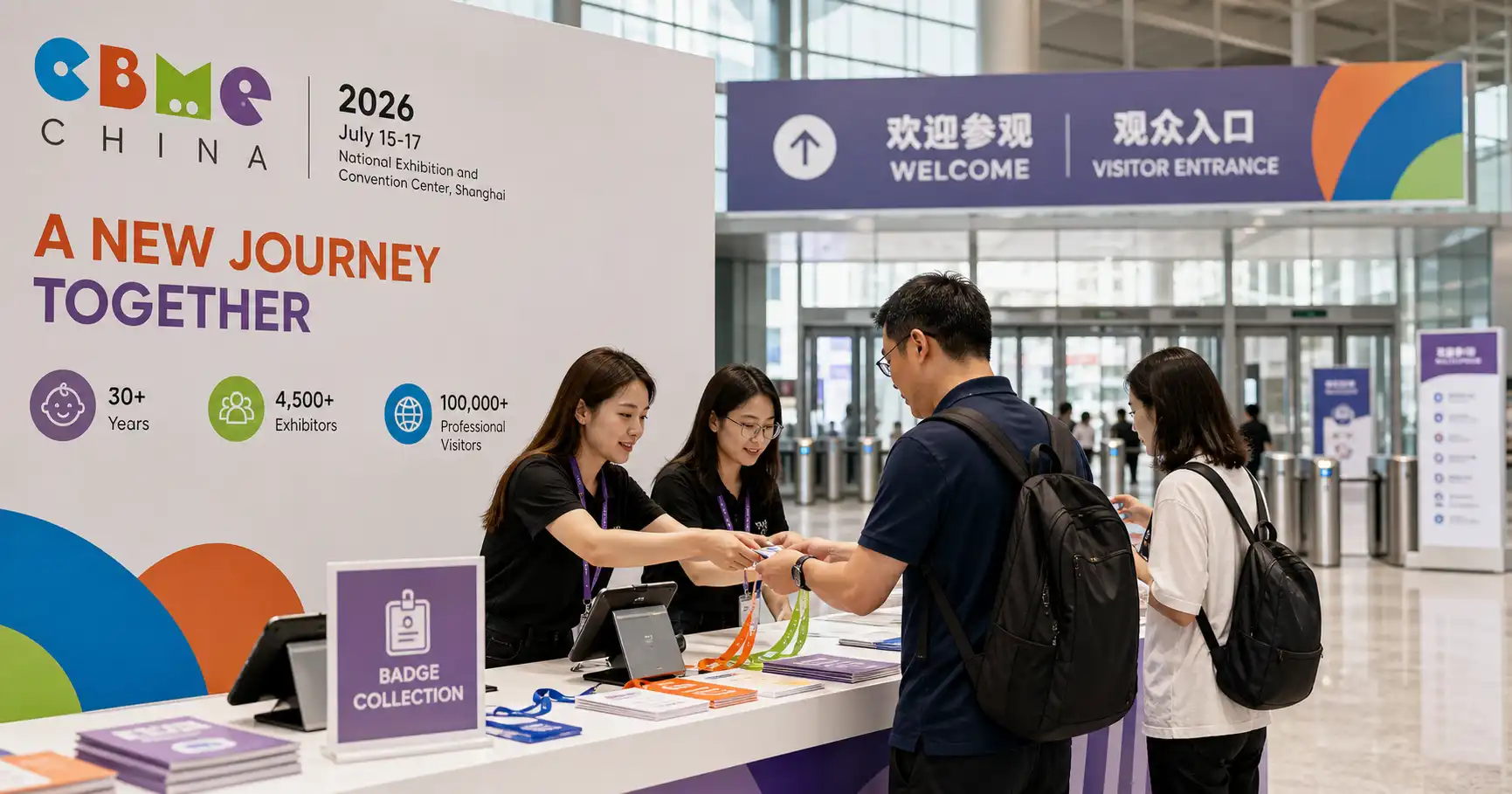
CBME China 2026
- Date: July 15–17, 2026
- Venue: National Exhibition and Convention Center (NECC), 333 Songze Avenue, Qingpu District, Shanghai 201102
- Stroller Category: Officially listed as “Strollers, Ride-on Toys, Car Seats & Furniture” in the exhibits profile
- Concurrent Events: CBME Toy & Education Expo, CBME Children’s Wear Expo, CBME Food & Health Expo, CBME Supply Chain Expo, Licensing Expo China
- Pre-registration: Free before show (RMB 100 on-site)
- Register: Register to Visit — Free
Why July Heat Changes How You Source Strollers from China
Heat advisories are not just consumer-news chatter in the stroller category — they are a recurring operational risk for global buyers placing summer delivery orders with Chinese factories. Pediatric heat-illness guidance from the American Academy of Pediatrics (source: AAP) finds that children absorb more heat than adults and sweat less efficiently; under identical ambient heat, an infant’s core body temperature can rise 3–5× faster than an adult’s.
The “excessive heat watch” — the warning language the US National Weather Service uses when dangerous heat is possible in 24–72 hours — echoes the heat-health warning language used across Europe and East Asia. If your retail channel ships strollers into a July delivery window, you are sourcing into the first 4–6 weeks of the season that produces the highest reported volume of stroller-incident complaints.
For China-manufactured strollers, three structural facts make July sourcing uniquely risk-loaded:
- Stroller categories overlap with multi-agency regulation. A stroller is simultaneously a consumer product (CPSC), a wheeled child conveyance (ASTM F833 / EN 1888), and a textile-laden good. Heat is the one dimension that crosses all three regulatory layers without being explicitly tested.
- Chinese factories have strong baseline compliance but inconsistent above-minimum testing. Almost every credible Ningbo-, Zhongshan-, or Kunshan-area stroller factory will already test to ASTM F833 or EN 1888. Heat-resistance testing — beyond a basic “passed lab test” claim — is where documentation varies. Stroller, car seat and baby gear suppliers listed at CBME China 2026 represent the full spectrum of testing rigour; use the scorecard in this article to sort them efficiently.
- Show-floor pressure in July compresses verification time. CBME China 2026 (source: CBME China official site) runs July 15–17, just as peak heat advisories begin. Buyers who walked the floor last July will recognise the urgency of getting heat-spec documentation in writing before placing a PO, not as a post-hoc request. If you are planning how to plan a 3-day sourcing trip to CBME China 2026, make heat-spec verification the first agenda item for every stroller-category meeting.
This article treats heat safety as the buyer’s above-minimum spec layer — the questions you ask a manufacturer in addition to passing ASTM F833, EN 1888, and GB 14748. The structure below is five indicators, each tied to an evidence-based test method and a specific question you can put to the supplier.
The 5 Heat-Resistance Specs That Actually Matter
These five specifications come up across the most credible Chinese stroller factories and the most rigorous Western retail-buyer heat-test programs. Use them to compare suppliers on a level playing field.
Spec #1 — Heat-Stable Foam & Padding
The risk. Polyurethane (PU) foam — the most common seat and harness-padding material in mid-tier strollers — begins to off-gas and degrade at ambient temperatures above ~70°C, a level an enclosed black-canopy stroller parked in direct sun can reach within 10–15 minutes.
Buyer question to ask: “Which foam chemistry is used in the seat and harness padding, and at what continuous-use temperature does the supplier’s accelerated-aging test certify it remains stable? Ask for the lab report and the test temperature, not just a ‘passed lab test’ claim.”
What’s acceptable:
- PU foam with a documented accelerated-aging test (60°C / 7-day equivalent).
- EPE (cross-linked polyethylene) foam — higher thermal stability, used in premium strollers.
- EVA foam — moderate stability, common in toddler products.
- A producer who can hand you a sample and a thermal-stability curve is preferable to one who cannot.
Spec #2 — UV-Resistant Canopy Fabric
The risk. Canopy fabric — most commonly PET polyester — degrades under UV-B exposure. Industry-standard accelerated weathering, AATCC TM 186 (source: AATCC), documents tensile-strength and color-fade loss. Six to twelve months of typical summer sun exposure can reduce PET tensile strength by 40–60%, depending on weave, denier, and color.
Buyer question to ask: “What UV-exposure weathering test method is used on the canopy, and what is the documented tensile-strength retention after the test cycle? Bonus: ask for the color-fastness grade to ISO 105-B02.”
What’s acceptable:
- Canopy fabric that retains ≥70% tensile strength after the documented UV-exposure cycle.
- Color-fastness rating ≥4 on the ISO 105-B02 grey-scale.
- A weaving or knit structure, not a laminated film (laminated films tend to delaminate under UV and heat).
Spec #3 — Cool-Touch Frame & Surface Temperature
The risk. Bare-metal stroller frames in direct sun can reach 60°C+. The World Health Organization (source: WHO) places the contact-burn threshold at ~44°C with prolonged skin contact. Black or dark-anodized aluminum frames run 15–25°C hotter than silver or white frames under identical sunlight.
Buyer question to ask: “What is the maximum surface temperature documented on the bare handle and seat-frame materials in your summer-test cycle, and is a color or anodizing option available that lowers the surface temperature? Some Western retailers refuse any dark-frame stroller above 40°C peak surface temperature in the lab test.”
What’s acceptable:
- A documented peak surface-temperature number on the handle and seat-frame materials (not just “passes test” without a number).
- A color or anodizing option for cooler-touch surfaces in light colors.
- Avoid any frame advertised as “premium black-anodized” without a temperature claim — these run hottest.
Spec #4 — Heat-Stable Wheels & Brakes
The risk. Standard thermoplastic polyurethane (TPU) wheels can soften above 60–70°C, which compromises brake-grip and tracking. Peroxide-cured EPDM and silicone-blend polymers hold shape and braking consistency at higher temperatures.
Buyer question to ask: “What is the wheel and brake polymer grade, and what is the maximum operating temperature documented in the wheel’s load-and-speed test? Do you publish a high-temperature-cycle test (e.g., 60°C / 8-hour equivalent)?”
What’s acceptable:
- Wheel and brake polymer explicitly identified (TPU / EPDM / silicone-blend).
- A documented high-temperature-cycle test report — not just “passed lab test.”
- Brake-force retention ≥80% before/after the high-temperature cycle.
Spec #5 — Airflow & Ventilation Architecture
The risk. Strollers without mesh ventilation panels or breathable seat-back fabrics trap interior heat. Knitted or 3-D mesh fabrics can reduce interior stroller temperatures by 2–5°C versus solid fabric in identical sunlight.
Buyer question to ask: “What percentage of the canopy and seat-back surface is mesh or breathable fabric, and do you have a documented interior-temperature test? Look for a product photo showing the mesh panels, not just marketing copy.”
What’s acceptable:
- Canopy with a rear mesh ventilation panel or zip-open ventilation layer.
- Seat-back fabric in woven or knit (not laminated).
- A documented interior-temperature delta number, ideally in °C, against a control stroller in the same sun-angle test.
Stroller Heat Safety Standards Around the World
Stroller regulation is structured around three regional standards:
| Standard | Region | Coverage | Heat-Resistance Test? |
|---|---|---|---|
| ASTM F833 (Carriages and Strollers) + 16 CFR 1227 | US | Mechanical hazards, brakes, restraint systems, stability, locking | No — covers mechanical safety only |
| EN 1888 (Child care articles — Wheeled child conveyances) | EU | Mechanical and chemical safety, brakes, parking devices, harness integrity | No — covers mechanical safety only |
| GB 14748 (Safety requirements for wheeled child conveyances for infants and young children) | China | Mechanical and chemical safety | No — covers mechanical safety only |
The structural gap is the same in every region: the three standards regulate the mechanical safety of the stroller, not the thermal comfort or surface-temperature safety of the materials. That is why the 5-indicator framework above is best understood as a buyer-spec layer above the regulatory minimum — a defined specification set for your factory to test against, document, and warrant.
For buyers who want a broader view of the Chinese baby product manufacturing landscape before diving into stroller-specific specs, see our China baby and maternity market guide 2026 for context on the supplier ecosystem.
Practical implication for buyers: Do not ask a Chinese factory whether their stroller “passes” heat-safety tests. The standards don’t include them. Instead, ask for the five documents above and verify their source. If you are learning how to source baby products from China with a stroller focus, build the heat-spec scorecard into your pre-show supplier questionnaire.
Heat-Specific Red Flags When Evaluating Chinese Manufacturers
A short “do-not-list” worth keeping in front of you on the CBME show floor:
- “We have a heat-resistant certificate.” Heat-resistance certification is not a single industry certificate. Ask which standard, which test method, and which lab.
- “Our foam is heat-resistant.” Without a temperature and an aging-test number, this is marketing copy, not documentation.
- No lab name or lab accreditation on the report. Every credible report names an accredited lab (e.g., SGS, Intertek, TUV, Bureau Veritas). A missing lab name is a red flag.
- Test report older than 12 months. Material formulations change; insist on reports from the production run that will fill your PO.
- Vague black-frame-with-padding claims. If the supplier cannot produce a color-anodizing option for cooler touch, ask why — it’s a 5-minute change for most manufacturers.
The fastest way to validate supplier claims at scale is to engage the CBME China 2026 Hosted Buyer Program (source: CBME China official site), which pre-matches international buyers with suppliers willing to provide the documentation you ask for.
Soft CTA: Pre-screen summer-delivery stroller candidates using the CBME China Product Spotlight (source: CBME China official site) before the show; this lets you walk onto the floor with a shortlist of suppliers likely to have the heat-spec documentation you need.
How CBME China 2026 Helps You Verify Heat Specs Onsite
The “Strollers, Ride-on Toys, Car Seats & Furniture” category at CBME China 2026 (source: CBME China official site) is the largest concentration of Chinese stroller manufacturers in a single venue. If you are sourcing for a July–September delivery window, three CBME tools accelerate the heat-spec verification work:
- Pre-show shortlisting with the Product Spotlight. Use the monthly Product Spotlight (source: CBME China official site) to flag strollers by category before arrival. Most Spotlight listings now include material-specification fields; look for foam chemistry, canopy fabric grade, and frame-anodizing color in the supplier profile.
- Pre-matched meetings via the Hosted Buyer Program. The Hosted Buyer Program (source: CBME China official site) pre-matches international buyers with suppliers by category. Once matched, ask the supplier in writing to bring documentation on the 5 specs in Section 2.
- Concurrent CBME Toy & Education Expo and Children’s Wear Expo. These adjacent expos share the NECC halls, so a buyer can compare two stroller fabric grades side-by-side or discuss fabric sourcing with a textiles exhibitor in the same trip.
NECC Shanghai halls are climate-controlled; allow for outdoor walking between halls in July heat — late-morning and mid-afternoon outdoor travel between halls is the hottest window. See Get to Venue (source: CBME China official site) for venue logistics.
Frequently Asked Questions
Why does July sourcing change how I should evaluate Chinese stroller factories?
July is the start of the high-heat-risk delivery window in the northern hemisphere. Buying teams placing orders for summer or early-fall delivery are the first to receive consumer complaints when strollers perform poorly in heat. The risk is upstream — in supplier heat-spec testing — not just in retail returns.
Does ASTM F833 cover heat safety for strollers?
No. ASTM F833 (source: ASTM International) and the federal incorporation 16 CFR 1227 cover mechanical, brake, restraint, and locking hazards. It does not include a quantitative heat-resistance or surface-temperature test for end-user comfort or contact-burn prevention. Buyers must add heat testing as an above-minimum specification. (source: CPSC)
Does EN 1888 test for surface temperature either?
No. EN 1888 covers mechanical and chemical safety, brakes, parking devices, and harness integrity, but does not include a quantitative maximum surface-temperature test. EU buyers must also layer in their own heat-spec framework — there is no harmonised EU heat-test. (source: CEN)
What is the contact-burn threshold for a baby’s skin?
Pediatric burn guidance places the contact-burn threshold at ~44°C with prolonged skin contact. Bare-metal stroller frames in direct sun can reach 60°C or more, well above this threshold. Cool-touch frames (light-colored anodizing, wood-effect overlays) keep surface temperatures lower. (source: WHO)
How should foam padding be tested for heat stability?
Ask the supplier for an accelerated-aging test report at the foam’s continuous-use temperature. PU foam typically degrades above ~70°C, while EPE and EVA foams remain stable at higher temperatures. Acceptable documentation: the test temperature, the test duration, and the aging-cycle results.
What UV test should I require for canopy fabric?
AATCC TM 186 (source: AATCC) (or ISO 105-B06) is the standard accelerated-weathering test method for canopy fabric. Acceptable results: canopy fabric retaining ≥70% tensile strength after the documented UV-exposure cycle, with a color-fastness grade ≥4 on the ISO 105-B02 grey scale.
Can CBME China 2026 help me find heat-tested stroller suppliers?
Yes. The “Strollers, Ride-on Toys, Car Seats & Furniture” exhibitor cohort at CBME China 2026 (source: CBME China official site) (July 15–17, NECC Shanghai) is the largest concentration of Chinese stroller manufacturers in a single venue. Use the Product Spotlight (source: CBME China official site) for pre-show shortlisting, and apply to the Hosted Buyer Program (source: CBME China official site) to get pre-matched with suppliers willing to provide the heat-spec documentation you need.
Official Sources
- CBME China — About the show (source: CBME China official site)
- CBME China — Why visit (source: CBME China official site)
- CBME China — Featured Product Spotlight (source: CBME China official site)
- CBME China — Hosted Buyer Program (source: CBME China official site)
- CBME China — Get to Venue (source: CBME China official site)
- ASTM F833 — Standard Consumer Safety Specification for Carriages and Strollers (source: ASTM International)
- CPSC — Carriages and Strollers Business Guidance (source: US Consumer Product Safety Commission)
- CEN — EN 1888 Child care articles — Wheeled child conveyances (source: European Committee for Standardization)
- American Academy of Pediatrics — Heat-related illness guidance (source: AAP)
- WHO — Burns fact sheet (source: World Health Organization)
- AATCC TM 186 — Weathering test methods (source: AATCC)
Publisher and Editorial Information
Publisher: CBME China, a division of Informa
Editorial team: CBME China Editorial Team
This article is commercial buyer guidance, not legal, medical, or compliance advice. Always verify heat-safety specifications with the manufacturer and a CPSC-accepted third-party lab before placing orders.
Last reviewed: July 4, 2026 | First published: July 4, 2026 | Publisher: CBME China, a division of Informa
Plan your CBME China 2026 stroller sourcing with the 5-indicator heat-spec framework in hand. The “Strollers, Ride-on Toys, Car Seats & Furniture” exhibitor cohort at CBME China 2026 (July 15–17, NECC Shanghai) is the largest concentration of Chinese stroller manufacturers in a single venue. Pre-register for free, shortlist suppliers with the Product Spotlight, and apply to the Hosted Buyer Program for pre-matched meetings.