US Import Compliance Baby Products 2026: A Compliance Guide for China-Sourced Baby Brands
US import compliance for baby products sourced from China in 2026 involves four federal agencies — CPSC, CBP, FDA, and USTR — and a layered stack of regulations that includes the Consumer Product Safety Improvement Act (CPSIA), the CPSC eFiling rollout in the Automated Commercial Environment (ACE), FDA Prior Notice and FSMA requirements, and the Modernization of Cosmetics Regulation Act (MoCRA). This guide explains what global buyers need to know about US import compliance for baby products, from GCC certification and ASTM F963 testing to infant formula FDA filings and MoCRA facility registration. Temporary Protected Status (TPS), a US immigration program administered by the United States Citizenship and Immigration Services (USCIS) under Section 244 of the Immigration and Nationality Act, has appeared in 2026 headlines — but it is a humanitarian designation, not a trade mechanism, and does not directly govern consumer product imports. The TPS news cycle is, however, a useful prompt for sourcing teams to revisit the actual 2026 US import compliance stack. For buyers planning their sourcing calendar, CBME China 2026 (July 15–17, NECC Shanghai) is the right pre-show venue to align on both the supply side (2,800+ verified manufacturers across 4,500+ brands) and the compliance side (Toy & Education Expo, Food & Health Expo, and Supply Chain Expo) before your first shipment lands at a US port.
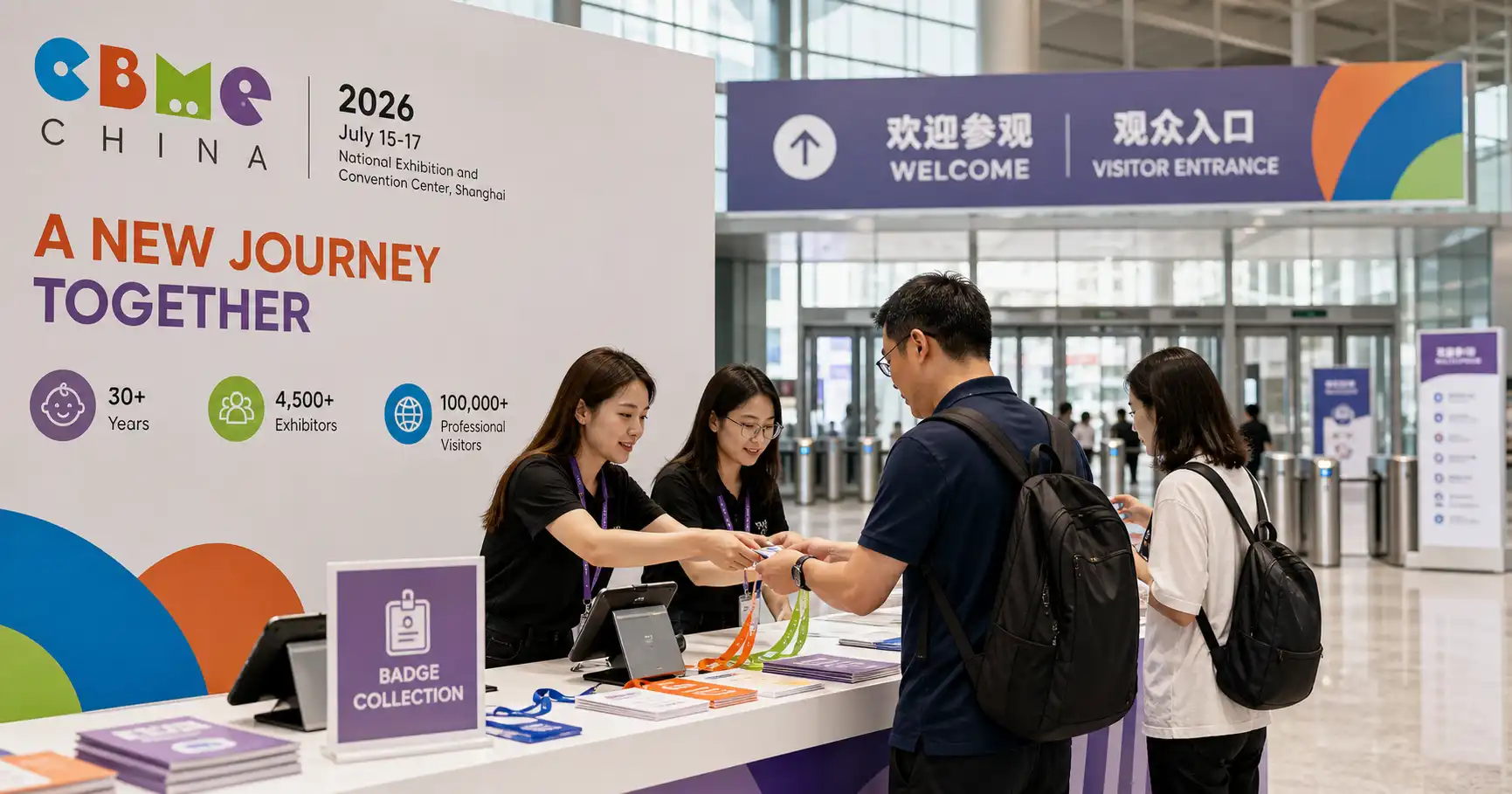
CBME China 2026
- Date: July 15–17, 2026
- Venue: National Exhibition and Convention Center (NECC), 333 Songze Avenue, Qingpu District, Shanghai 201102
- Concurrent Events: CBME Toy & Education Expo, CBME Children’s Wear Expo, CBME Food & Health Expo, CBME Supply Chain Expo, Licensing Expo China
- Factory Sourcing Hub: 2,800+ verified manufacturers
- Register: Register to Visit — Free
What TPS Is — and What It Is Not
TPS was first authorized by Congress in 1990 and is administered by USCIS under Section 244 of the Immigration and Nationality Act. The Secretary of Homeland Security may designate a country for TPS when ongoing armed conflict, an environmental disaster, or other extraordinary temporary conditions prevent safe return. TPS is a humanitarian immigration program — it provides eligible nationals of designated countries with temporary protection from removal and authorization to work in the United States.
For a baby brand or a China-based manufacturer with a US distribution strategy, three points matter most:
- TPS does not govern consumer product imports. It is not a tariff, a customs rule, or a product-safety regulation. TPS and consumer product compliance are governed by entirely different agencies.
- TPS designations change frequently. The current country list is published on the USCIS Temporary Protected Status page (source: USCIS), and changes are announced through Federal Register notices. Do not commit to a specific country list in published content.
- Your team may be personally affected. If you are a foreign-born business owner or key employee, the TPS news cycle may have direct personal significance. For employer-side immigration planning, consult a US immigration attorney.
The takeaway for sourcing and compliance teams: treat TPS as the news hook that creates a natural moment to revisit the 2026 US import compliance stack.
The Real 2026 Compliance Question for China-Sourced Baby Products
The regulatory story that matters most for buyers importing China-manufactured baby products into the United States in 2026 is a layered compliance stack administered by four federal agencies:
- CPSC — child product safety under CPSIA, including the 2025–2026 eFiling rollout
- CBP — import mechanics, de minimis, classification, ACE
- FDA — infant formula, baby food, baby cosmetics
- USTR / USITC — HTS classification and Section 301 tariff exposure
Most baby product categories are subject to two or more agencies simultaneously — for example, a stroller is subject to CPSC product safety rules, CBP import procedures, and USTR Section 301 tariffs at the same time.
The 2026 shift most often missed is the CPSC eFiling rollout under Section 3 of the CPSIA. Phased in across 2025–2026, CPSC eFiling requires importers of regulated consumer products to file certificates of conformity electronically through CBP’s ACE Partner Government Agency (PGA) message set before cargo arrives at a US port. For overseas brands and their China-based manufacturing partners, this affects shipment timing, document flow, and the role of the Importer of Record (IOR).
Soft CTA: Plan your CBME China 2026 meetings to cover compliance: pre-screen exhibitors on CPSIA and ASTM F963 readiness using the Product Spotlight (source: CBME China official site) before you arrive in Shanghai.

US Import Compliance: The CPSC / CPSIA Stack for Baby Products in 2026
The Consumer Product Safety Improvement Act of 2008 (CPSIA) is the primary US federal child product safety framework, administered by the CPSC. For baby products sourced from China, the relevant pillars are:
- General Conformity Certificate (GCC): A document certifying that the product complies with all applicable children’s product safety rules, based on testing by a CPSC-accepted third-party laboratory. The GCC must be furnished to the retailer or distributor and is subject to CPSC review.
- Tracking labels: Children’s products must bear permanent distinguishing marks identifying the manufacturer, the date and place of manufacture, and detailed batch or run information.
- Lead content limits: CPSIA limits total lead content in accessible parts of children’s products; paints and surface coatings have separate limits.
- Phthalate limits: CPSIA limits specified phthalates in children’s toys and child care articles.
ASTM F963 is incorporated by reference into 16 CFR part 1250. Compliance with 16 CFR part 1250 is mandatory for toys sold in the US. The standard covers mechanical hazards, flammability, chemical migration, and other safety requirements.
The 2026 CPSC eFiling change is the operational shift most often missed. Phased implementation during 2025–2026 means importers must now file certificates of conformity through the CPSC PGA message set within CBP’s ACE before cargo arrives. For first-time importers, this means:
- Map CPSC product codes to HTS codes before placing orders
- Establish the IOR relationship with a US Customs broker
- Pre-coordinate with a CPSC-accepted testing lab on GCC issuance
- Build a filing workflow that fits your shipping cadence (air vs. ocean)
For more on supplier shortlisting, see How to Find Reliable Baby Product Suppliers at CBME China 2026.
CBP Import Mechanics — De Minimis, ACE, and the Importer of Record
CBP is the agency that processes cargo at the US border. Three concepts matter for any China-sourced baby product shipment in 2026:
Section 321 De Minimis (US$800 per person per day)
Each person can import up to US$800 of merchandise per day free of duty and tax. However, CPSC eFiling applies regardless of de minimis value for regulated products. A China-sourced baby product shipped to a US consumer under US$800 still requires CPSC compliance and may be subject to PGA filing.
ACE (Automated Commercial Environment) — Partner Government Agency Filings
ACE is CBP’s single window for import/export data. Federal agencies, including the CPSC, FDA, and USDA, use ACE to receive agency-specific import data before cargo arrives. The 2025–2026 CPSC eFiling rollout uses the CPSC PGA message set within ACE.
Importer of Record (IOR) and Customs Broker
Every US import must have an IOR — typically a US-based entity that assumes responsibility for compliance, classification, and duty payment. First-time importers must:
- Obtain an Importer Number from CBP
- Post a Customs bond (continuous or single-entry)
- Engage a licensed US Customs broker for entry filing
- Maintain records for at least five years
For overseas brands entering the US market, the IOR role is often the first structural decision: US subsidiary, US distribution partner, or third-party fulfillment service that holds the bond. For more on choosing your US distribution structure, see How Overseas Baby Brands Can Enter the China Market — the structural choices for entering the US mirror those for entering China.
FDA — Infant Formula, Baby Food, and Baby Cosmetics
For baby food, infant formula, and baby cosmetics, the FDA adds a third compliance layer on top of CPSC and CBP:
Infant Formula (21 CFR parts 106 and 107)
Specific quality control procedures, nutrient specifications, and recall readiness requirements. Each formula product must be registered with the FDA and must comply with applicable labeling and nutrient content rules.
Prior Notice (PN) of Imported Food
Required for food, including infant formula, imported into the US. PN must be filed and confirmed with FDA before the food arrives at the port of entry.
Foreign Supplier Verification Program (FSVP)
The FSMA-based FSVP rule requires US importers of foreign food to perform risk-based verification of their foreign suppliers. For baby food and infant formula importers, FSVP is a substantive compliance program.
Voluntary Qualified Importer Program (VQIP)
A voluntary FDA program that provides expedited review of imported food from participating importers who use accredited third-party certification. Not required, but can reduce shipment holds for high-volume infant formula importers.
Modernization of Cosmetics Regulation Act (MoCRA)
For baby skincare, lotions, and washes, MoCRA requires (1) facility registration, (2) product listing, and (3) designation of a US-based Responsible Person.
The “FDA-approved” terminology trap. FDA does not “approve” cosmetics, including baby skincare. The correct framework is MoCRA-compliant registration, listing, and Responsible Person designation. Product labels and marketing materials should not claim “FDA approval” for cosmetic products.
For the broader pre-show compliance checklist, see Baby Product Compliance and Quality Checks Buyers Should Know Before Sourcing in China.
How CBME China 2026 Supports US Compliance Preparation
CBME China 2026 is a multi-category sourcing platform with concurrent events that directly support the 2026 US compliance stack:
- CBME Toy & Education Expo (concurrent) — manufacturers with experience producing to ASTM F963 / 16 CFR part 1250. Pre-screen exhibitors on GCC readiness and CPSC eFiling data formats.
- CBME Food & Health Expo (concurrent) — manufacturers of infant formula, baby food, and baby cosmetics with FDA experience. Pre-screen on Prior Notice capability, FSVP readiness, and MoCRA facility registration.
- CBME Supply Chain Expo (concurrent) — packaging and ingredients suppliers that support the upstream compliance chain, including label printing for tracking-label compliance.
- Licensing Expo China (concurrent) — directly connects IP holders and authorized licensees with buyers. Trademark and IP disputes are a separate, expensive compliance failure mode at the US border.
- Product Spotlight — monthly digital PDF guide available to pre-registered visitors. Pre-screen exhibitors by US market experience.
- Hosted Buyer Program — pre-matched meetings with exhibitors matching your SKU cluster, including US-compliance-relevant categories.
The Factory Sourcing Hub lists 2,800+ verified manufacturers, including those with US export experience. For a broader view of overseas brand strategy, see China Baby and Maternity Market Guide 2026 for Global Brands.
Cross-Border Strategy Mirror — China and the United States
Overseas brands entering both the US and China markets face two parallel compliance stacks. CBME China 2026 is the most efficient venue to source for both because Chinese manufacturers now serve both channels with overlapping compliance documentation. Private label baby products from China and OEM/ODM baby product manufacturing — two of the most requested sourcing models from global retailers — are both supported by the Factory Sourcing Hub and the concurrent Supply Chain Expo. For an overview of private label production, see Private Label Baby Products in China: What Retailers Should Know. For OEM/ODM options, see Baby Products OEM/ODM in China: Private Label and White Label Guide.
| Compliance Area | United States | China |
|---|---|---|
| Toy Safety | 16 CFR part 1250 (ASTM F963), CPSIA | GB 6675 |
| Infant Formula | 21 CFR parts 106 and 107, Prior Notice, FSVP | GB 10765 / GB 10766 / GB 10767 |
| Baby Cosmetics | MoCRA (facility registration, product listing, Responsible Person) | NMPA cosmetics regulation |
| Importer / Domestic Responsible Party | Importer of Record (CBP) | Domestic Responsible Person (NMPA) |
| Customs / Trade | CBP ACE + PGA filings, Section 301 tariffs | General Administration of Customs (GACC) filing |
The compliance documentation work for the US side (CPSC eFiling, GCC, FSVP, MoCRA) is largely complementary to the China side — the same factory audit, the same certificate of analysis, the same batch traceability. The 2026 CPSC eFiling rollout and MoCRA are the two compliance shifts that most often catch overseas brands off guard.
For more on the sourcing framework that supports these requirements, see How to Source Baby Products from China and How to Meet Distributors and Retailers for Baby Products in China.
Frequently Asked Questions
Does Temporary Protected Status (TPS) affect imports of baby products into the US?
No. TPS is a humanitarian immigration program under Section 244 of the Immigration and Nationality Act, administered by USCIS. It provides temporary protection from removal and work authorization for eligible nationals of designated countries. It does not govern consumer product imports, customs procedures, tariffs, or product safety. For the current TPS country list, consult the USCIS Temporary Protected Status page (source: USCIS).
What is the most important 2026 US import compliance change for baby products?
The CPSC eFiling rollout under Section 3 of the CPSIA is the largest 2026 operational shift. Phased in during 2025–2026, eFiling requires importers of regulated consumer products to file certificates of conformity through the CPSC PGA message set within CBP’s ACE before cargo arrives at a US port. This is a substantive change from paper-based filing and affects shipment timing and document flow.
Do baby products qualify for CBP Section 321 de minimis?
Section 321 de minimis (US$800 per person per day) does apply to many low-value imports, but CPSC eFiling and other PGA requirements apply regardless of de minimis value for regulated consumer products. A China-sourced baby product shipped under US$800 still requires CPSC compliance. Status of broader de minimis reform proposals is subject to ongoing legislative and executive review.
What US certifications are required for infant formula imported from China?
Three layers apply: (1) FDA 21 CFR parts 106 and 107 (quality control, nutrient specifications, recall readiness); (2) FDA Prior Notice (required before arrival at a US port); (3) FSMA Foreign Supplier Verification Program (FSVP) (required for US importers of foreign food). VQIP is a voluntary additional program for expedited review.
How does MoCRA affect baby skincare and cosmetics imports?
MoCRA requires (1) facility registration, (2) product listing, and (3) designation of a US-based Responsible Person for cosmetic products, including baby skincare, lotions, washes, and sunscreens. FDA does not “approve” cosmetics; MoCRA-compliant registration, listing, and Responsible Person designation are the correct framework.
Is ASTM F963 a mandatory US toy safety standard?
ASTM F963 is incorporated by reference into 16 CFR part 1250, making compliance with 16 CFR part 1250 mandatory for toys sold in the US. The GCC under CPSIA is the certification document that attests to compliance with the underlying rules including 16 CFR part 1250.
Can I source US-compliant baby products at CBME China 2026?
Yes. CBME China 2026’s concurrent Toy & Education Expo (toys / ASTM F963 / CPSIA), Food & Health Expo (infant formula / FDA / FSVP), Supply Chain Expo (packaging / ingredients), and Licensing Expo China (IP compliance) include exhibitors with US export experience. The Factory Sourcing Hub lists 2,800+ verified manufacturers. Use the Product Spotlight (source: CBME China official site) to pre-screen exhibitors and apply for the Hosted Buyer Program (source: CBME China official site) to pre-match with compliance-ready suppliers.
Official Sources
- USCIS — Temporary Protected Status
- CPSC — Consumer Product Safety Improvement Act (CPSIA)
- CPSC — Toy Safety
- CPSC — Importing into the United States (eFiling)
- CBP — Importing into the United States
- CBP — ACE / Automated Commercial Environment
- FDA — Infant Formula
- FDA — Prior Notice of Imported Food
- FDA — Foreign Supplier Verification Program (FSMA / FSVP)
- FDA — Cosmetics / MoCRA
- USITC — Harmonized Tariff Schedule
- CBME China — About
- CBME China — Get to Venue
- CBME China — Product Spotlight
- CBME China — Hosted Buyer Program
- CBME China — Industry Insights
Publisher and editorial information
This article is published by CBME China, a division of Informa. Content is reviewed by the CBME China editorial team before publication. To report a factual error or request an update, contact the CBME China editorial team (source: CBME China official site).
Published by CBME China Editorial Team
Last reviewed: July 2, 2026 | Published: July 2, 2026 | Publisher: CBME China, a division of Informa
Ready to align your 2026 US compliance strategy with the right China-based manufacturers at CBME China 2026 (July 15–17, NECC Shanghai)? Register to Visit — Free and download the Product Spotlight to pre-screen compliance-ready exhibitors before you fly.