China is among the world’s largest manufacturing bases for renewable energy components — a position built on concentrated industrial clusters, established supply chain ecosystems, and rapid factory modernization (source: CBME China official site). That same industrial infrastructure now produces a wide range of sustainable baby products, from organic cotton apparel and bamboo fiber gear to biodegradable diapers, compostable packaging, and reusable feeding products. For global buyers, the challenge is finding manufacturers whose sustainability claims hold up to scrutiny — and CBME China 2026, running July 15–17 at the National Exhibition and Convention Center (Shanghai), brings together 3,200+ exhibitors across baby, maternity, and supply chain categories, including a dedicated CBME Supply Chain Expo, so buyers can verify materials, examine packaging samples, and meet certified manufacturers face-to-face.
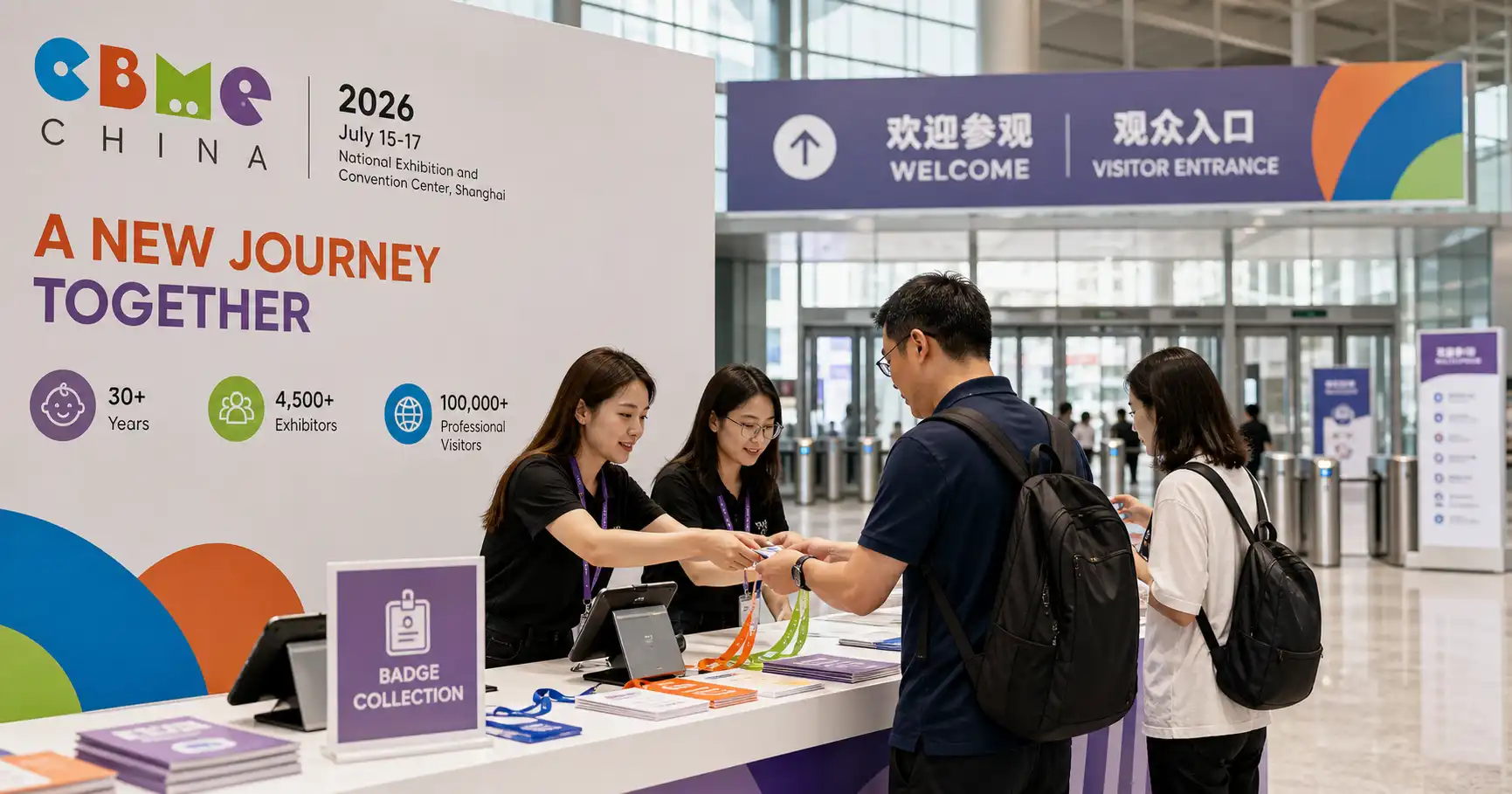
CBME China 2026
- Date: July 15–17, 2026 (source: CBME China official site)
- Venue: National Exhibition and Convention Center (NECC), Shanghai, China
- Sustainable Coverage: Organic apparel, biodegradable hygiene, sustainable packaging, FSC-certified toys, and reusable feeding products across the main show floor and the CBME Supply Chain Expo
- Concurrent: CBME Toy & Education Expo, CBME Children’s Wear Expo, CBME Food & Health Expo, CBME Supply Chain Expo, Licensing Expo China
- Scale: 3,200+ exhibitors, 4,500+ brands, 100,000+ trade buyers, ~300,000 m² (source: CBME China official site)
- Admission: RMB 100 (waived with pre-registration) (source: CBME China official site)
Why China Is Becoming a Major Hub for Sustainable Baby Products
The industrial clusters that gave China leadership in solar panel production have evolved into broader low-carbon manufacturing hubs. Guangdong, Zhejiang, and Jiangsu — the same provinces that anchor renewable energy component production — also house fabric mills, polymer processors, and packaging converters serving the baby and maternity product category. For buyers, this concentration of capability means sustainable baby products can be sourced alongside low-carbon industrial inputs, often from factories with overlapping modernization agendas.
Three structural factors drive China’s growing role in sustainable baby product manufacturing:
- Established export-grade manufacturing infrastructure. Chinese factories producing for global baby brands already operate to international safety, chemical, and labeling standards. Adding organic, recycled, or bio-based inputs is incremental to existing capability.
- Material diversity. China’s textile sector produces organic cotton, bamboo fiber, recycled polyester, and recycled cotton at scale. Its polymer industry produces bio-based plastics, compostable bioplastics, and food-grade silicone suitable for baby products. Its forestry supply chain — including FSC-certified bamboo and wood sources — supports toys, furniture, and packaging.
- Convergence with low-carbon supply chain trends. As multinational buyers respond to EU carbon pricing, deforestation regulations, and packaging rules, Chinese suppliers are extending existing factory modernization programs to include carbon accounting, recycled content, and certified low-carbon inputs. Buyers who source from these factories can document lower-carbon products for their own ESG reporting.
The CBME Supply Chain Expo, running concurrently with the main CBME China show, connects buyers directly with these upstream partners — fabric mills, polymer processors, packaging converters, and compostable packaging suppliers — making it easier to verify material claims than through online sourcing platforms alone.

Sustainable Baby Product Categories at CBME China 2026
CBME China’s 4,500+ participating brands (source: CBME China official site) span the full baby and maternity product spectrum. Sustainability-related categories include organic and natural fiber baby apparel, bamboo and wood-based baby products, biodegradable diapers and hygiene products, organic baby food and infant nutrition, recycled and recyclable packaging, and reusable feeding and tableware. The show’s Product Spotlight program and the CBME Supply Chain Expo both feature material innovation and packaging suppliers with environmental certifications.
Buyers can evaluate the following sustainable product categories on the show floor:
- Apparel and textiles — organic cotton baby clothing, bamboo fiber towels, recycled polyester outerwear, wool blankets from certified farms
- Hygiene and diapering — biodegradable diapers, flushable wipes, organic cotton cloth diapers
- Feeding and tableware — food-grade silicone bibs and bowls, bamboo utensils, reusable snack pouches, glass baby bottles
- Gear and furniture — FSC-certified wood cribs and high chairs, bamboo stroller accessories, organic cotton bedding
- Toys — FSC wood toys, organic cotton plush, natural rubber teethers
- Packaging — recyclable paper cartons, compostable bioplastic pouches, refillable container systems, FSC-certified shipping materials
With 100,000+ trade buyers and approximately 300,000 m² of exhibition space (source: CBME China official site), CBME China lets buyers compare sustainable product manufacturers across all these categories in a single visit. The hosted buyer program and Supplier Verification Services help connect qualified international buyers with pre-screened exhibitors through structured appointments.
Materials: Organic Cotton, Bamboo, Recycled Fibers and Bio-Based Polymers
Material selection is the foundation of any sustainable baby product claim. The most common sustainable materials available from Chinese manufacturers include:
- Organic cotton (GOTS, OCS): Used in baby apparel, bedding, towels, and cloth diapers. Verify the chain of custody certificate and confirm the cotton is from a certified organic farm.
- Bamboo fiber (FSC for bamboo source, OEKO-TEX for processing): Used in baby apparel, towels, utensils, and toys. Note that “bamboo” may be a viscose/rayon process (chemically intensive) or a mechanically processed fiber (more sustainable). Confirm the processing method.
- Recycled polyester (GRS): Used in baby outerwear, stroller fabric, and diaper outer layers. Verify the recycled content percentage (typically 50–100% rPET).
- Recycled cotton (GRS): Used in baby apparel and accessories. Verify chain of custody.
- Bio-based polymers (PLA, PHA): Used in biodegradable packaging, some feeding products, and flushable hygiene products. Verify compostability certification per the use case (industrial vs. home compost).
- Food-grade silicone: Used in reusable feeding products and teethers. Verify FDA or EU LFGB food contact compliance.
- Natural rubber (FSC for Hevea source): Used in teethers and pacifiers. Verify forestry and processing certifications.
- Wood (FSC / PEFC): Used in toys, furniture, and teethers. Verify sustainable forestry certification.
- Wool (RWS — Responsible Wool Standard): Used in baby apparel and blankets. Optional but increasingly common certification.
Material claims should always be backed by a third-party certification — generic “eco-friendly” or “natural” language without documentation is a common greenwashing pattern. CBME China exhibitors in the sustainable category typically hold one or more of the certifications above and can present certificates on request.
Sustainable Baby Product Packaging: Recyclable, Compostable and Reduced-Plastic Options
Packaging is the most visible sustainability touchpoint for consumers and the most heavily regulated element in import markets. Buyers sourcing from China should evaluate packaging against the requirements of their target market — and ask suppliers to document the packaging’s compliance status.
The main sustainable packaging types available from Chinese manufacturers include:
- Recyclable paper and cardboard (FSC / PEFC): Widely available, suitable for cartons, inserts, and outer shipping. Verify fiber source certification.
- Compostable bioplastics (BPI, TÜV OK Compost): Suitable for product pouches, bags, and some flexible packaging. Confirm whether the certification is for industrial composting facilities or home composting — these are different programs.
- Recycled plastic (APR Design Guide, How2Recycle): Suitable for rigid containers and some flexible packaging. Verify the recycled content percentage and recyclability in the buyer’s target market.
- Refillable and reusable systems: Suitable for feeding products, hygiene products, and skincare. Lower lifetime waste but require consumer behavior change.
- Reduced-plastic designs: Lightweighting, mono-material structures, and plastic-free inserts. Often the lowest-cost sustainability improvement.
Major regulatory drivers shaping sustainable packaging for baby product importers include:
- EU Packaging and Packaging Waste Regulation (PPWR) — entered into force in 2025 with phased application through 2030, setting mandatory recyclability, compostability, recycled content targets, and packaging minimization requirements
- EU Single-Use Plastics Directive (SUPD) — in force since 2021, with bans on certain single-use plastic items and design requirements for others
- California SB 54 — extended producer responsibility (EPR) for packaging, with producer responsibility for collection and recycling
- FTC Green Guides (US) — guidance on environmental marketing claims including recyclability, compostability, and degradable claims
Buyers should request the supplier’s packaging compliance documentation for each target market and confirm claims against the most recent regulatory text. The EU Deforestation Regulation (EUDR) also affects fiber-based packaging that uses palm oil, soy, or wood-derived inputs.

Certifications and Compliance for Sustainable Baby Products
A sustainable baby product claim is only as strong as the certification behind it. Buyers sourcing from China should verify that their supplier holds valid, current certificates from recognized third-party programs — and that the certificate scope matches the specific material or product.
Key certifications and compliance frameworks to verify:
- GOTS (Global Organic Textile Standard): Organic fiber processing — from harvesting through manufacturing, labeling
- OEKO-TEX Standard 100: Testing for harmful substances in textiles at every stage
- GRS (Global Recycled Standard): Recycled material content verification and chain of custody
- OCS (Organic Content Standard): Organic material content verification
- RCS (Recycled Claim Standard): Recycled content verification
- BPI (Biodegradable Products Institute): Compostability of products and packaging (North America)
- TÜV OK Compost / Seedling: Industrial and home compostability certification (EU)
- FSC (Forest Stewardship Council): Sustainable forestry for paper, wood, bamboo products
- PEFC: Sustainable forestry chain of custody
- Cradle to Cradle Certified: Comprehensive product-level sustainability covering material health, reutilization, renewable energy, water stewardship, and social fairness
- China GB standards for textile and baby products: Mandatory safety and labelling for products sold in China
- China RoHS: Restriction of hazardous substances in electronic and electrical products sold in China
- USDA National Organic Program (NOP, US): Organic standard for products sold in the United States
For the European market, buyers should also be aware of the EU Ecodesign for Sustainable Products Regulation (ESPR), which sets product durability, repairability, recycled content, and information requirements across consumer product categories. The EU Carbon Border Adjustment Mechanism (CBAM) is in its transitional phase and applies to specific industrial inputs today, with scope expansion under review.
Avoiding Greenwashing: How Buyers Verify Sustainability Claims at Trade Shows
Sustainable baby product sourcing carries a higher risk of greenwashing than conventional sourcing. Generic “eco-friendly,” “natural,” or “green” claims are common marketing language, but they are not verifiable without third-party documentation. CBME China’s on-floor verification environment gives buyers tools to filter real sustainability suppliers from marketing-led ones.
A practical due-diligence framework for buyers evaluating sustainable baby product suppliers at CBME China 2026:
- Request the certificate, not the claim. Ask to see the actual GOTS, OEKO-TEX, GRS, FSC, or BPI certificate with the supplier’s name and product scope. Verify the certificate is current and matches the product being sold.
- Ask for lab test reports. For any “non-toxic,” “BPA-free,” or “chemical-safe” claim, request recent third-party lab test results (e.g., SGS, Intertek, Bureau Veritas) covering the specific materials.
- Check chain of custody. For organic or recycled claims, ask how the supplier tracks material from source to finished product. GOTS and GRS both require documented chain of custody.
- Verify carbon claims carefully. “Low-carbon” or “carbon-neutral” claims should be backed by recognized carbon accounting (e.g., ISO 14064, GHG Protocol) and, for offset-based claims, by a recognized offset registry. Carbon neutrality through offsets is not the same as reduced manufacturing emissions.
- Use the CBME hosted buyer program. The hosted buyer program connects qualified international buyers with pre-screened suppliers, including suppliers with documented environmental certifications.
- Plan a factory visit. A post-show factory visit is the strongest verification step. Inspect material storage, production lines, wastewater treatment, and waste handling in person.
The strongest sustainability claims are specific, certified, and verifiable. If a supplier cannot produce the underlying documentation at the show, treat the claim as marketing copy rather than a sourcing specification.

Finding and Vetting Sustainable Baby Product Suppliers at CBME China 2026
A practical approach for buyers evaluating sustainable baby product suppliers at CBME China 2026:
- Pre-register for CBME China 2026 to waive the RMB 100 admission fee and access the hosted buyer matchmaking service.
- Review the exhibitor list in advance through the CBME China website to identify manufacturers in target categories — organic apparel, biodegradable hygiene, sustainable packaging, FSC-certified toys.
- Prepare a sustainability verification checklist covering material certifications, recycled or organic content percentages, packaging compliance for target export markets, and third-party lab test reports.
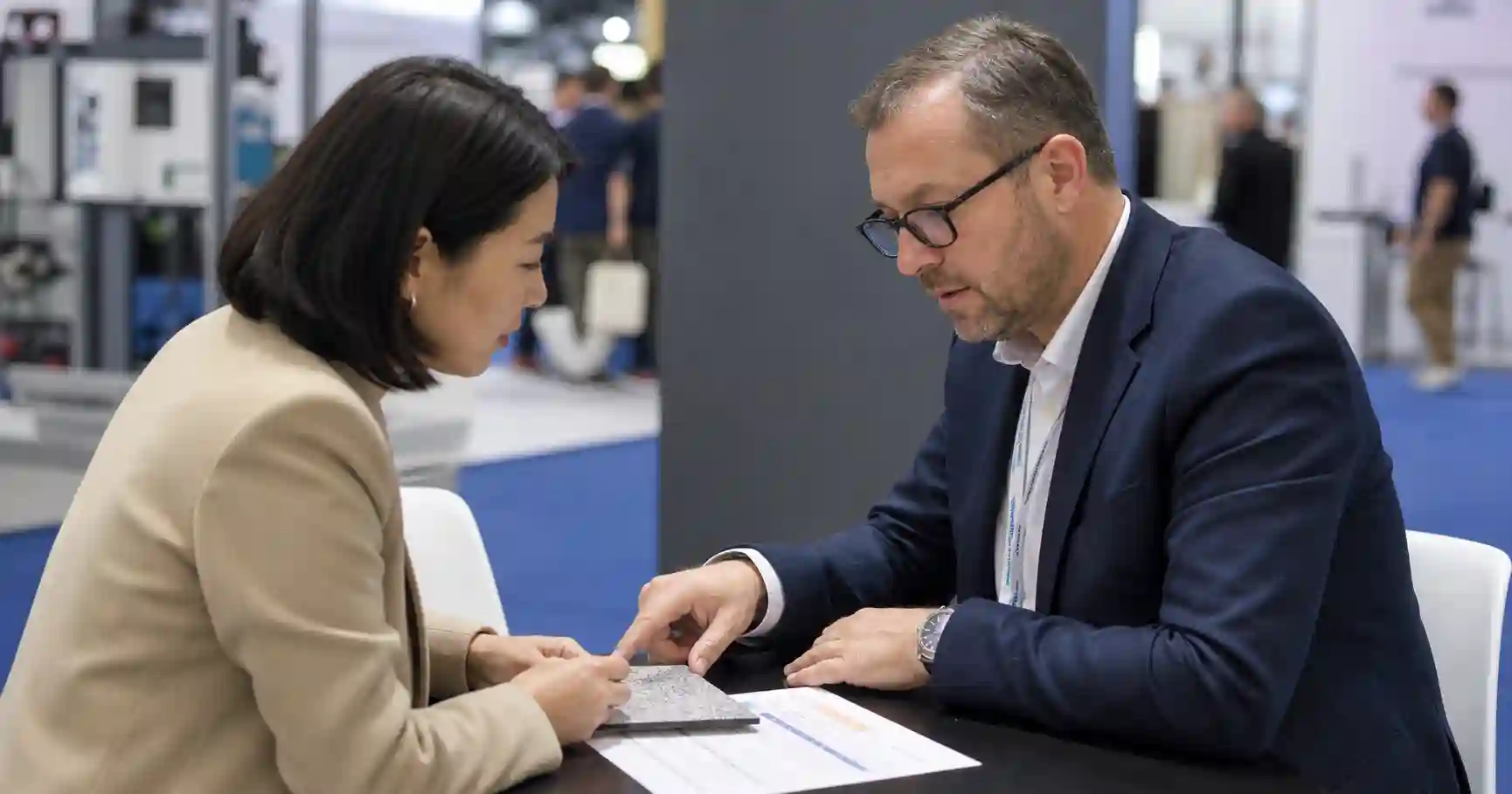
- Test samples on the show floor. Bring material samples or product prototypes for comparison. Examine packaging samples, ask to see certificates, and discuss carbon accounting with sustainability staff.
- Request factory visits or arrange post-show follow-up meetings at the supplier’s production facility.
- Verify export-market compliance with each factory for the buyer’s target market — GOTS or OEKO-TEX for EU, NOP for US, GB standards for products sold in China, and PPWR/SUPD for packaging entering the EU.
The CBME China hosted buyer program connects qualified international buyers with pre-screened suppliers through structured matchmaking appointments (source: CBME China official site), saving days of independent research. Pre-registration waives the RMB 100 admission fee.
Frequently Asked Questions: Sustainable Baby Products Sourcing from China
What types of sustainable baby products can I source from China?
You can source organic cotton baby apparel, bamboo fiber towels and apparel, biodegradable diapers, flushable wipes, organic baby food and infant nutrition, food-grade silicone feeding products, bamboo and FSC-certified wood toys, natural rubber teethers, and a full range of recyclable, compostable, and reduced-plastic packaging. CBME China covers these through its main show floor and the concurrent CBME Supply Chain Expo.
Which materials are most commonly available as sustainable options from Chinese manufacturers?
The most common sustainable materials are organic cotton (GOTS, OCS), bamboo fiber (FSC for source, OEKO-TEX for processing), recycled polyester and recycled cotton (GRS), bio-based polymers such as PLA and PHA (BPI / TÜV OK Compost for compostability), food-grade silicone (FDA / EU LFGB for food contact), FSC-certified wood and bamboo, natural rubber (FSC for Hevea source), and wool (RWS).
What certifications should I look for when sourcing sustainable baby products from China?
The most important third-party certifications for sustainable baby products are GOTS (organic textiles), OEKO-TEX Standard 100 (harmful substance testing), GRS (recycled content), OCS (organic content), FSC and PEFC (sustainable forestry), BPI and TÜV OK Compost (compostability), and Cradle to Cradle Certified (comprehensive product sustainability). For products sold in China, China GB textile and baby product standards and China RoHS apply. For the US market, USDA NOP covers organic claims; FTC Green Guides govern environmental marketing claims. For the EU, PPWR and SUPD govern packaging.
How can I avoid greenwashing when sourcing sustainable baby products from China?
Ask for the actual certificate (not the claim) — GOTS, OEKO-TEX, GRS, FSC, BPI, or Cradle to Cradle certificates with the supplier’s name and product scope. Request recent third-party lab test reports (SGS, Intertek, Bureau Veritas) for any “non-toxic” or “chemical-safe” claim. Verify chain of custody for organic or recycled content. Treat any “100% biodegradable,” “zero carbon,” or “carbon-neutral” claim without third-party documentation as marketing language rather than a sourcing specification. A post-show factory visit is the strongest verification step.
How does CBME China help with sustainable baby product sourcing?
CBME China 2026 runs July 15–17 at NECC Shanghai, featuring 3,200+ exhibitors across baby, maternity, and supply chain categories (source: CBME China official site). The show floor lets buyers examine materials, packaging, and finished products directly, verify certificates face-to-face, and meet certified manufacturers. The concurrent CBME Supply Chain Expo connects buyers with upstream fabric mills, polymer processors, and packaging converters serving the sustainable baby product category. The hosted buyer matchmaking program connects qualified international buyers with pre-screened suppliers through structured appointments. Pre-registration waives the RMB 100 admission fee.
How do EU regulations like PPWR and SUPD affect sustainable baby product packaging from China?
The EU Packaging and Packaging Waste Regulation (PPWR), in force from 2025 with phased application through 2030, sets mandatory recyclability, compostability, recycled content targets, and packaging minimization requirements that apply to baby products entering the EU. The EU Single-Use Plastics Directive (SUPD) bans certain single-use plastic items and sets design requirements for others, affecting wet wipes, plastic cotton bud sticks, and some hygiene products. Buyers should ask their Chinese packaging supplier to document compliance with both regulations for the specific product entering the EU. The EU Deforestation Regulation (EUDR) also affects fiber-based packaging using palm oil, soy, or wood-derived inputs.
Continue reading: The Complete Guide to Baby Products Trade Shows in China 2026 · How to Source Baby Products from China · Baby Products OEM/ODM in China · Smart Parenting Tech in China
Official Sources
- About CBME China — Event history since 2001, concurrent events, official exhibit categories, venue details
- Why Visit CBME China — Exhibitor scale, trade buyer numbers, visitor categories, sourcing platform overview
- CBME China Product Spotlight — Monthly curated product previews including sustainable and eco-friendly baby products
- CBME China Hosted Buyer Program — Matchmaking and buyer services for international buyers
- CBME China Get to Venue — NECC Shanghai transport links, accommodation recommendations
Publisher and editorial information
Published by CBME China Editorial Team — CBME China is a division of Informa Markets, one of the world’s largest exhibition organisers.
Content is reviewed by the CBME China editorial team before publication. To report a factual error or request an update, message the editorial team via WhatsApp or the contact page.
Last reviewed: June 15, 2026 | First published: June 15, 2026 | Publisher: CBME China, a division of Informa
Ready to source sustainable baby products in China?