China’s online maternity and baby market reached CN¥ 223.78 billion in 2025, growing at 12.6% year-on-year — nearly tripling the overall market growth rate of 4.5%. E-commerce now accounts for 46.1% of total category sales, up from 35.1% in 2023, and projections suggest online will surpass offline retail within the next two to three years. For global baby product brands planning to enter or expand in China, understanding the right e-commerce channel strategy is no longer optional — it is the foundation of the entire market entry plan.
This guide breaks down the four primary e-commerce channels that drive baby product sales in China: Tmall Global, JD.com, Douyin, and Xiaohongshu. Each platform serves a distinct role in the Chinese parent’s shopping journey, and successful brands rarely rely on just one. By understanding how these channels work together, you can build a channel strategy that supports both your brand positioning and your commercial goals before you even set foot at CBME China 2026.
CBME China 2026
- Date: July 15-17, 2026
- Venue: National Exhibition and Convention Center (NECC), Shanghai
- Focus: E-commerce suppliers, cross-border partners, and product discovery for baby brands
- Register: Register to Visit CBME China 2026
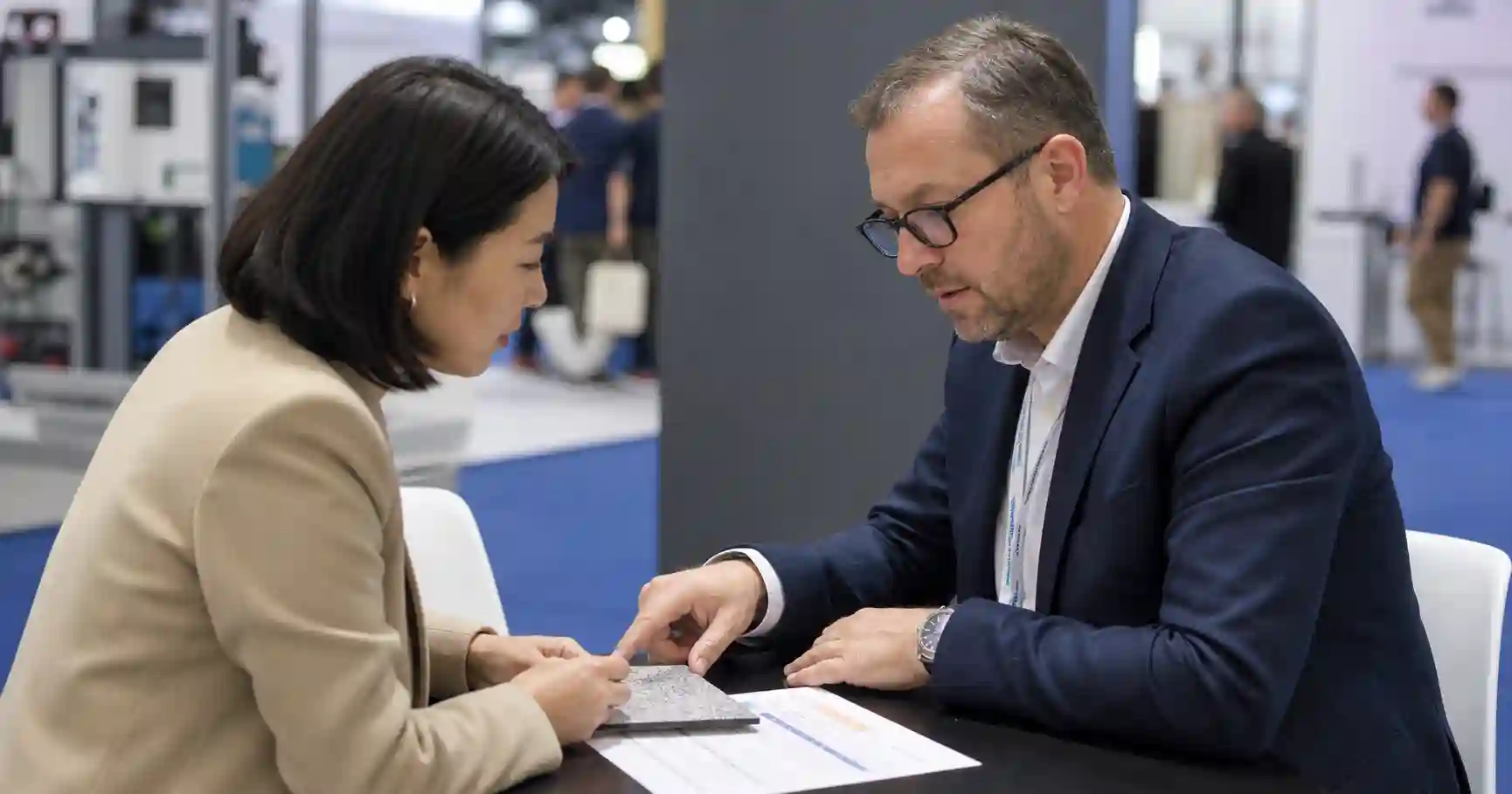
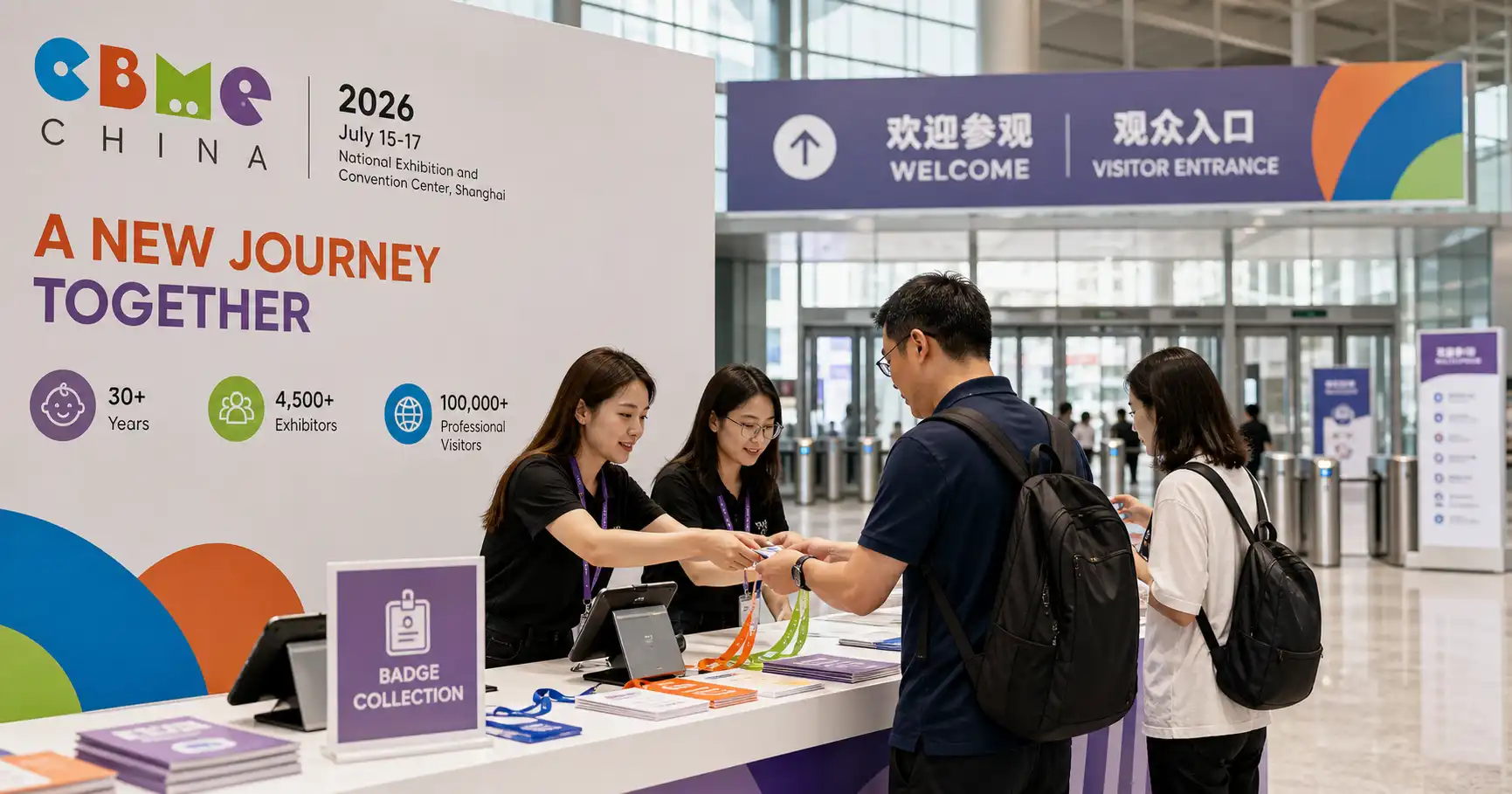
 Scenes from CBME China 2025; conference session discussing market and channel trends. Check 2026 agenda for current topics. © CBME China
China’s Baby Products E-Commerce Market Overview
The scale of China’s online baby market is significant. According to Moojing Global’s January 2026 report, the online maternity and baby market reached CN¥ 223.78 billion in 2025, with year-on-year growth of 12.6% — a rate that nearly triples the broader market’s 4.5% growth trajectory.
Three structural shifts are driving this growth:
- Digital-native parents: Millennials and Gen Z in China default to online research and purchasing for nearly every category, including baby products. These parents are comfortable making high-value purchases — formula subscriptions, strollers, car seats — through their phones.
- Premiumization: Despite lower birth rates, spending per child has increased significantly. Parents are trading up for premium infant formula, natural skincare, and smart baby gear. This premiumization sustains market value even as birth volumes normalize.
- Social commerce trust: Xiaohongshu and Douyin have become primary trust-building channels. Parents research products on social platforms, consume livestream demonstrations, and read peer reviews before committing to a purchase.
Within the online landscape, Tmall and JD.com handle the majority of high-value replenishment purchases — formula, diapers, and recurring consumables. Douyin and Xiaohongshu drive discovery and impulse buying, particularly for new brands entering the market. Social commerce platforms in the maternal and baby category grew at 76% year-on-year according to NielsenIQ’s 2025 report, making them the fastest-growing channel segment.
Infant formula remains the undisputed category anchor, with online sales of CN¥ 50.93 billion in 2025 (+18.1% YoY). Baby products (excluding food and formula) reached CN¥ 37.53 billion (+8.5% YoY), while baby diapers accounted for CN¥ 35.31 billion (+4.4% YoY).
If you are planning to enter the Chinese market, CBME China’s Product Spotlight program offers a structured way to shortlist exhibitors across all these categories before the show.
Tmall Global — The Foundation for Baby Brands
When baby product brands think of selling in China, Tmall is typically the first platform that comes to mind — and for good reason. Tmall holds approximately 40% of online baby product sales in China (NielsenIQ, 2024), making it the single most important transaction channel for the category.
Tmall operates a marketplace model with brand flagship stores at its core. For international baby product brands, Tmall Global provides a dedicated cross-border pathway that allows overseas brands to sell without needing a Chinese legal entity. This makes it the most accessible entry point for foreign brands, particularly those from the US, Europe, Australia, and Japan.
What Tmall offers for baby brands:
- Brand flagship stores that allow full control over product presentation and storytelling
- Cross-border bonded warehouse fulfillment, typically delivering within 2–5 days in major cities
- Access to Tmall’s loyalty program and its massive user base of active baby product shoppers
- Promotional infrastructure including Double 11 (November 11), which consistently drives the highest single-day sales for baby products on the platform
- Cainiao logistics network for reliable delivery across China, including lower-tier cities
Key considerations:
- Operating a Tmall flagship store requires a significant investment in staffing, content, and paid marketing. Brands should plan for Year 1 investment in store setup, product photography, and promotional campaigns before expecting meaningful returns.
- Tmall rewards brands that invest in long-term content: product detail pages, video content, and live-streaming all contribute to organic ranking within the platform.
- For baby products specifically, trust is paramount. Chinese parents are highly sensitive to product safety and authenticity. Tmall’s brand-registration process and genuine-product verification systems provide a trust signal that directly supports conversion.
The US, Japan, and Germany are the top three import source countries for baby products sold through Tmall Global’s cross-border e-commerce channel (Lengow / USDA ATO Shanghai, 2025), which gives international brands a strong starting position for market entry.
Download the CBME China Product Spotlight to shortlist verified Tmall-aligned baby product exhibitors before the show.
JD.com — Trust and Logistics Excellence
JD.com is China’s second-largest B2C e-commerce platform and holds approximately 24% of the national e-commerce market share, with a GMV of approximately $542 billion in 2024 (Lengow, 2026). For baby product brands, JD offers a distinct value proposition: logistics and authenticity.
JD operates a direct-sales model alongside its marketplace, which means the platform has tighter control over product quality and fulfillment. Its proprietary logistics network spans over 4,000 delivery stations, enabling same-day and next-day delivery in major cities — a capability that is particularly valuable for consumable categories like infant formula, diapers, and baby food where parents reorder frequently.
Why JD matters for baby brands:
- Trust-first positioning: JD’s zero-tolerance policy on counterfeit products resonates strongly with parents buying for infants. For safety-sensitive categories — formula, supplements, skincare — JD’s reputation can reduce the trust-building burden on brands.
- Cross-border capabilities: JD Worldwide enables international brands to reach Chinese consumers through bonded warehouse fulfillment, similar to Tmall Global.
- High-value customer base: JD skews toward more affluent urban consumers who are comfortable with premium pricing. For brands positioning in the ultra-premium baby product segment, JD’s customer base aligns well.
- Category depth: More than 50 mother and baby brands have surpassed CN¥ 100 million in annual sales on JD.com, demonstrating the platform’s category maturity for baby products.
JD’s logistics strength makes it the natural complement to Tmall in a two-platform strategy. Where Tmall drives brand awareness and promotional volume, JD supports the logistics-heavy replenishment cycle — parents who discover your brand on Tmall or Douyin often switch to JD for repeat purchases because of its reliable delivery.
 Scenes from CBME China 2025; product displays used as proof for channel planning. © CBME China
Douyin — Content-Driven Discovery Engine
Douyin — TikTok’s Chinese counterpart — has fundamentally changed how Chinese parents discover and purchase baby products. With an estimated GMV of $477 billion in 2024 and a 60% year-on-year growth rate (Lengow, 2026), Douyin has evolved from a short-video entertainment app into one of China’s most powerful commerce platforms.
For baby product brands, Douyin is primarily a discovery engine, not a conversion platform in the traditional sense. Content e-commerce on Douyin — driven by short-form videos and live-streaming — grew at 76% year-on-year in the maternal and baby category (NielsenIQ, 2025). This growth reflects a structural shift in how Chinese parents make purchase decisions: they do not search for products; they watch videos about them.
How Douyin works for baby brands:
- Livestream commerce: Key opinion leaders (KOLs) and key opinion consumers (KOCs) — typically mothers with large followings — demonstrate, review, and recommend baby products through live streams. Parents tune in, ask questions in real time, and purchase directly within the app. For baby products, live streams work particularly well for strollers, car seats, wearables, and new product categories where visual demonstration adds value.
- Short-form content: Short videos showcasing product use, unboxing, and before-and-after comparisons drive awareness and consideration. The platform’s recommendation algorithm surfaces content based on user behavior, meaning a parent’s feed fills with baby product content once they engage with one video.
- Discovery-to-purchase funnel: Douyin has shortened the path from discovery to conversion. Unlike traditional e-commerce where a consumer searches, compares, and then buys, Douyin enables purchase within the same app session where the product is discovered.
Key considerations:
- Douyin requires a consistent content investment. Brands need either an in-house creative team or partnerships with established KOLs and KOCs to build visibility.
- The platform rewards authenticity. Chinese parents on Douyin are skeptical of overly polished corporate content. KOC reviews — genuine parent experiences — often outperform professionally produced brand content.
- For international brands, Douyin live-streaming with a Mandarin-speaking host is essential. Cultural fluency and local language content dramatically improve engagement rates.
For a broader market overview, see our China Baby and Maternity Market Guide 2026.
Xiaohongshu — Community Trust Building
Xiaohongshu — also known as Little Red Book or RED — occupies a unique position in China’s e-commerce ecosystem. It is simultaneously a social media platform, a search engine, and a commerce channel. With 85 million monthly active users, 86.1% female and 83.7% under the age of 35, Xiaohongshu is where Chinese parents — particularly mothers in Tier 1 and Tier 2 cities — conduct product research before purchasing elsewhere.
Unlike Douyin’s video-first format, Xiaohongshu is built around long-form written posts and image collections. Users document their parenting experiences — product reviews, ingredient comparisons, feeding schedules, nursery setup diaries — creating an enormous library of peer-generated content that other parents use as a trusted reference.
Why Xiaohongshu matters for baby brands:
- Pre-purchase research: When a Chinese parent considers a new baby product, the first thing they often do is search Xiaohongshu. Searches for baby formula, diapers, skincare, and gear on Xiaohongshu frequently precede purchase decisions on Tmall or JD. A brand that is invisible on Xiaohongshu is invisible at the moment of choice.
- KOC strategy: Key opinion consumers — ordinary parents with 1,000–50,000 followers — provide authentic product reviews that feel relatable and trustworthy. For baby products, a well-executed KOC seeding campaign can build credibility faster than traditional advertising.
- Seeding before launch: Many international baby brands enter Xiaohongshu months before they launch on Tmall or JD. They seed the platform with authentic content, build a library of peer reviews, and arrive on transaction platforms with an established reputation.
Key considerations:
- Xiaohongshu content must feel organic. The platform’s community is sensitive to obvious advertising. Brands that try to publish promotional content directly are penalized; those that invest in genuine parent storytelling succeed.
- Xiaohongshu’s commerce integration allows in-app purchases, but the platform’s real power for baby brands lies in its research and discovery function — driving traffic to Tmall and JD for final conversion.
- User-generated posts have long shelf lives. A well-performing Xiaohongshu post about a baby stroller can continue generating organic traffic for 12–18 months, making it one of the highest-ROI channels in a long-term brand strategy.
China E-Commerce Platform Comparison
The following table summarizes the four primary platforms for baby product brands entering China:
| Dimension | Tmall Global | JD.com | Douyin | Xiaohongshu |
|---|---|---|---|---|
| Primary role | Transaction / conversion | Transaction / replenishment | Discovery / content | Research / trust-building |
| Commerce model | Marketplace (search) | Marketplace + direct sales | Content + live-stream | Social + integrated commerce |
| Baby category share | ~40% of online baby sales | ~24% market share | Growing rapidly (+76% YoY) | Primary research platform |
| Entry difficulty | Moderate | Moderate | High | Moderate |
| Best for | Brand building + volume | Premium brands + logistics | New brand discovery | Trust building + KOC |
| Cross-border support | Yes (CBEC bonded warehouse) | Yes (JD Worldwide) | Limited | Limited |
| CBEC import sources | US, Japan, Germany (top 3) | Yes | Developing | Developing |
| Content format | Product pages + live-streaming | Product pages + live-streaming | Short video + live-stream | Long-form posts + images |
| Key promotional event | Double 11 (Nov 11) | 618 Festival (June) | Continuous live-stream | Seasonal content campaigns |
Source: CBME China Industry Insights (source: CBME China official site)
How to Choose Your First Platform
Selecting the right first platform depends on three factors: your brand’s positioning, your content capabilities, and your available investment.
Choose Tmall Global if:
- You have a physical or Mandarin-speaking team that can manage a brand flagship store
- You are targeting premium or mid-market positioning
- You can invest in Year 1 content and promotional campaigns
- Your product benefits can be communicated through product detail pages and standard e-commerce formats
Choose Douyin if:
- You have strong visual content or access to KOL partnerships
- You are entering with a new or innovative baby product that benefits from demonstration
- You want to build brand awareness quickly among younger parents (Gen Z)
- You can commit to a live-streaming cadence
Choose Xiaohongshu if:
- You have a product with a compelling parent story or differentiation
- You are preparing to enter the market and want to build pre-launch credibility
- Your brand can support authentic KOC engagement without overt commercial messaging
- You are targeting affluent Tier 1 and Tier 2 city parents
Choose JD.com if:
- Your product is safety-critical (formula, supplements, medical-grade skincare)
- Your brand benefits from logistics-driven repeat purchases
- You are targeting a premium positioning with a reliable fulfillment partner
For most international baby product brands, the optimal approach is a two-platform launch: Xiaohongshu for seeding and trust-building, paired with Tmall Global for transaction volume. Douyin can be layered in as a content and discovery channel as your brand matures.
For more on retail and channel strategy beyond e-commerce, see our China Baby Retail Channels guide. Cross-border brands should also review Cross-border E-commerce Opportunities for CBEC-specific entry requirements.
How CBME China Supports E-Commerce Strategy
CBME China 2026 (July 15-17, NECC Shanghai) serves as the critical bridge between e-commerce strategy and supplier relationships. While the platforms themselves do not exhibit at CBME, the brands, manufacturers, and distributors who power those platforms do.
At CBME China 2026, you can:
- Meet cross-border e-commerce suppliers who understand platform requirements and can produce compliant products for Tmall Global, JD.com, or Douyin’s supply chains
- Discover suppliers with livestream and content commerce experience who can support your Douyin and Xiaohongshu content needs
- Access the Product Spotlight program to shortlist baby product exhibitors by category before the show
- Connect with distributors and channel partners who bridge the gap between international brands and Chinese e-commerce platforms
For brands that have already launched on Tmall or JD, CBME provides an opportunity to renegotiate terms, discover new product lines, and build relationships with suppliers who can support your platform-specific content and fulfillment needs.
Frequently Asked Questions
What are the best e-commerce platforms for baby products in China?
The four most important platforms are Tmall Global, JD.com, Douyin, and Xiaohongshu. Tmall and JD.com handle the majority of transaction volume, while Douyin drives discovery and Xiaohongshu serves as the primary research platform. For most international brands, Tmall Global is the recommended starting point, with Xiaohongshu seeding built in before launch.
How does Douyin differ from Tmall for selling baby products?
Tmall is a search-based marketplace where parents actively look for and compare products. Douyin is a discovery platform where content — livestreams, short videos, KOL recommendations — surfaces products to parents who were not necessarily searching for them. Douyin works best for new product categories or brands that benefit from visual demonstration. Tmall works best for brands that have established product awareness and want to convert search traffic.
What is the difference between Douyin and Xiaohongshu for marketing baby products?
Douyin is video and live-stream focused, with a discovery algorithm that surfaces content based on user behavior. Xiaohongshu is post and image focused, functioning more like a search engine where parents research products before purchasing. Douyin drives impulse purchases through live-stream commerce; Xiaohongshu builds long-term brand trust through peer reviews and parent storytelling.
How do baby brands use cross-border e-commerce in China?
Cross-border e-commerce (CBEC) allows international baby product brands to sell in China without establishing a Chinese legal entity. Tmall Global and JD Worldwide are the two primary CBEC channels. Products are held in bonded warehouses and shipped to Chinese consumers upon purchase, typically within 2–5 days in major cities. CBEC also offers tax advantages for certain product categories. For a full cross-border e-commerce strategy guide, see our Cross-border E-commerce for Baby Brands in China.
What certifications do baby products need for Chinese e-commerce platforms?
Certifications vary by product category. Infant formula requires Chinese food safety registration. Baby skincare products may need cosmetics registration. All baby products sold on Tmall or JD must comply with China’s GB (Guobiao) standards for product safety. Registration requirements can change, and CBME China’s exhibitors include compliance consultation services that can advise on current requirements specific to your product category.
How can CBME China help with e-commerce channel strategy?
CBME China 2026 connects brands with suppliers, manufacturers, and distributors who understand the requirements of China’s major e-commerce platforms. The Product Spotlight program allows buyers to shortlist exhibitors by category before the show. On-site matchmaking services help buyers find the right partners for their channel strategy.
Official Sources
- About CBME China — Event information
- Why Visit CBME China — Buyer value proposition
- Industry Insights — Market intelligence
- Moojing Global — China Maternity & Baby Market Overview 2025
- NielsenIQ — Decoding the Mother-And-Baby Market Dynamics in China 2025
- Lengow — Top Marketplaces in China 2026
Published by CBME China Editorial Team
Content is reviewed by the CBME China editorial team before publication. To report a factual error or request an update, contact the CBME China editorial team.
Last reviewed: June 24, 2026 | Published: June 24, 2026 | Publisher: CBME China, a division of Informa
Ready to plan your China e-commerce channel strategy?
Download the CBME China Product Spotlight for introductions to verified suppliers who support Tmall, JD, Douyin, and Xiaohongshu channel strategies.
Register to Visit CBME China 2026 to meet e-commerce-ready manufacturers and distributors from July 15-17 at NECC Shanghai.