Baby Food and Infant Nutrition Suppliers in China: 2026 Guide for Global Buyers
China is home to one of the world’s most concentrated baby food manufacturing ecosystems — and online infant formula sales reached CN¥ 50.93 billion in 2025, growing 18.1% year-on-year, the fastest subcategory of China’s broader online maternity and baby market (Moojing Global, January 2026). For international food buyers, importers, and retailers, this combination of regulatory maturity, manufacturing depth, and a single trade show that gathers them all makes China one of the most efficient baby food sourcing destinations available — provided you know what to verify before you commit.
This guide explains the supplier types, product categories, and compliance checkpoints that international buyers should understand when sourcing baby food and infant nutrition in China for 2026 and beyond. It also walks through how CBME China 2026 — held July 15–17 at NECC Shanghai — brings together the full baby food and nutrition supply chain under one roof.
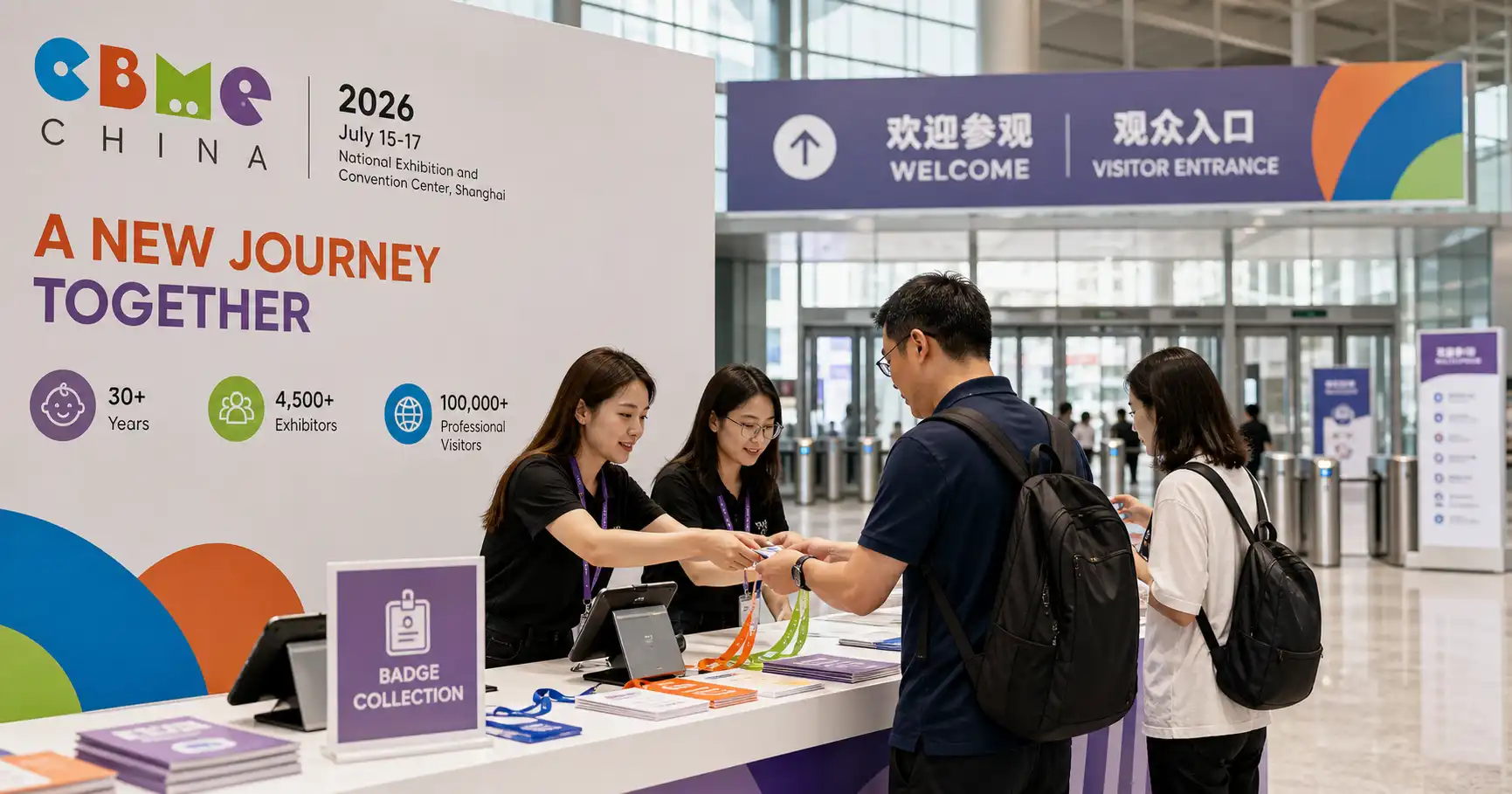
CBME China 2026 — Quick Facts
- Date: July 15–17, 2026
- Venue: National Exhibition and Convention Center (NECC), Shanghai
- Scale: 4,500+ brands, 3,200+ exhibitors, 100,000+ trade buyers
- Food & Nutrition Category: 21.0% of exhibits
- Food & Health Expo halls: 7.2 & 8.2 (concurrent with main show)
- Maternal & infant formula hall: 7.1
- Healthy Baby Foods & Snacks hall: 8.1
- Register: Register to Visit CBME China 2026 — pre-register to waive the RMB 100 admission fee
Why China Is a Major Baby Food Sourcing Hub
Three structural factors make China a serious sourcing destination for baby food and infant nutrition buyers:
1. Manufacturing concentration. China’s baby food manufacturing base is concentrated in four provinces: Guangdong, Fujian, Zhejiang, and Shandong. Guangdong and Fujian dominate complementary foods, snacks, and biscuits; Shandong and Zhejiang host large ingredient and OEM operations. Buyers can shortlist multiple qualified suppliers within a single sourcing trip.
2. Online sales growth. The online maternity and baby market reached CN¥ 223.78 billion in 2025 (+12.6% YoY), nearly tripling the broader consumer market’s 4.5% growth (Moojing Global, January 2026). Within this, online infant formula reached CN¥ 50.93 billion (+18.1% YoY), baby products (excluding food) CN¥ 37.53 billion (+8.5%), and baby diapers CN¥ 35.31 billion (+4.4%) — sustained retail demand for the categories CBME covers.
3. Regulatory tightening as a trust signal. SAMR formula registration reforms, new infant formula liquid milk licensing rules (January 2026), and GACC Decree 248 / 280 have raised the compliance bar since 2023 — but this also screens out non-compliant operators. Buyers who verify documentation thoroughly now work from a more trustworthy supplier pool than five years ago.
Supplier Types in China’s Baby Food Industry
Four distinct supplier types serve international baby food buyers:
1. Branded Manufacturers
Well-known Chinese baby food brands with their own R&D, manufacturing, registered formulas, and domestic retail presence. They typically serve as OEM partners for complementary food, snacks, supplements, and maternal nutrition — but rarely OEM infant formula, where regulatory and brand-equity concerns make white-label production difficult.
2. OEM/ODM Snack and Complementary Food Makers
This segment holds the deepest manufacturing capacity. OEM/ODM makers specialize in baby biscuits, rice puffs, teething biscuits, fruit purees, cereal-based foods, noodles, congee, and dairy snacks. Many offer low MOQs (as low as 50 boxes for some biscuit SKUs) and full OEM / ODM / private-label production — the most accessible entry point for first-time buyers of China’s baby food export market.
3. Ingredient and Packaging Suppliers
CBME’s Supply Chain Expo hosts packaging materials, food ingredients, OEM equipment, and labeling suppliers alongside the main show. Meeting these suppliers reduces vendor onboarding time and supports formulation discussions with manufacturers.
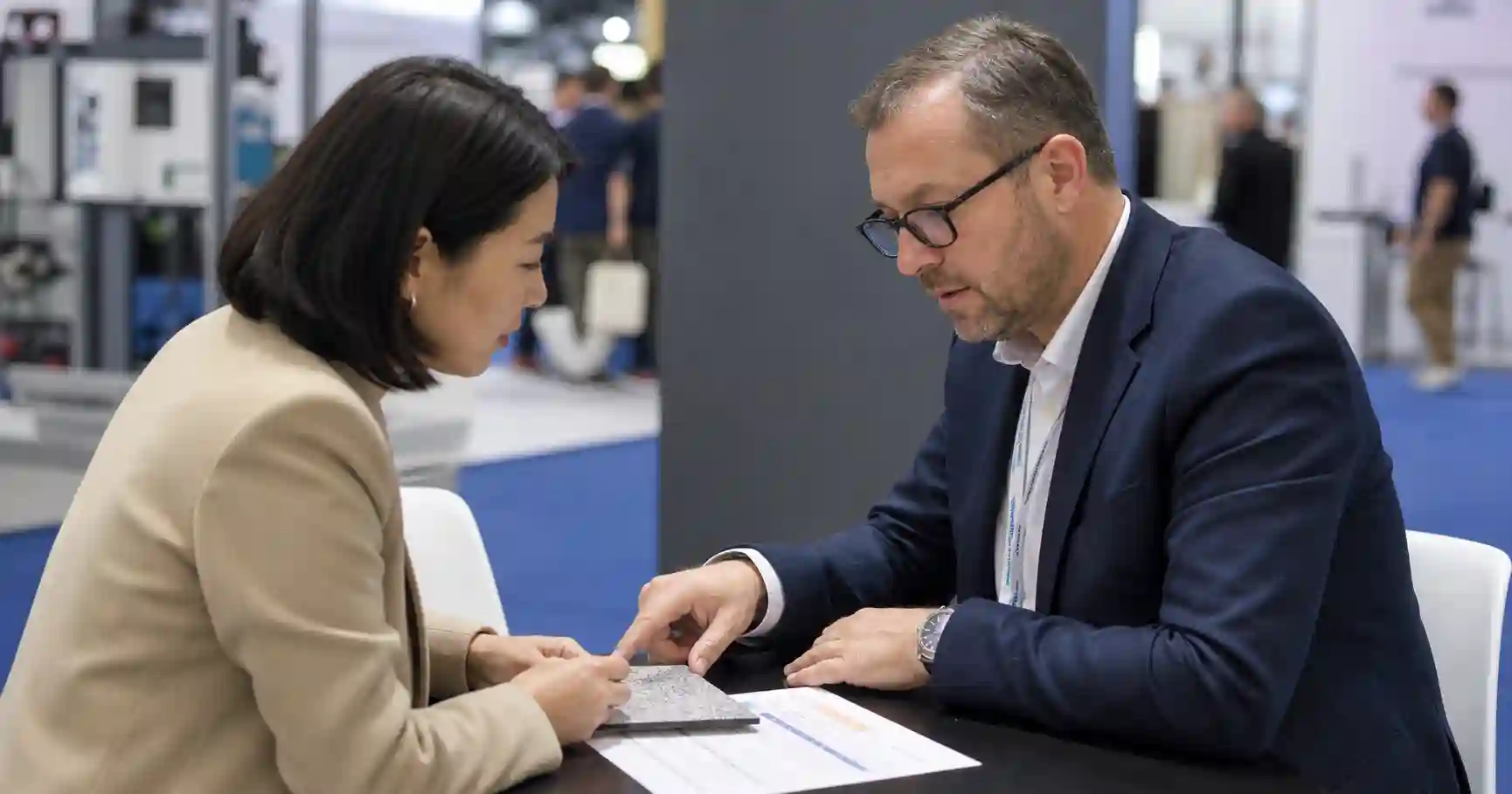
 International buyers meeting with Chinese baby food suppliers at CBME China 2025. © CBME China 2025.
4. Trading Companies
Trading companies handle export documentation, logistics, and language support between manufacturers and buyers. Useful for smaller buyers without volume to engage manufacturers directly, but they add margin and reduce production control. For regulated categories like infant formula, working with the manufacturer directly is preferable.
Key Product Categories Buyers Can Source at CBME
CBME China 2026 dedicates 21.0% of exhibition space to food and nutrition — its second-largest category. Buyers can source:
Infant Formula (Stage 1–3)
The highest-stakes subcategory. China requires SAMR formula registration for each formula, and each enterprise is limited to three formula series and nine product formulas (SAMR Measures, Article 9). Sourcing infant formula typically means importing under your own SAMR-registered formula or partnering with a registered manufacturer — contract manufacturing for infant formula liquid milk is prohibited as of January 2026.
Complementary Foods
Cereal-based products, canned baby food, fruit and meat purees, noodles, and congee — governed by national standards GB 10769-2025 and GB 10770-2025. More accessible for OEM and a common entry point for new entrants.
Baby Snacks
Baby biscuits, rice puffs, teething biscuits, fruit snacks, jelly, dairy snacks — the fastest-growing subcategories. Broadest OEM capacity with low MOQs; halal-certified, organic, and allergen-free options widely available.
Nutritional Supplements
Bovine colostrum, DHA, calcium/iron/zinc, cod liver oil, probiotics, protein powder, multivitamins. Probiotics and DHA are particularly active in infant and maternal nutrition OEM.
Maternal Nutrition
Pregnancy and lactation supplements, maternal snacks, and maternal health products. Smaller but growing; overlaps with infant formula regulation and often sourced from the same OEM manufacturers.
Compliance and Quality: What Buyers Must Verify
Verification is non-negotiable when sourcing baby food and infant nutrition suppliers in China. The following documents and standards are the baseline for any supplier on your shortlist.
Mandatory Documentation
1. SAMR Formula Registration Certificate — Required for any infant formula sold in China. Each formula must be individually registered with SAMR. The Measures explicitly prohibit contract manufacturing for infant formula liquid milk — production must be under the licensee’s direct operational control (China Briefing, January 2026).
2. SC License (Food Production License) — Every food manufacturer must hold a current SC License confirming GMP, facility design, and quality control compliance. Verify the license scope matches your product category.
3. GACC Decree 248 + CIFER — Foreign food manufacturers exporting to China must register with GACC under Decree 248. Verify registration in the official CIFER system at https://cifer.singlewindow.cn before engaging. Decree 280 governs customs declaration requirements under license category code 519.
Quality Certifications
Beyond mandatory documentation, the following certifications signal manufacturing quality: HACCP (required for infant formula under SAMR Measures), ISO 22000, FSSC 22000, GMP for Powdered Infant Formula, and BRCGS. Product-specific certifications (Organic / Halal / Kosher) verify with the issuing body, not just the supplier. Independent third-party audits from SGS, TÜV, or Bureau Veritas provide the highest level of verification.
Questions to Ask Baby Food Suppliers
Before committing to any baby food or infant nutrition supplier, walk through the following checklist. The same questions should be asked of every shortlisted supplier so you can compare answers objectively.
 Illustrative planning checklist; not a photo from the show. Use this framework to compare baby food suppliers at CBME China 2026.
Documentation & Compliance
- Can you provide your current SC License with scope clearly matching our product category?
- What is your SAMR formula registration status for any infant formula products?
- Are you registered with GACC under Decree 248? What is your CIFER registration number?
- What quality certifications do you hold (HACCP, ISO 22000, FSSC 22000, BRC, Organic, Halal)?
- Can you share the most recent third-party audit report?
Production Capacity & Track Record
- What is your annual production capacity for our specific product category?
- Which export markets do you currently serve, and what is your annual export volume?
- Can you provide buyer references in our target market?
Samples & Quality Control
- What is your sample policy — sample cost, lead time, and customization options?
- Do you conduct batch-by-batch laboratory testing? Can you share recent test reports?
- What is your process for handling product recalls or quality complaints?
Commercial Terms
- What is your MOQ for our product type, and are there MOQ tiers for OEM vs. ODM?
- What are typical lead times from confirmed purchase order to shipment?
- What payment terms do you accept, and what is your policy on quality-based disputes?
Apply this 14-question checklist to every shortlisted supplier — directly comparable answers produce the evidence-based shortlist that protects your business from unverified supplier relationships.
Soft CTA: Before the show, use the Download the CBME Product Spotlight to identify baby food exhibitors in your subcategory, then apply the same 14 questions to each.
How CBME China 2026 Helps You Find Baby Food Suppliers
CBME China 2026 (July 15–17, NECC Shanghai) is the most efficient single venue for meeting baby food and infant nutrition suppliers from across China. The CBME Food & Health Expo runs in parallel with the main show, concentrating formula, complementary food, snacks, supplements, and maternal nutrition manufacturers under one roof.
Where to find baby food suppliers on the show floor:
- Hall 7.1 — Maternal and infant formula, nutritional products
- Hall 7.2 — Food & Health Expo (growing-up milk, specialty formula, OEM/ODM packaging)
- Hall 8.1 — Healthy Baby Foods & Snacks
- Hall 8.2 — Food & Health Expo (sweets, dairy snacks, purees, congee, teething snacks, vitamins, supplements)
Pre-show shortlisting: The CBME Product Spotlight is a monthly curated PDF (May 2026 issue #2) for identifying priority products and exhibitors. Onsite matchmaking: the CBME Hosted Buyer Program provides pre-scheduled 1-on-1 meetings, a customized shortlist, twin-sharing hotel accommodation, fast-track access, and 2-day EVIP lounge lunch. Application deadline: May 30, 2026.
Frequently Asked Questions
Who are the largest baby food suppliers in China?
China’s baby food industry includes both branded manufacturers (companies with their own formulas and retail presence) and a much larger pool of OEM/ODM manufacturers specializing in complementary foods, snacks, and supplements. Rather than naming specific brands, the most reliable approach is to use the CBME exhibitor directory combined with the monthly Product Spotlight to identify suppliers in your specific subcategory. CBME’s Food & Health Expo halls (7.1, 7.2, 8.1, 8.2) concentrate the majority of qualified exhibitors.
How do I verify a baby food manufacturer in China?
Verification requires multiple steps: (1) request the SC License and confirm scope matches your product category; (2) verify SAMR formula registration for any infant formula products via SAMR’s official database; (3) confirm GACC Decree 248 registration through the CIFER system at https://cifer.singlewindow.cn; (4) cross-check business registration with official Chinese databases; (5) verify quality certifications with the issuing bodies; and (6) commission an independent third-party audit (SGS, TÜV, Bureau Veritas) before placing volume orders.
Is infant formula from China safe to import?
China’s infant formula sector is one of the most tightly regulated in the world. SAMR’s 2025 formula registration measures limit each enterprise to three formula series and nine product formulas, require GMP and HACCP compliance, and mandate batch-by-batch laboratory testing. The January 2026 SAMR licensing rules for infant formula liquid milk explicitly prohibit contract manufacturing and require production under the licensee’s direct operational control. These regulations create a high barrier to entry that screens out non-compliant operators. Buyers who verify documentation thoroughly are working from a more trustworthy supplier pool than they would have five years ago.
What certifications do baby food manufacturers in China need?
Mandatory: SC License (Food Production License), SAMR formula registration (for infant formula), GACC Decree 248 registration (for exporters to China), GMP for powdered infant formula. Common quality certifications: HACCP, ISO 22000, FSSC 22000, BRCGS. Product-specific: Organic, Halal, Kosher. Always verify certification authenticity with the issuing body — never accept supplier-provided documents without independent verification.
Can foreign brands OEM baby food in China?
It depends on the subcategory. Infant formula is the most restricted: contract manufacturing for infant formula liquid milk is explicitly prohibited under SAMR’s January 2026 rules, and each formula must be registered to a specific enterprise with direct production control. For complementary foods, snacks, and supplements, OEM/ODM arrangements are common and accessible. Many Chinese OEM manufacturers offer low MOQs (sometimes as low as 50 boxes for specific biscuit SKUs) and flexible customization.
What is GACC Decree 280 for baby food imports?
GACC Decree 280 governs customs declaration requirements for overseas food manufacturers exporting to China. The decree requires that customs declarations include the GACC registration number under license category code 519 and “食用” (consumption) in the purpose field. Foreign manufacturers must complete Decree 248 registration (overseas food establishment registration) and have a valid CIFER registration before shipping baby food products to China.
Official Sources
- CBME China — About
- CBME China — Why Visit
- CBME China — Featured Product Spotlight
- CBME China — Food & Health Expo
- CBME China — Explore CBME Functional Areas
- CBME China — Hosted Buyer Program
- SAMR — 婴幼儿配方乳粉产品配方注册管理办法
- China Briefing — China’s New Production Licensing Rules for Infant Formula Liquid Milk
- China Briefing — GAC Overseas Food Manufacturer Registration: A Guide for Exporters
- China Briefing — China Tightens Infant Food Compliance
- Moojing Global — China Maternity & Baby Market Overview 2025
Published by CBME China Editorial Team — a division of Informa.
Content is reviewed by the CBME China editorial team before publication. To report a factual error or request an update, contact the CBME China editorial team.
Last reviewed: | Published: | Publisher: CBME China, a division of Informa
Ready to find your baby food and infant nutrition suppliers?
Register to Visit CBME China 2026 to meet baby food and infant nutrition suppliers from across China — concentrate your sourcing trip in Halls 7.1, 7.2, 8.1, and 8.2 and shortlist exhibitors using the monthly Product Spotlight. Pre-register to waive the RMB 100 admission fee.
Apply to the Hosted Buyer Program for pre-scheduled 1-on-1 meetings, customized shortlist, twin-sharing hotel accommodation, fast-track access, and 2-day EVIP lounge lunch. Application deadline: May 30, 2026.